Vanwonterghem Inka, Webster Nicole S
Australian Centre for Ecogenomics, School of Chemistry and Molecular Biosciences, University of Queensland, Brisbane, QLD 4072, Australia.
Australian Centre for Ecogenomics, School of Chemistry and Molecular Biosciences, University of Queensland, Brisbane, QLD 4072, Australia; Australian Institute of Marine Science, Townsville, QLD 4810, Australia.
iScience. 2020 Apr 24;23(4):100972. doi: 10.1016/j.isci.2020.100972. Epub 2020 Mar 9.
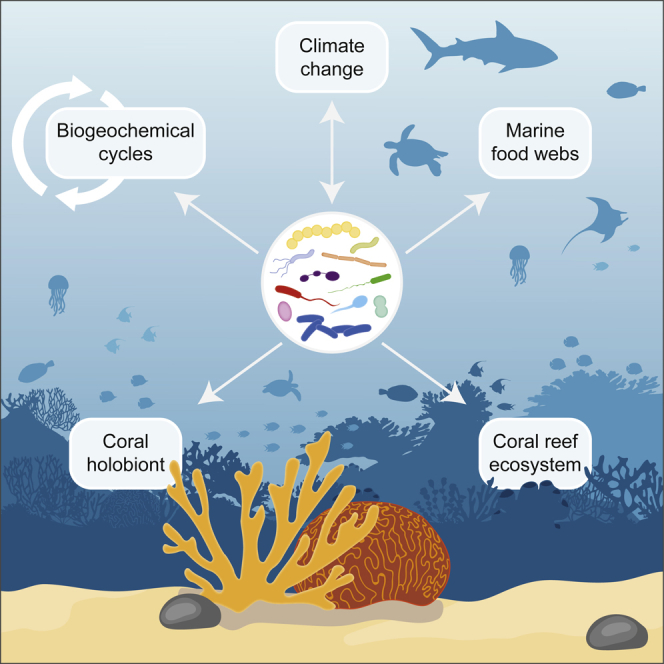
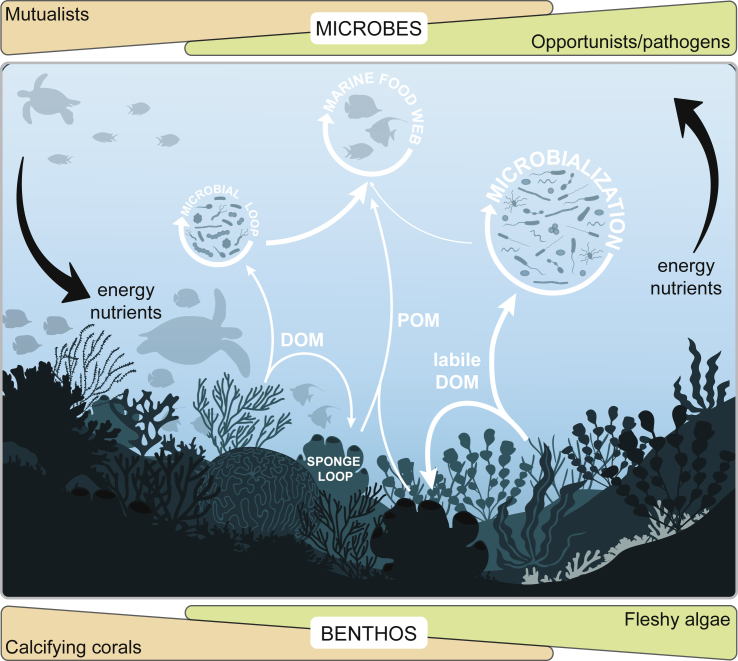
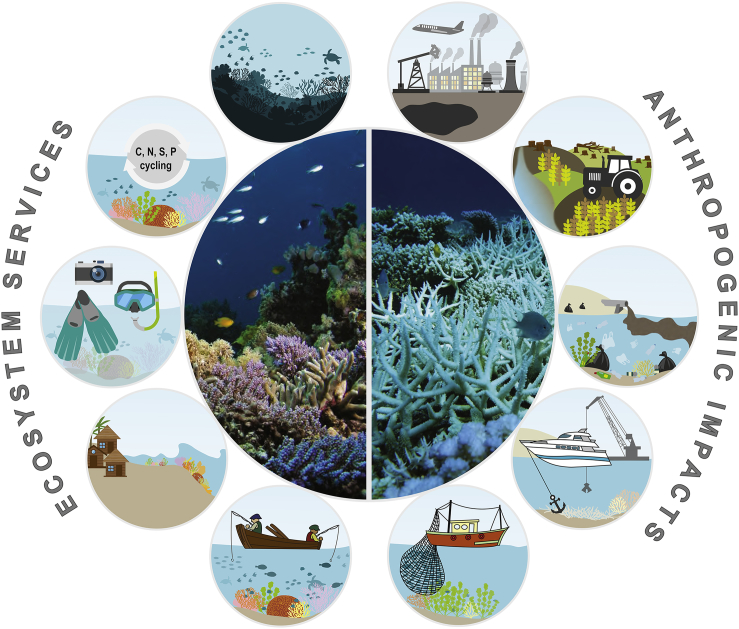
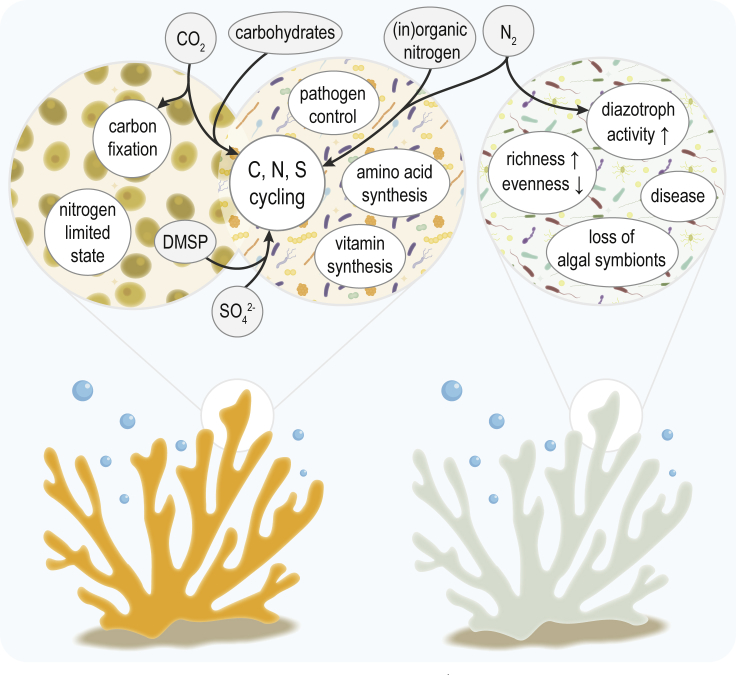
Coral reefs are one of the most diverse and productive ecosystems on the planet, yet they have suffered tremendous losses due to anthropogenic disturbances and are predicted to be one of the most adversely affected habitats under future climate change conditions. Coral reefs can be viewed as microbially driven ecosystems that rely on the efficient capture, retention, and recycling of nutrients in order to thrive in oligotrophic waters. Microorganisms play vital roles in maintaining holobiont health and ecosystem resilience under environmental stress; however, they are also key players in positive feedback loops that intensify coral reef decline, with cascading effects on biogeochemical cycles and marine food webs. There is an urgent need to develop a fundamental understanding of the complex microbial interactions within coral reefs and their role in ecosystem acclimatization, and it is important to include microorganisms in reef conservation in order to secure a future for these unique environments.
珊瑚礁是地球上最多样化和生产力最高的生态系统之一,但由于人为干扰,它们遭受了巨大损失,预计在未来气候变化条件下将成为受影响最严重的栖息地之一。珊瑚礁可被视为微生物驱动的生态系统,依靠有效捕获、保留和循环营养物质以在贫营养水域中茁壮成长。微生物在环境压力下维持共生体健康和生态系统恢复力方面发挥着至关重要的作用;然而,它们也是加剧珊瑚礁衰退的正反馈回路中的关键因素,对生物地球化学循环和海洋食物网产生连锁反应。迫切需要深入了解珊瑚礁内复杂的微生物相互作用及其在生态系统适应中的作用,将微生物纳入珊瑚礁保护工作对于确保这些独特环境的未来至关重要。