Department of Endocrinology, Qilu Hospital of Shandong University, Shandong University, Jinan, Shandong, 250012, China.
Department of Endocrinology and Metabology, the First Affiliated Hospital of Shandong First Medical University, Jinan, 250014, China.
Lipids Health Dis. 2020 Mar 24;19(1):53. doi: 10.1186/s12944-020-01239-1.
Hyperlipidaemia causes kidney damage over the long term. We investigated the effect of the administration of endothelial progenitor cells (EPCs) on the progression of kidney damage in a mouse model of hyperlipidaemia.
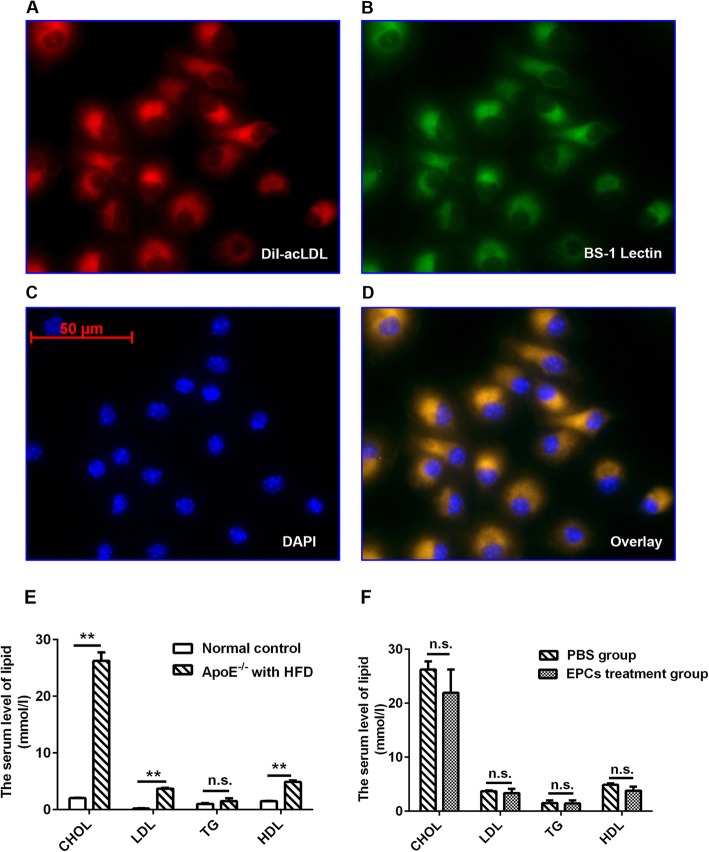
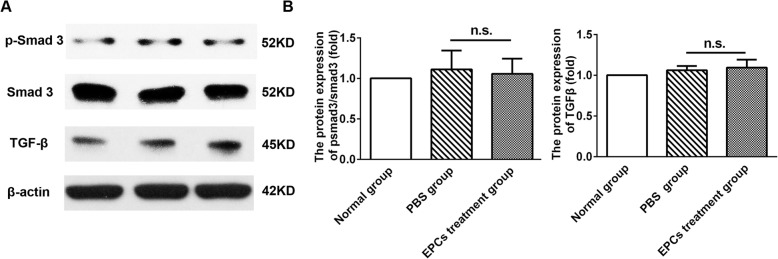
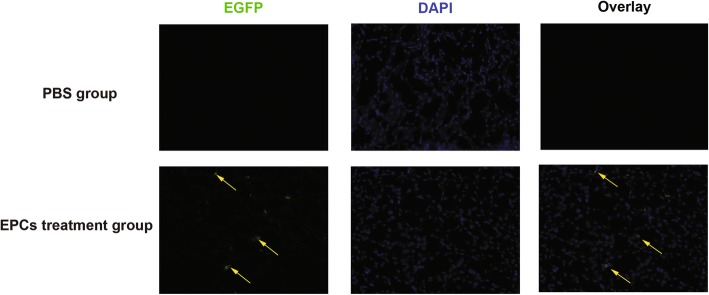
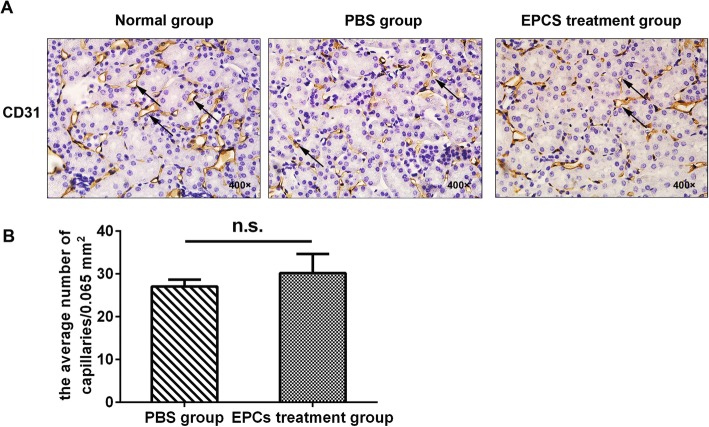
Apolipoprotein E-knockout (ApoE) mice were treated with a high-cholesterol diet after spleen resection. Twenty-four weeks later, the mice were divided into two groups and intravenously injected with PBS or EPCs. Six weeks later, the recruitment of EPCs to the kidney was monitored by immunofluorescence. The lipid, endothelial cell, and collagen contents in the kidney were evaluated by specific immunostaining. The protein expression levels of transforming growth factor-β (TGF-β), Smad2/3, and phospho-Smad3 (p-smad3) were detected by western blot analysis.
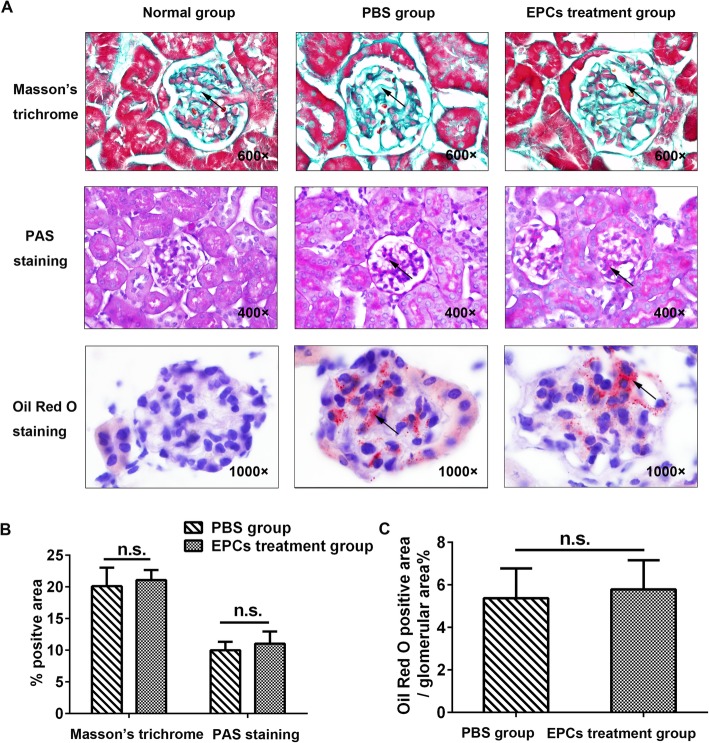
ApoE mice treated with a high-fat diet demonstrated glomerular lipid deposition, enlargement of the glomerular mesangial matrix, endothelial cell enlargement accompanied by vacuolar degeneration and an area of interstitial collagen in the kidney. Six weeks after EPC treatment, only a few EPCs were detected in the kidney tissues of ApoE mice, mainly in the kidney interstitial area. No significant differences in TGF-β, p-smad3 or smad2/3 expression were found between the PBS group and the EPC treatment group (TGF-β expression, PBS group: 1.06 ± 0.09, EPC treatment group: 1.09 ± 0.17, P = 0.787; p-smad3/smad2/3 expression: PBS group: 1.11 ± 0.41, EPC treatment group: 1.05 ± 0.33, P = 0.861).
Our findings demonstrate that hyperlipidaemia causes basement membrane thickening, glomerulosclerosis and the vascular degeneration of endothelial cells. The long-term administration of EPCs substantially has limited effect in the progression of kidney damage in a mouse model of hyperlipidaemia.
高脂血症会导致肾脏长期受损。我们研究了内皮祖细胞(EPCs)给药对高脂血症小鼠模型肾脏损伤进展的影响。
载脂蛋白 E 基因敲除(ApoE)小鼠在脾切除后给予高胆固醇饮食。24 周后,将小鼠分为两组,分别静脉注射 PBS 或 EPCs。6 周后,通过免疫荧光监测 EPC 向肾脏的募集情况。通过特异性免疫染色评估肾脏中的脂质、内皮细胞和胶原含量。通过 Western blot 分析检测转化生长因子-β(TGF-β)、Smad2/3 和磷酸化 Smad3(p-smad3)的蛋白表达水平。
高脂饮食处理的 ApoE 小鼠显示肾小球脂质沉积、肾小球系膜基质增大、内皮细胞增大伴空泡变性和肾间质胶原面积增加。EPC 治疗 6 周后,仅在 ApoE 小鼠的肾组织中检测到少量 EPCs,主要位于肾间质区。PBS 组和 EPC 治疗组之间 TGF-β、p-smad3 或 smad2/3 的表达无显著差异(TGF-β表达,PBS 组:1.06±0.09,EPC 治疗组:1.09±0.17,P=0.787;p-smad3/smad2/3 表达:PBS 组:1.11±0.41,EPC 治疗组:1.05±0.33,P=0.861)。
我们的研究结果表明,高脂血症导致基底膜增厚、肾小球硬化和内皮细胞血管退化。长期给予 EPCs 对高脂血症小鼠模型肾脏损伤的进展影响有限。