Department of Medicine, The George Washington University, Washington, DC.
Pioneer Valley Life Science Institute, Baystate Medical Center, Springfield, MA.
J Am Heart Assoc. 2017 Apr 1;6(4):e005146. doi: 10.1161/JAHA.116.005146.
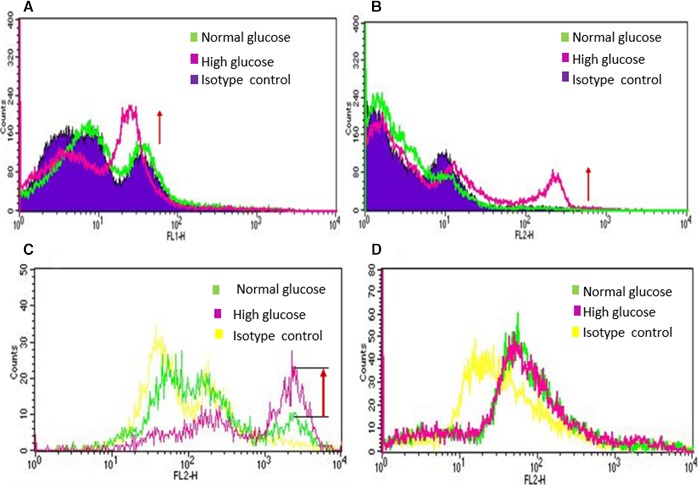
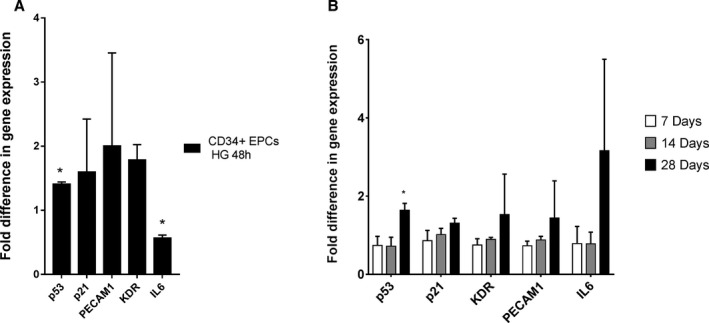
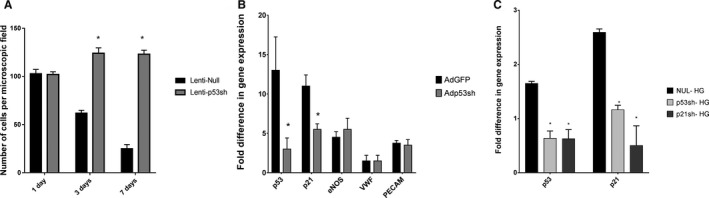
Peripheral vascular disease is a major diabetes mellitus-related complication. In this study, we noted that expressions of proapoptotic p53 gene and its downstream cascade gene such as p21 are upregulated in hyperglycemia. Therefore, we investigated whether p53- and p21-silenced endothelial progenitor cells (EPCs) were able to survive in hyperglycemic milieu, and whether transplantation of either p53 knockout (KO) or p21KO or p53- and p21-silenced EPCs could improve collateral vessel formation and blood flow in diabetic vaso-occlusive peripheral vascular disease mouse models.
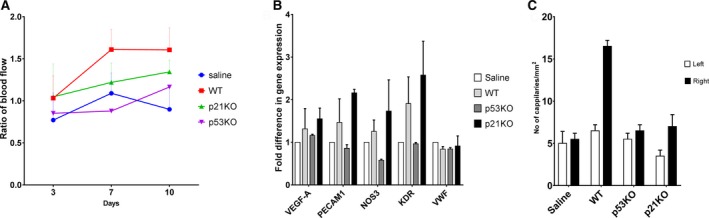
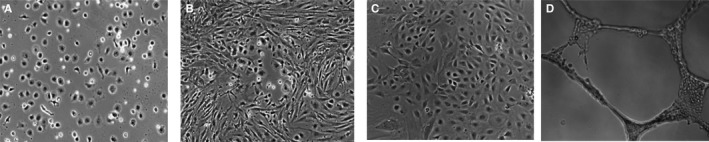
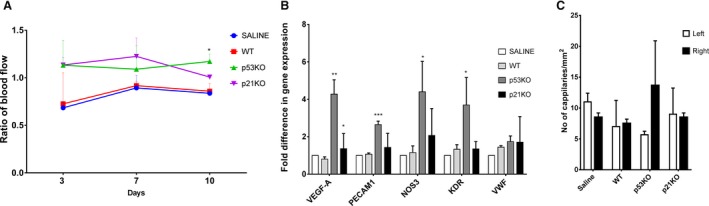
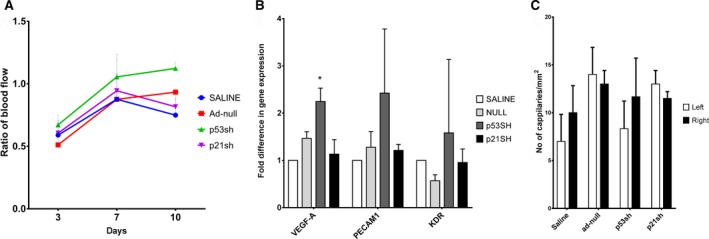
We transplanted p53 and p21KO mouse EPCs (mEPCs) into streptozotocin-induced diabetic (type 1 diabetes mellitus model) C57BL/6J and db/db (B6.BKS(D)-Leprdb/J) (type 2 model) post-femoral artery occlusion. Similarly, Ad-p53-silenced and Ad-p21-silenced human EPCs (CD34+) cells were transplanted into streptozotocin-induced diabetic NOD.CB17-Prkdcscid/J mice. We measured blood flow at 3, 7, and 10 days and hindlimb muscles were obtained postsacrifice for mRNA estimation and CD31 staining. Enhanced blood flow was noted with delivery of p53 and p21KO mEPCs in streptozotocin-induced diabetic C57BL/6J mice. Similar results were obtained when human Ad-p53shEPCs(CD34+) and Ad-p21shEPCs(CD34+) were transplanted into streptozotocin-induced nonobese diabetic severe combined immunodeficiency mice. Gene expression analysis of p53 and p21KO EPCs transplanted hindlimb muscles showed increased expression of endothelial markers such as endothelial nitric oxide synthase, vascular endothelial growth factor A, and platelet endothelial cell adhesion molecule 1. Similarly, quantitative reverse transcriptase polymerase chain reaction of human Ad-p53shEPCs (CD34+)- and Ad-p21shEPCs (CD34+)-transplanted hindlimb muscles also showed increased expression of endothelial markers such as vascular endothelial growth factor A, noted primarily in the p53-silenced EPCs group. However, such beneficial effect was not noted in the db/db type 2 diabetic mouse models.
Transient silencing of p53 using adenoviral vector in EPCs may have a therapeutic role in diabetic peripheral vascular disease.
外周血管疾病是糖尿病的主要相关并发症。在这项研究中,我们注意到在高血糖状态下促凋亡 p53 基因及其下游级联基因(如 p21)的表达上调。因此,我们研究了沉默 p53 和 p21 的内皮祖细胞(EPCs)是否能够在高血糖环境中存活,以及移植 p53 敲除(KO)或 p21KO 或 p53 和 p21 沉默的 EPCs 是否能够改善糖尿病血管阻塞性外周血管疾病小鼠模型中的侧支血管形成和血流。
我们将 p53 和 p21KO 小鼠 EPCs(mEPCs)移植到链脲佐菌素诱导的糖尿病(1 型糖尿病模型)C57BL/6J 和 db/db(B6.BKS(D)-Leprdb/J)(2 型模型)后股动脉闭塞的小鼠中。同样,将 Ad-p53 沉默和 Ad-p21 沉默的人 EPCs(CD34+)细胞移植到链脲佐菌素诱导的糖尿病 NOD.CB17-Prkdcscid/J 小鼠中。我们在 3、7 和 10 天时测量血流,并在处死时获得后肢肌肉进行 mRNA 估计和 CD31 染色。在链脲佐菌素诱导的 C57BL/6J 糖尿病小鼠中,给予 p53 和 p21KO mEPCs 可增强血流。当将人 Ad-p53shEPCs(CD34+)和 Ad-p21shEPCs(CD34+)移植到链脲佐菌素诱导的非肥胖型糖尿病严重联合免疫缺陷小鼠中时,也获得了类似的结果。移植后肢肌肉的 p53 和 p21KO EPCs 的基因表达分析显示,内皮一氧化氮合酶、血管内皮生长因子 A 和血小板内皮细胞黏附分子 1 等内皮标志物的表达增加。同样,人 Ad-p53shEPCs(CD34+)和 Ad-p21shEPCs(CD34+)移植后肢肌肉的定量逆转录聚合酶链反应也显示,血管内皮生长因子 A 等内皮标志物的表达增加,主要在 p53 沉默的 EPCs 组中。然而,在 2 型糖尿病 db/db 小鼠模型中未观察到这种有益作用。
使用腺病毒载体对 EPCs 中的 p53 进行短暂沉默可能在外周血管疾病中具有治疗作用。