Fujimoto Akihiro, Fujita Masashi, Hasegawa Takanori, Wong Jing Hao, Maejima Kazuhiro, Oku-Sasaki Aya, Nakano Kaoru, Shiraishi Yuichi, Miyano Satoru, Yamamoto Go, Akagi Kiwamu, Imoto Seiya, Nakagawa Hidewaki
Laboratory for Cancer Genomics, RIKEN Center for Integrative Medical Sciences, Tokyo 230-0045, Japan.
Department of Human Genetics, The University of Tokyo, Graduate School of Medicine, Tokyo 113-0033, Japan.
Genome Res. 2020 Mar 24;30(3):334-46. doi: 10.1101/gr.255026.119.
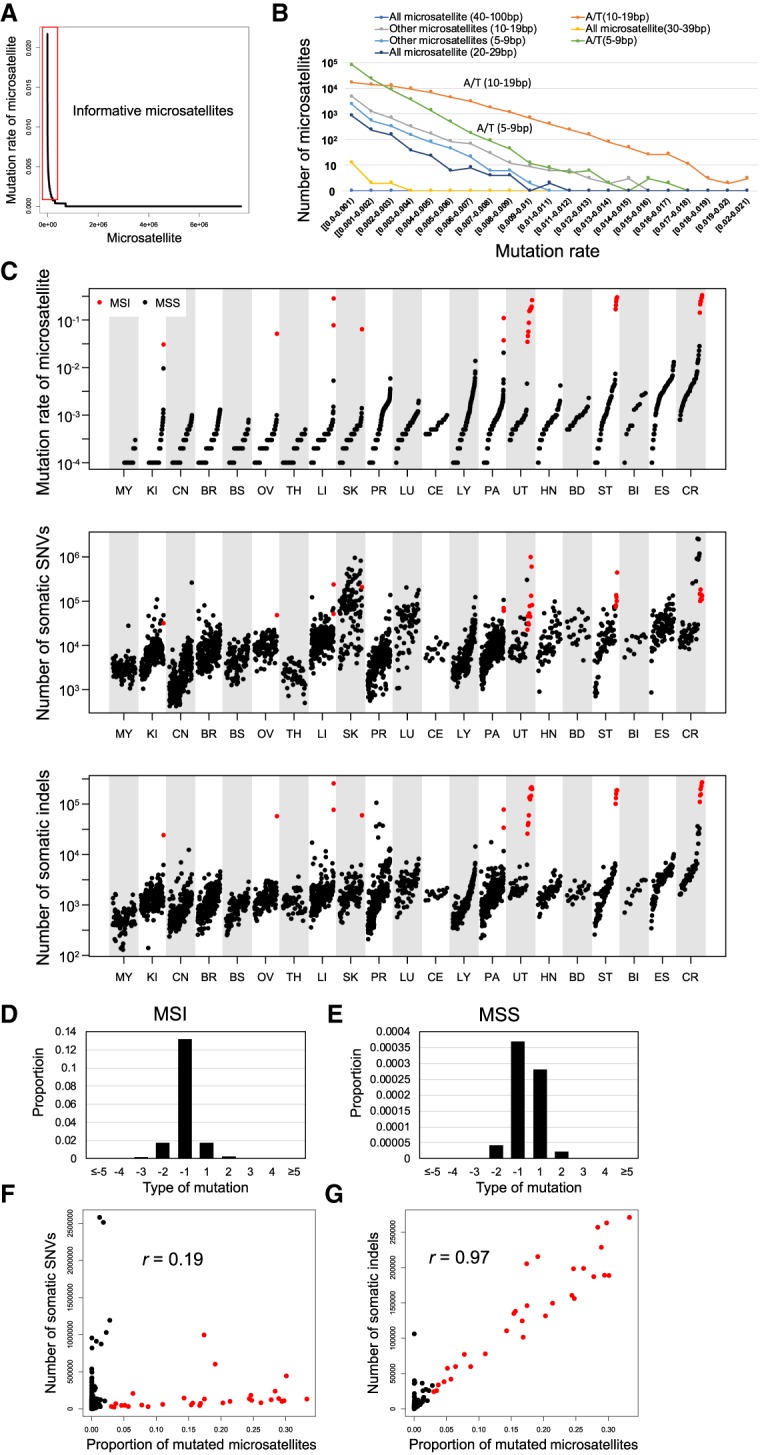
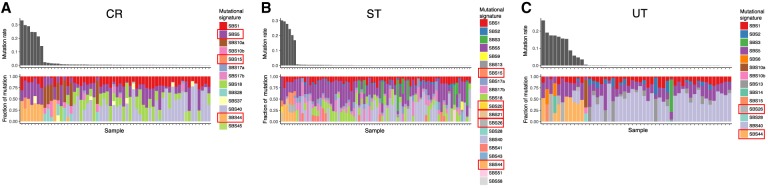
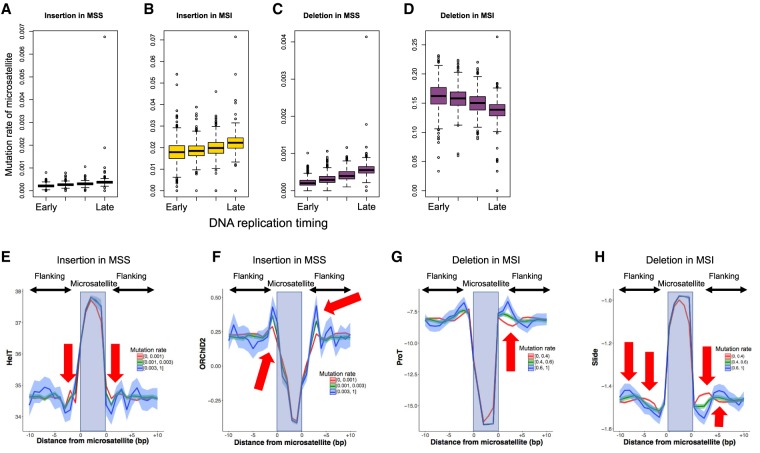
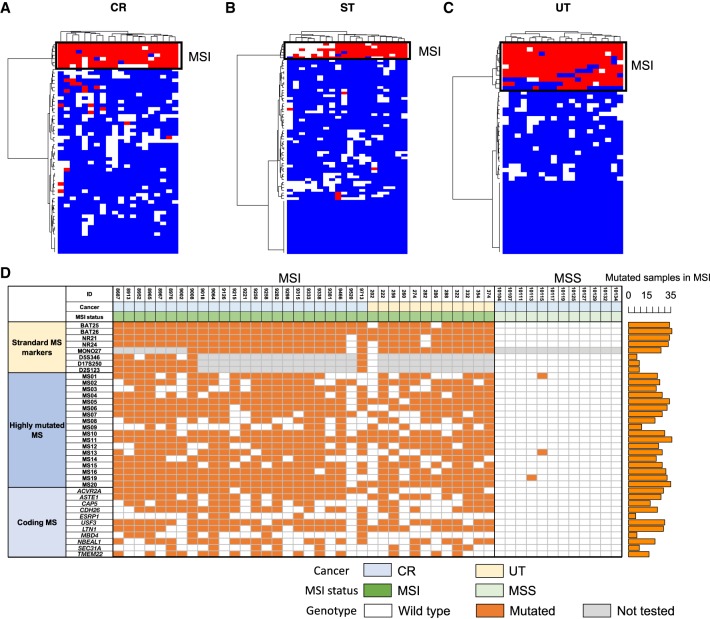
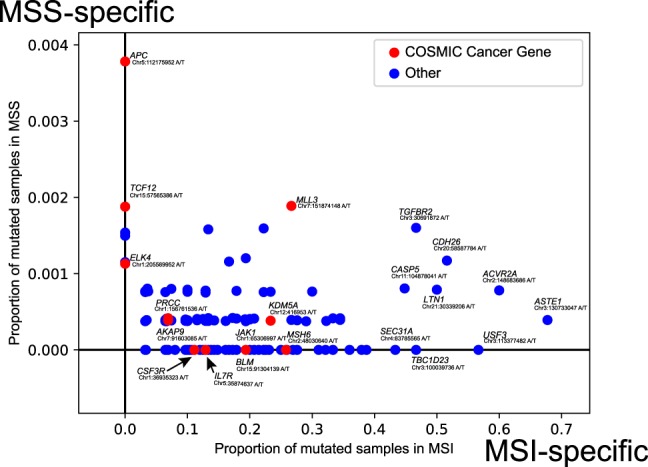
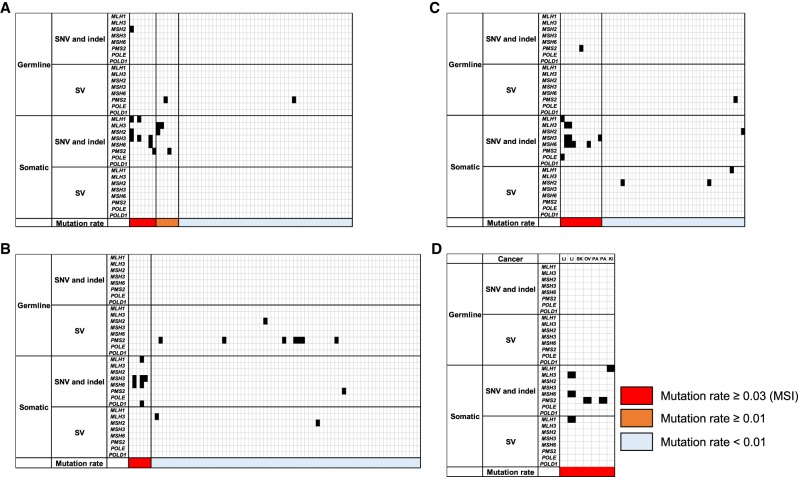
Microsatellites are repeats of 1- to 6-bp units, and approximately 10 million microsatellites have been identified across the human genome. Microsatellites are vulnerable to DNA mismatch errors and have thus been used to detect cancers with mismatch repair deficiency. To reveal the mutational landscape of microsatellite repeat regions at the genome level, we analyzed approximately 20.1 billion microsatellites in 2717 whole genomes of pan-cancer samples across 21 tissue types. First, we developed a new insertion and deletion caller (MIMcall) that takes into consideration the error patterns of different types of microsatellites. Among the 2717 pan-cancer samples, our analysis identified 31 samples, including colorectal, uterus, and stomach cancers, with a higher proportion of mutated microsatellite (≥0.03), which we defined as microsatellite instability (MSI) cancers of genome-wide level. Next, we found 20 highly mutated microsatellites that can be used to detect MSI cancers with high sensitivity. Third, we found that replication timing and DNA shape were significantly associated with mutation rates of microsatellites. Last, analysis of mutations in mismatch repair genes showed that somatic SNVs and short indels had larger functional impacts than germline mutations and structural variations. Our analysis provides a comprehensive picture of mutations in the microsatellite regions and reveals possible causes of mutations, as well as provides a useful marker set for MSI detection.
微卫星是1至6个碱基对单位的重复序列,在人类基因组中已鉴定出约1000万个微卫星。微卫星易受DNA错配错误影响,因此已被用于检测错配修复缺陷的癌症。为了在基因组水平上揭示微卫星重复区域的突变图谱,我们分析了21种组织类型的2717个泛癌样本全基因组中的约201亿个微卫星。首先,我们开发了一种新的插入和缺失调用器(MIMcall),该调用器考虑了不同类型微卫星的错误模式。在2717个泛癌样本中,我们的分析鉴定出31个样本,包括结直肠癌、子宫癌和胃癌,其微卫星突变比例较高(≥0.03),我们将其定义为全基因组水平的微卫星不稳定(MSI)癌症。接下来,我们发现了20个高度突变的微卫星,可用于高灵敏度检测MSI癌症。第三,我们发现复制时间和DNA形状与微卫星的突变率显著相关。最后,对错配修复基因的突变分析表明,体细胞单核苷酸变异和短插入缺失比对种系突变和结构变异具有更大的功能影响。我们的分析提供了微卫星区域突变的全面图景,揭示了突变的可能原因,并为MSI检测提供了一组有用的标记。