Nature. 2020 Feb;578(7793):82-93. doi: 10.1038/s41586-020-1969-6. Epub 2020 Feb 5.
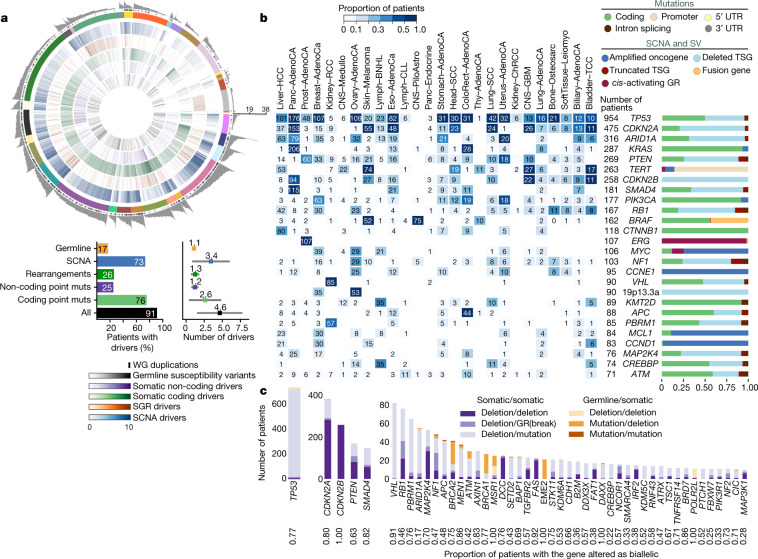
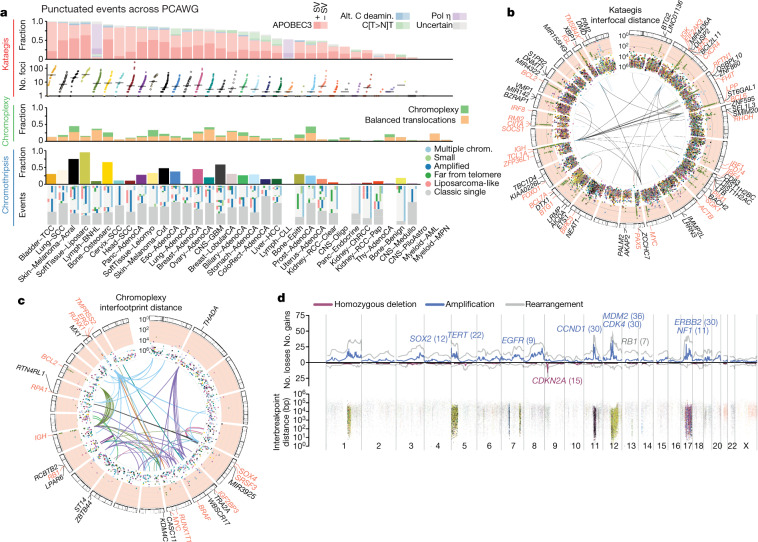
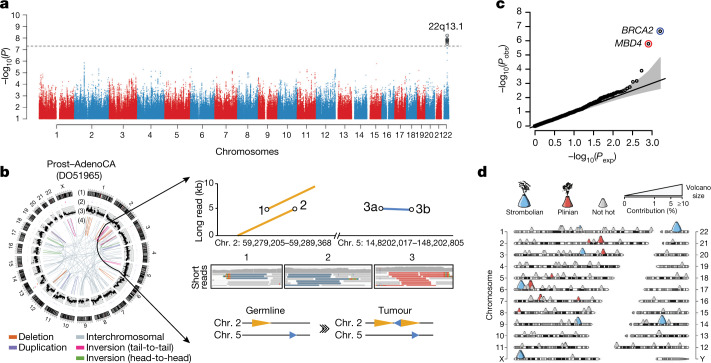
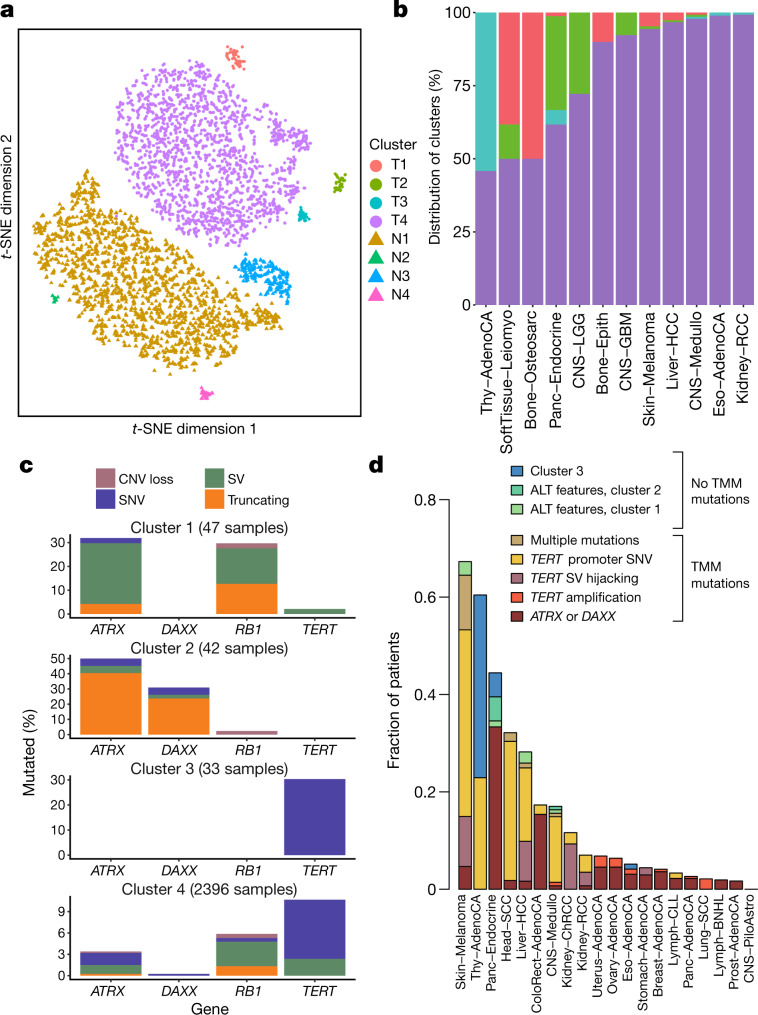
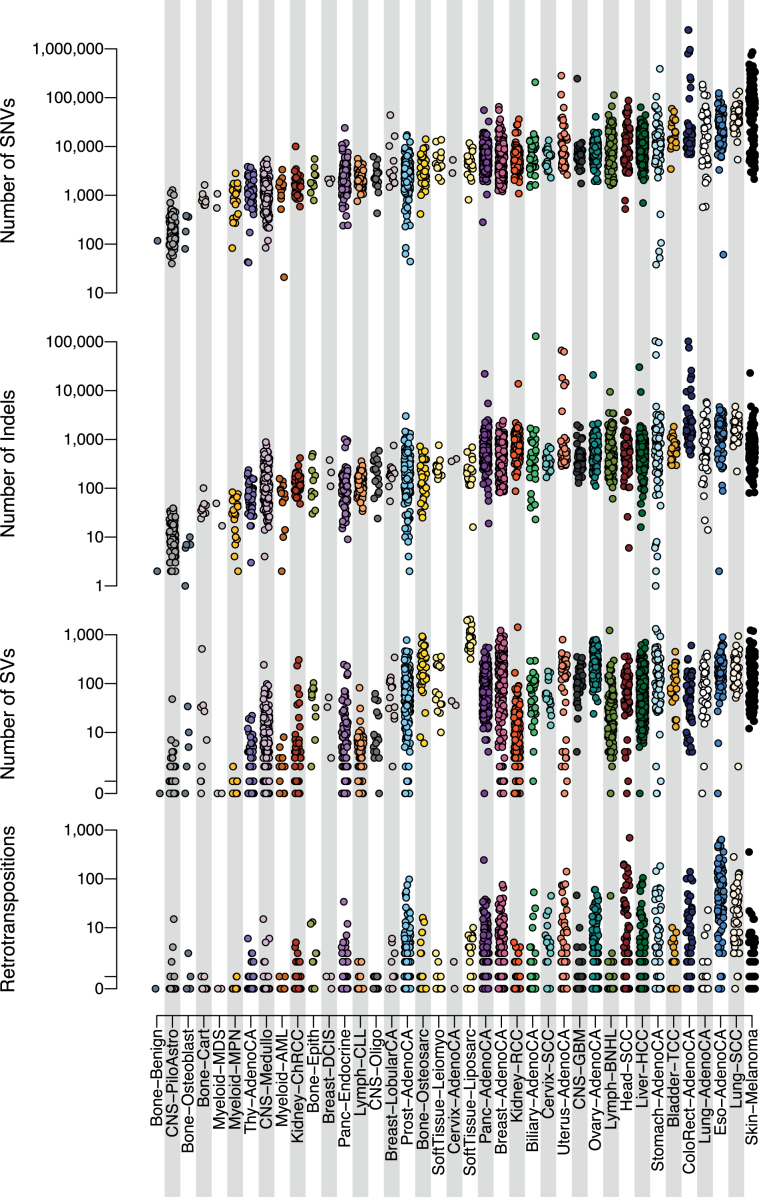
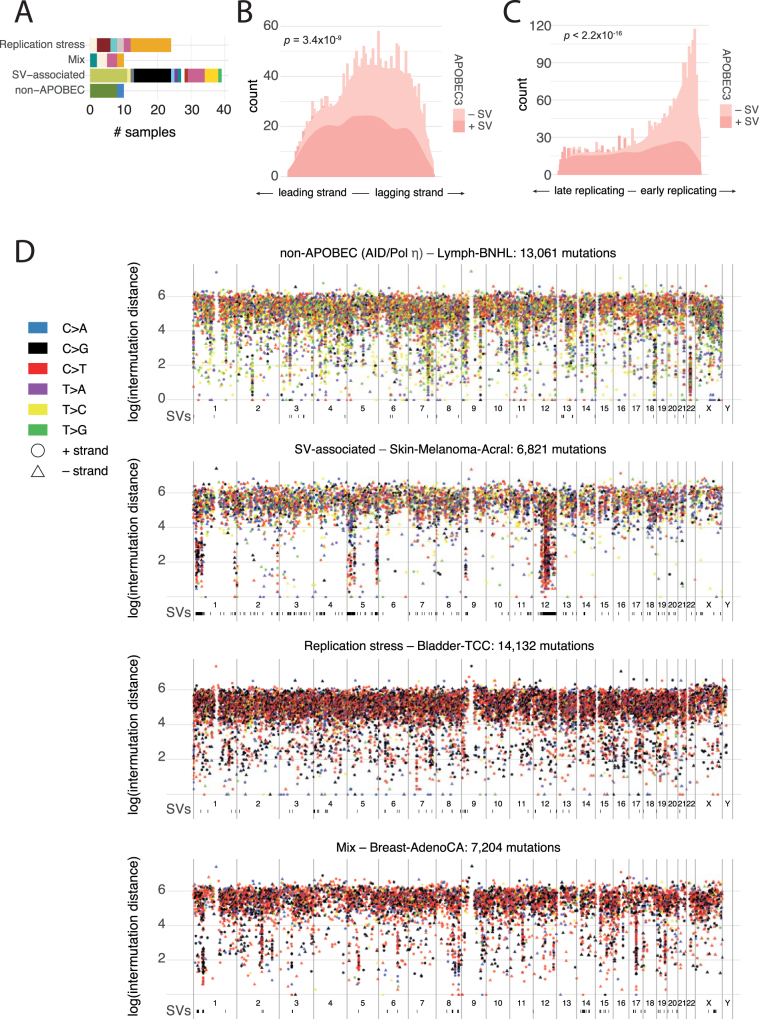
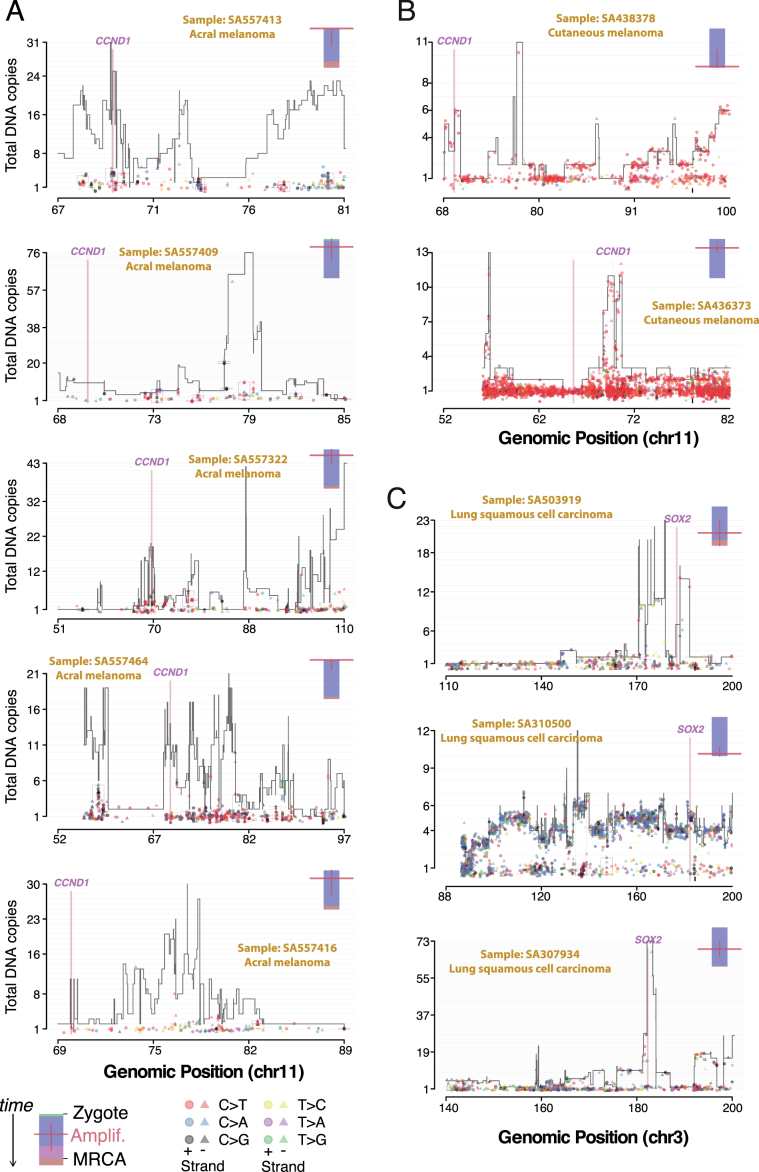
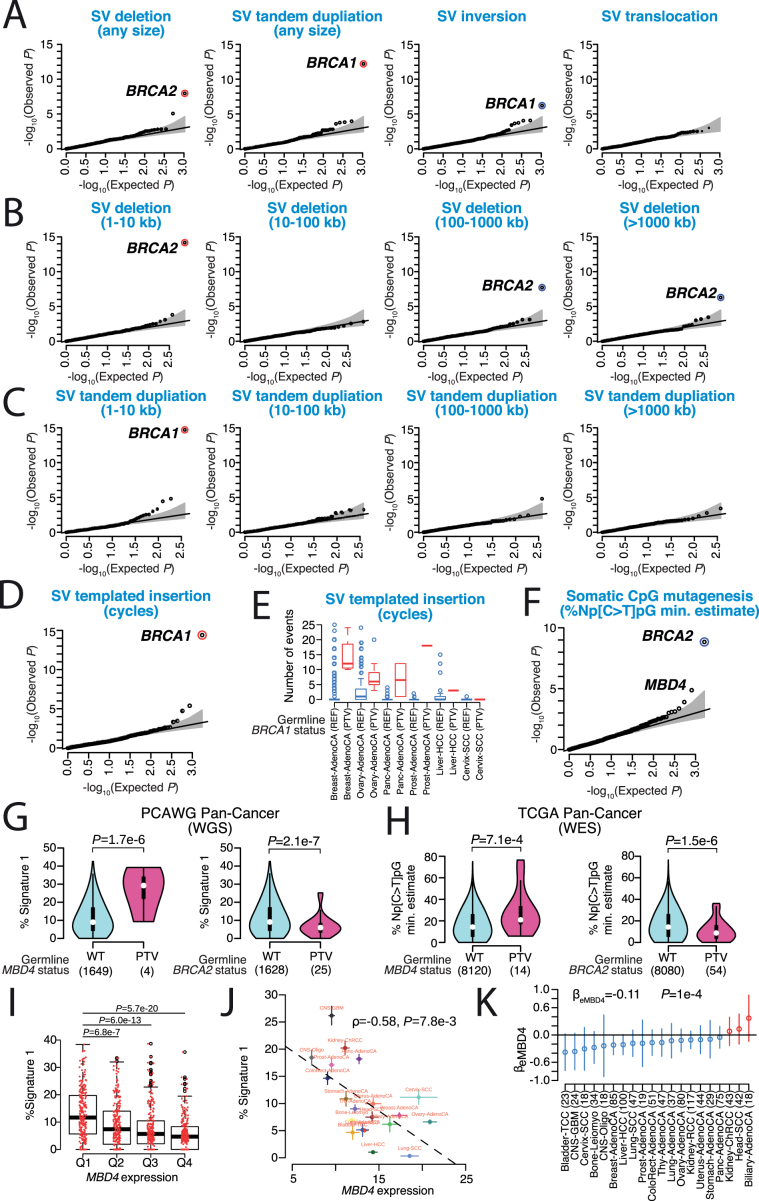
Cancer is driven by genetic change, and the advent of massively parallel sequencing has enabled systematic documentation of this variation at the whole-genome scale. Here we report the integrative analysis of 2,658 whole-cancer genomes and their matching normal tissues across 38 tumour types from the Pan-Cancer Analysis of Whole Genomes (PCAWG) Consortium of the International Cancer Genome Consortium (ICGC) and The Cancer Genome Atlas (TCGA). We describe the generation of the PCAWG resource, facilitated by international data sharing using compute clouds. On average, cancer genomes contained 4-5 driver mutations when combining coding and non-coding genomic elements; however, in around 5% of cases no drivers were identified, suggesting that cancer driver discovery is not yet complete. Chromothripsis, in which many clustered structural variants arise in a single catastrophic event, is frequently an early event in tumour evolution; in acral melanoma, for example, these events precede most somatic point mutations and affect several cancer-associated genes simultaneously. Cancers with abnormal telomere maintenance often originate from tissues with low replicative activity and show several mechanisms of preventing telomere attrition to critical levels. Common and rare germline variants affect patterns of somatic mutation, including point mutations, structural variants and somatic retrotransposition. A collection of papers from the PCAWG Consortium describes non-coding mutations that drive cancer beyond those in the TERT promoter; identifies new signatures of mutational processes that cause base substitutions, small insertions and deletions and structural variation; analyses timings and patterns of tumour evolution; describes the diverse transcriptional consequences of somatic mutation on splicing, expression levels, fusion genes and promoter activity; and evaluates a range of more-specialized features of cancer genomes.
癌症是由遗传变化驱动的,而大规模并行测序的出现使得能够在全基因组范围内系统地记录这种变异。在这里,我们报告了 38 种肿瘤类型的 2658 个全癌基因组及其匹配的正常组织的综合分析结果,这些肿瘤来自癌症基因组图谱(TCGA)和国际癌症基因组联盟(ICGC)的全基因组泛癌症分析(PCAWG)联盟。我们描述了 PCAWG 资源的生成,这得益于使用计算云进行的国际数据共享。平均而言,当将编码和非编码基因组元件结合起来时,癌症基因组包含 4-5 个驱动突变;然而,在大约 5%的情况下,没有发现驱动突变,这表明癌症驱动突变的发现尚未完成。染色体碎裂,其中许多聚集的结构变体在单个灾难性事件中产生,通常是肿瘤进化的早期事件;例如,在肢端黑色素瘤中,这些事件先于大多数体细胞点突变,并同时影响几个癌症相关基因。端粒维持异常的癌症通常起源于具有低复制活性的组织,并显示出几种防止端粒磨损到临界水平的机制。常见和罕见的种系变异影响体细胞突变模式,包括点突变、结构变异和体细胞逆转座。来自 PCAWG 联盟的一系列论文描述了除 TERT 启动子之外驱动癌症的非编码突变;确定了导致碱基替换、小插入和缺失以及结构变异的新突变过程特征;分析了肿瘤进化的时间和模式;描述了体细胞突变对剪接、表达水平、融合基因和启动子活性的不同转录后果;并评估了癌症基因组的一系列更专业的特征。