Hedayati Reza, Lakshmanan Sandhya
Novel Aerospace Materials group, Faculty of Aerospace Engineering, Delft University of Technology (TU Delft), Kluyverweg 1, 2629 HS Delft, The Netherlands.
Materials (Basel). 2020 Mar 23;13(6):1456. doi: 10.3390/ma13061456.
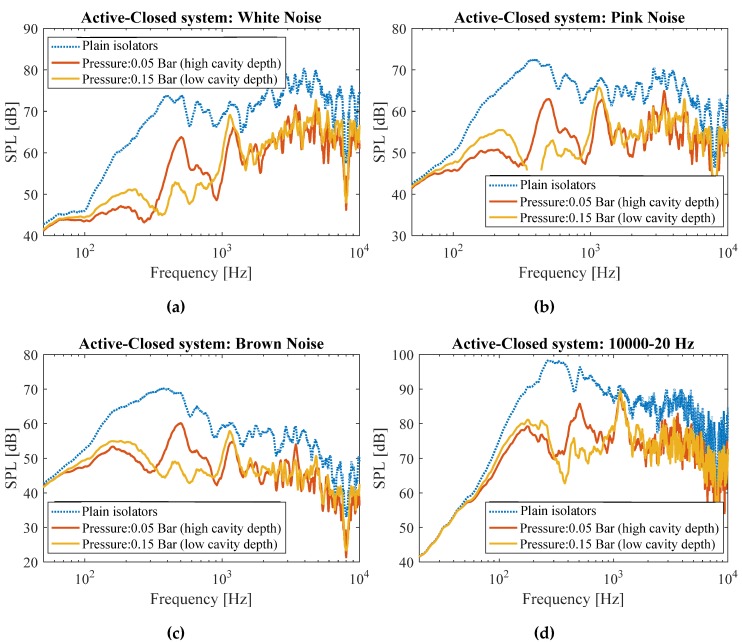
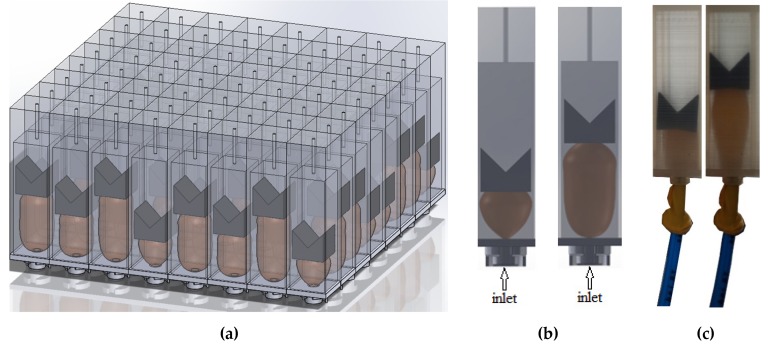
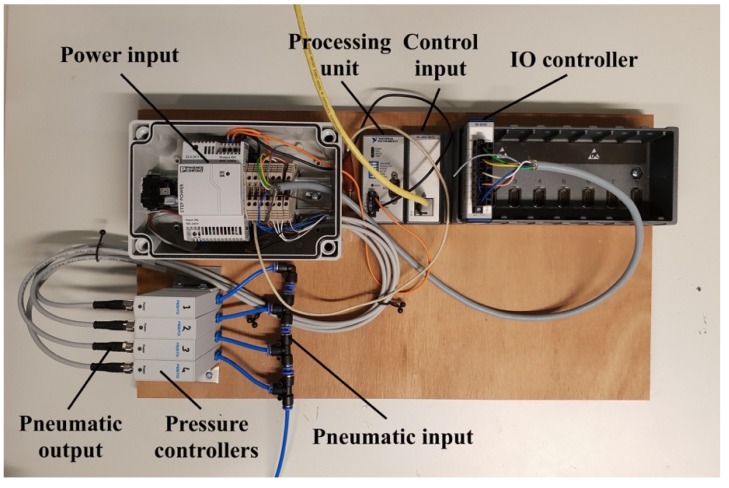
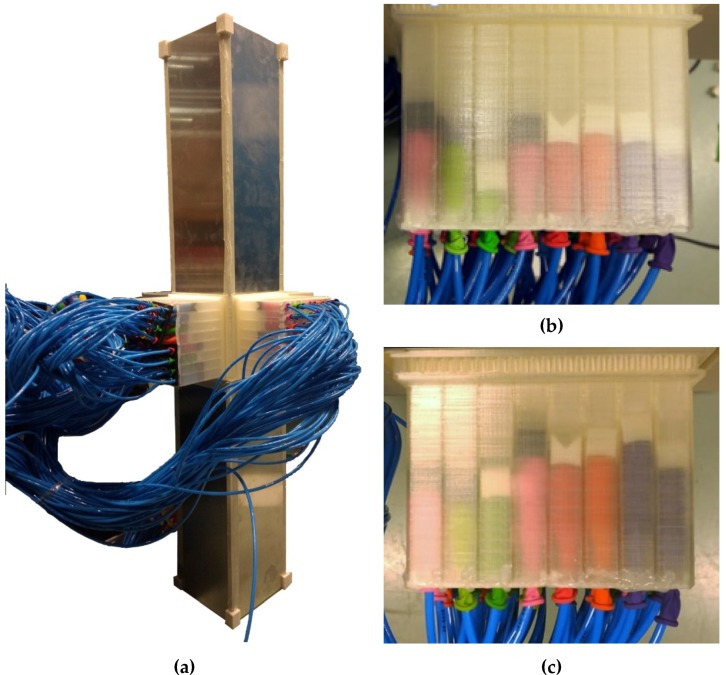
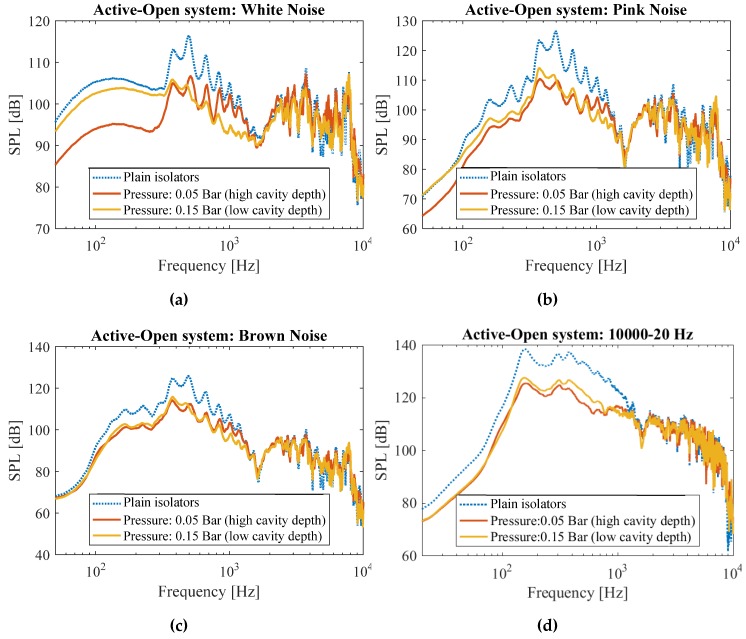
Metamaterials are periodic structures which offer physical properties not found in nature. Particularly, acoustic metamaterials can manipulate sound and elastic waves both spatially and spectrally in unpreceded ways. Acoustic metamaterials can generate arbitrary acoustic bandgaps by scattering sound waves, which is a superior property for insulation properties. In this study, one dimension of the resonators (depth of cavity) was altered by means of a pneumatic actuation system. To this end, metamaterial slabs were additively manufactured and connected to a proportional pressure control unit. The noise reduction performance of active acoustic metamaterials in closed- and open-space configurations was measured in different control conditions. The pneumatic actuation system was used to vary the pressure behind pistons inside each cell of the metamaterial, and as a result to vary the cavity depth of each unit cell. Two pressures were considered, P = 0.05 bar, which led to higher depth of the cavities, and P = 0.15 bar, which resulted in lower depth of cavities. The results showed that by changing the pressure from P = 0.05 (high cavity depth) to P = 0.15 (low cavity depth), the acoustic bandgap can be shifted from a frequency band of 150-350 Hz to a frequency band of 300-600 Hz. The pneumatically-actuated acoustical metamaterial gave a peak attenuation of 20 dB (at 500 Hz) in the closed system and 15 dB (at 500 Hz) in the open system. A step forward would be to tune different unit cells of the metamaterial with different pressure levels (and therefore different cavity depths) in order to target a broader range of frequencies.
超材料是具有自然界中不存在的物理特性的周期性结构。特别地,声学超材料能够以前所未有的方式在空间和频谱上操控声音和弹性波。声学超材料可以通过散射声波产生任意的声学带隙,这对于隔音性能而言是一项卓越的特性。在本研究中,通过一个气动驱动系统改变谐振器的一个维度(腔体深度)。为此,采用增材制造方法制作超材料平板,并将其连接到一个比例压力控制单元。在不同的控制条件下,测量了有源声学超材料在封闭空间和开放空间配置中的降噪性能。气动驱动系统用于改变超材料每个单元内活塞后面的压力,从而改变每个单元胞的腔体深度。考虑了两种压力,P = 0.05 巴,这会导致腔体深度更大;以及 P = 0.15 巴,这会使腔体深度更小。结果表明,通过将压力从 P = 0.05(高腔体深度)改变为 P = 0.15(低腔体深度),声学带隙可以从 150 - 350 赫兹的频带转移到 300 - 600 赫兹的频带。气动驱动的声学超材料在封闭系统中(500 赫兹时)给出了 20 分贝的峰值衰减,在开放系统中(500 赫兹时)给出了 15 分贝的峰值衰减。向前迈进的一步将是以不同的压力水平(从而不同的腔体深度)调节超材料的不同单元胞,以便针对更宽的频率范围。