Department of Biology, College of Staten Island, City University of New York, Staten Island, New York, United States of America.
PhD Program in Biology, The Graduate Center, City University of New York, New York, New York, United States of America.
PLoS One. 2020 Mar 25;15(3):e0230572. doi: 10.1371/journal.pone.0230572. eCollection 2020.
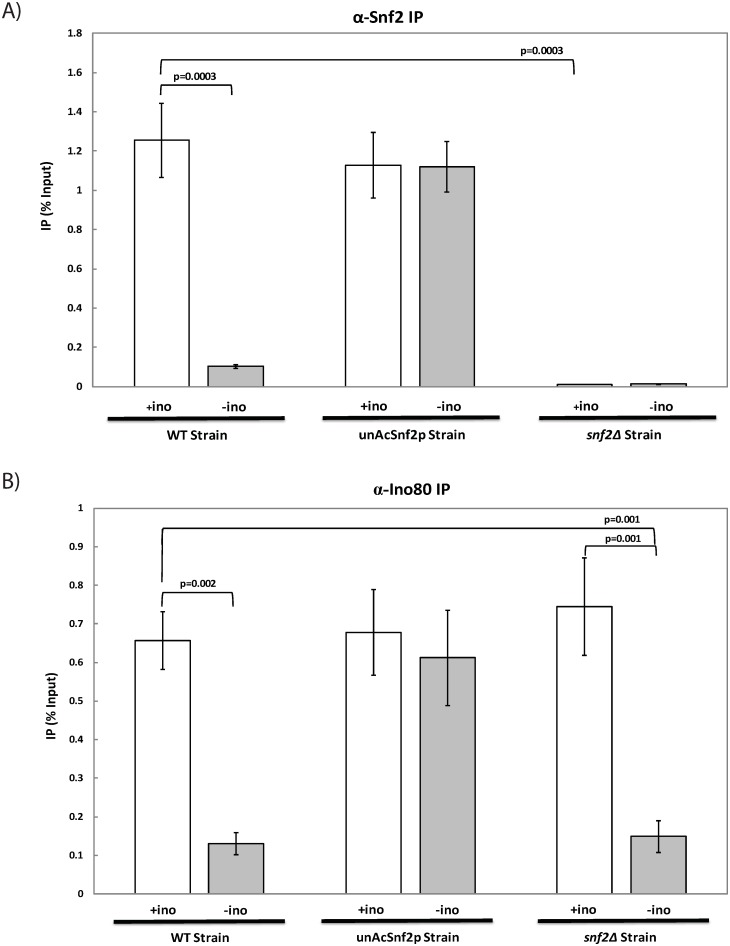
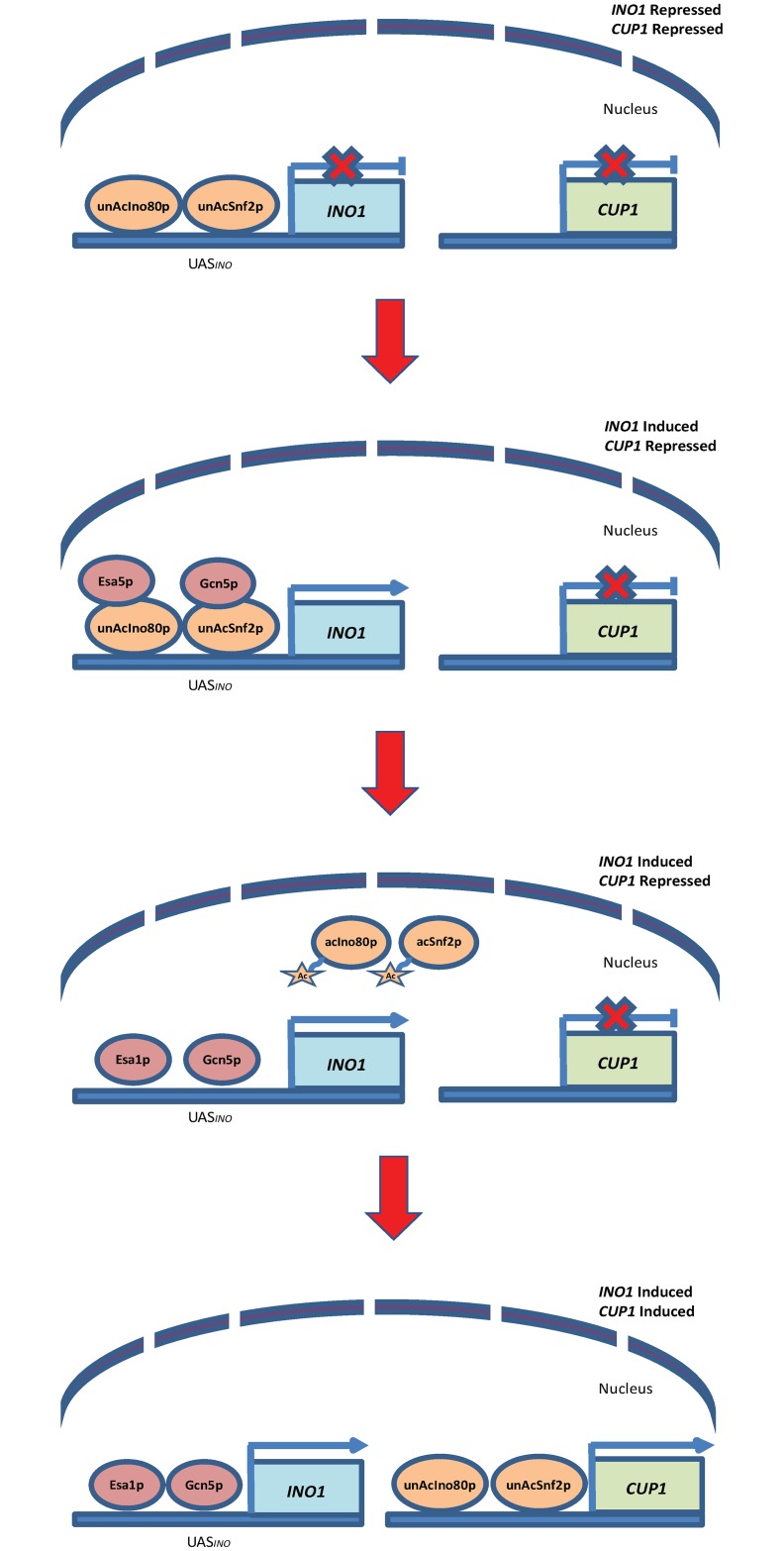
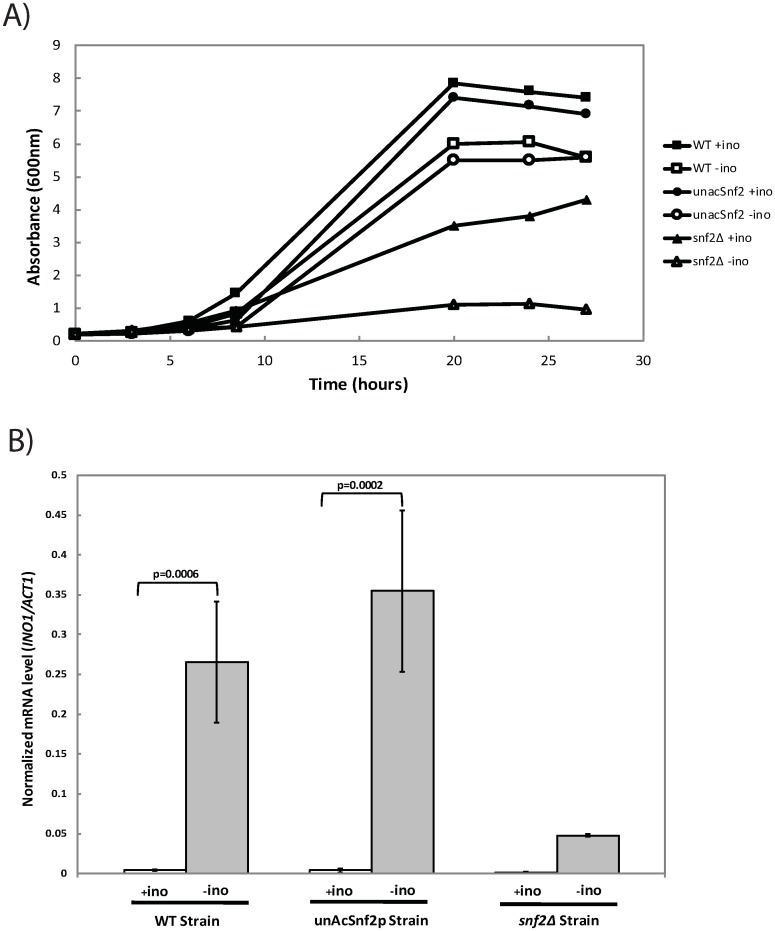
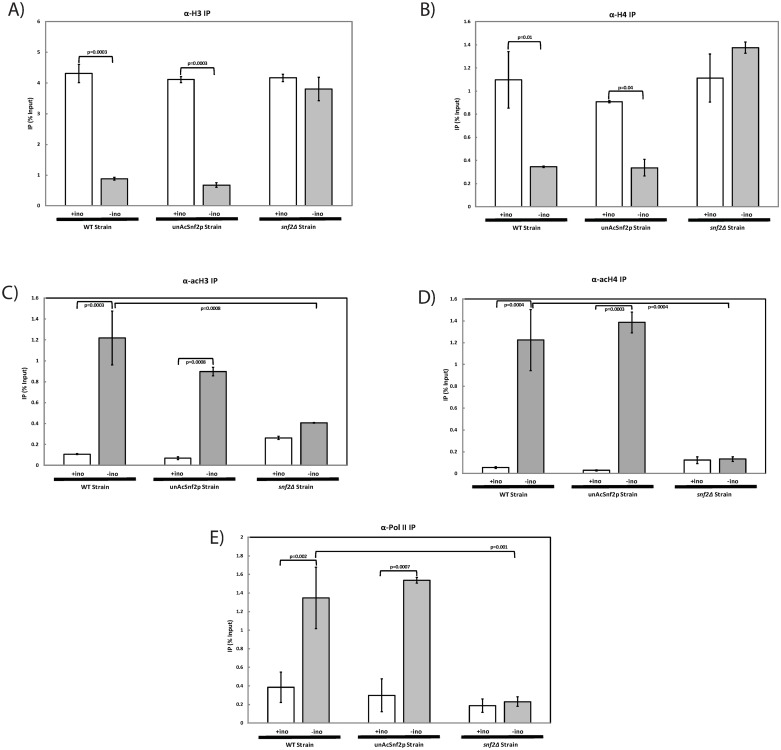
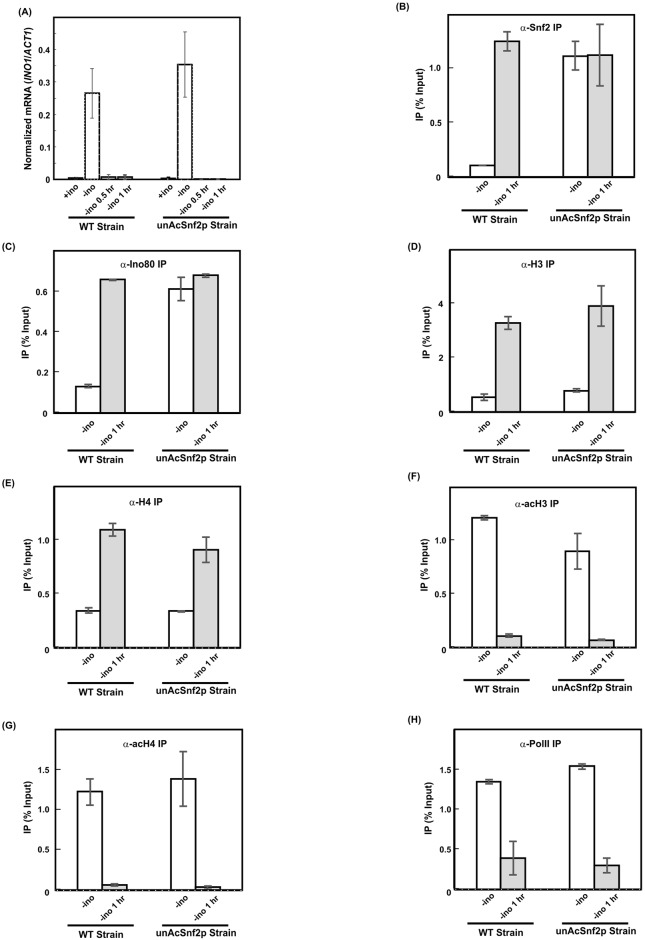
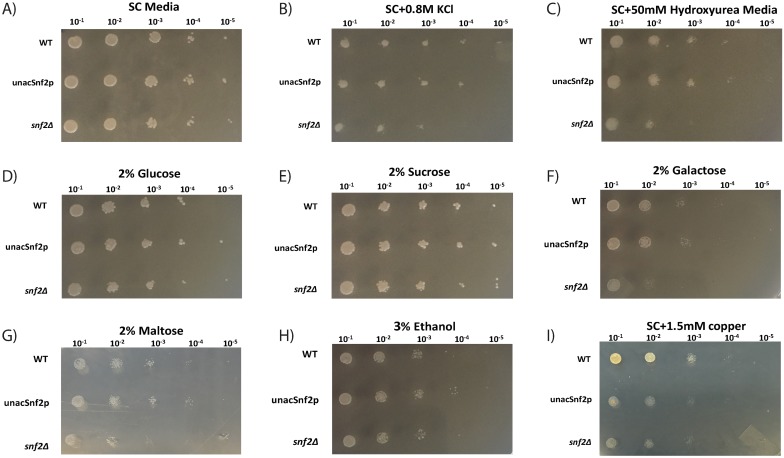
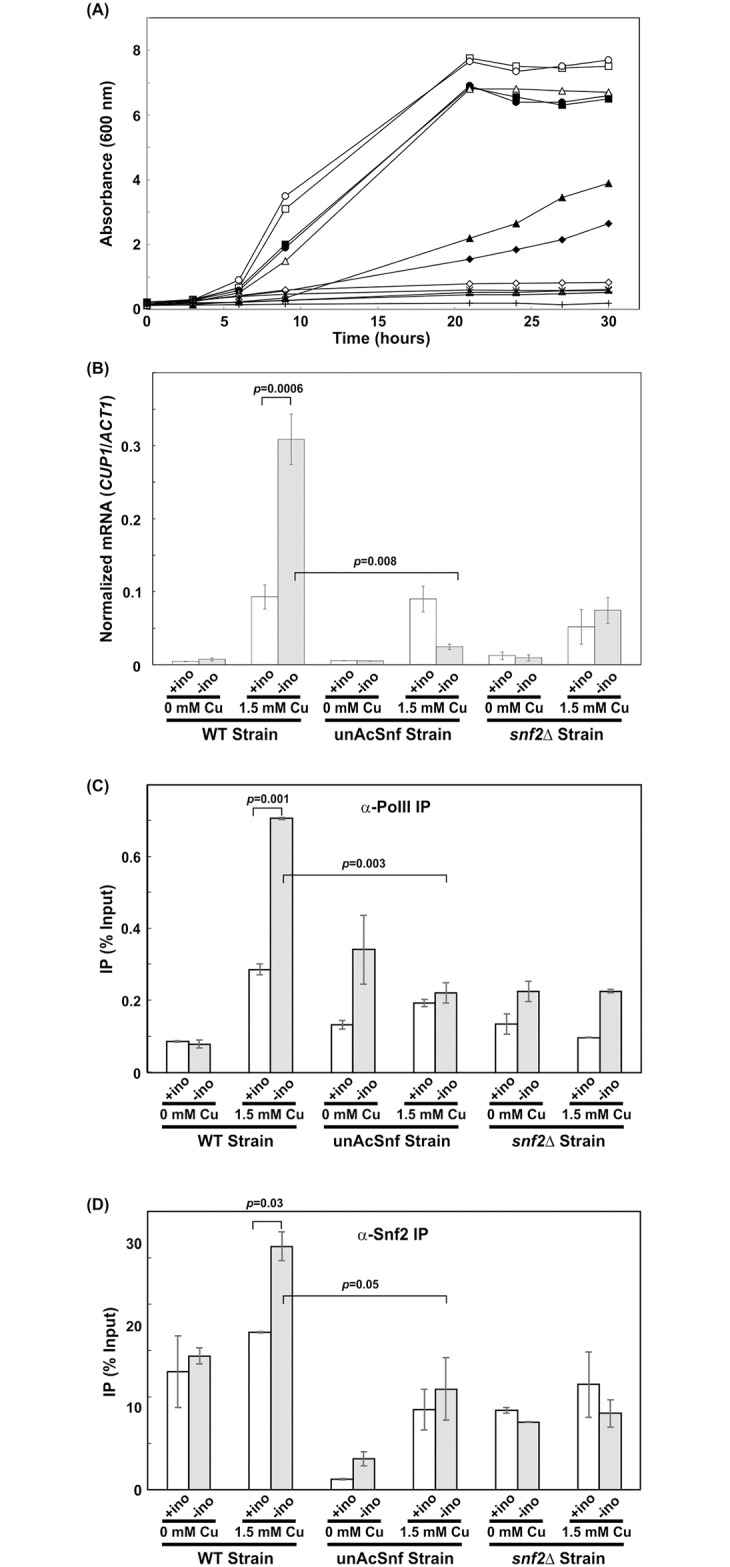
Chromatin structure plays a decisive role in gene regulation through the actions of transcriptional activators, coactivators, and epigenetic machinery. These trans-acting factors contribute to gene expression through their interactions with chromatin structure. In yeast INO1 activation, transcriptional activators and coactivators have been defined through intense study but the mechanistic links within these trans-acting factors and their functional implications are not yet fully understood. In this study, we examined the crosstalk within transcriptional coactivators with regard to the implications of Snf2p acetylation during INO1 activation. Through various biochemical analysis, we demonstrated that both Snf2p and Ino80p chromatin remodelers accumulate at the INO1 promoter in the absence of Snf2p acetylation during induction. Furthermore, nucleosome density and histone acetylation patterns remained unaffected by Snf2p acetylation status. We also showed that cells experience increased sensitivity to copper toxicity when remodelers accumulate at the INO1 promoter due to the decreased CUP1 expression. Therefore, our data provide evidence for crosstalk within transcriptional co-activators during INO1 activation. In light of these findings, we propose a model in which acetylation-driven chromatin remodeler recycling allows for efficient regulation of genes that are dependent upon limited co-activators.
染色质结构通过转录激活因子、共激活因子和表观遗传机制的作用在基因调控中起着决定性作用。这些反式作用因子通过与染色质结构的相互作用来促进基因表达。在酵母 INO1 的激活中,通过深入研究已经定义了转录激活因子和共激活因子,但这些反式作用因子内部的机制联系及其功能意义尚不完全清楚。在这项研究中,我们研究了转录共激活因子之间的串扰,以及 INO1 激活过程中 Snf2p 乙酰化的影响。通过各种生化分析,我们证明了在诱导过程中,即使 Snf2p 未发生乙酰化,Snf2p 和 Ino80p 染色质重塑酶也会在 INO1 启动子处积累。此外,核小体密度和组蛋白乙酰化模式不受 Snf2p 乙酰化状态的影响。我们还表明,由于 CUP1 表达的减少,当重塑酶在 INO1 启动子处积累时,细胞对铜毒性的敏感性会增加。因此,我们的数据为 INO1 激活过程中转录共激活因子之间的串扰提供了证据。有鉴于此,我们提出了一个模型,即乙酰化驱动的染色质重塑酶循环利用允许对依赖有限共激活因子的基因进行有效的调控。