Liu Qing, Xia Hongwei, Zhou Sheng, Tang Qiulin, Zhou Jitao, Ren Min, Bi Feng
Department of Abdominal Oncology, Cancer Center, West China Hospital, Sichuan University, Chengdu 610041, People's Republic of China.
Laboratory of Molecular Targeted Therapy in Oncology, West China Hospital, Sichuan University, Chengdu 610041, People's Republic of China.
Onco Targets Ther. 2020 Mar 9;13:2057-2066. doi: 10.2147/OTT.S237693. eCollection 2020.
Statins, which are used to lower blood cholesterol levels by inhibiting HMG-CoA reductase, have shown anticancer effects in many cancer cells. However, the role of statins in gastric cancer remains unclear. This study aims to investigate whether the statins could antagonize progression of gastric cancer cells and tried to find the molecule mechanism.
Effects of simvastatin on the morphology, proliferation, migration, apoptosis, and invasion of gastric cancer cells were detected and compared. Western blotting, cell viability assay, fluorescence, and transfection were employed to study the molecule mechanism of the effects and the interaction between YAP and β-catenin signaling.
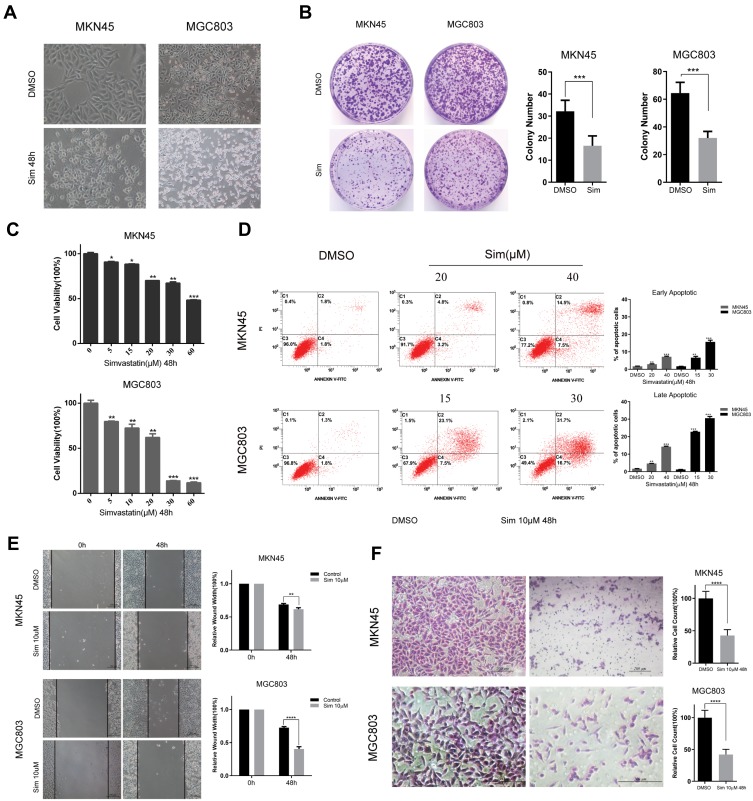
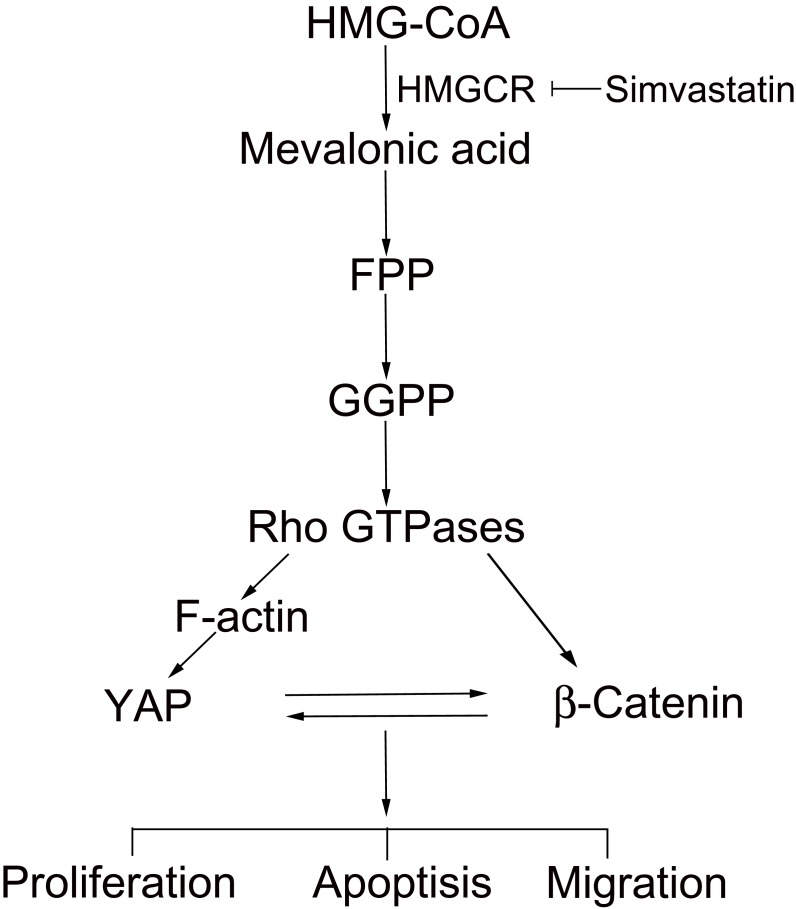
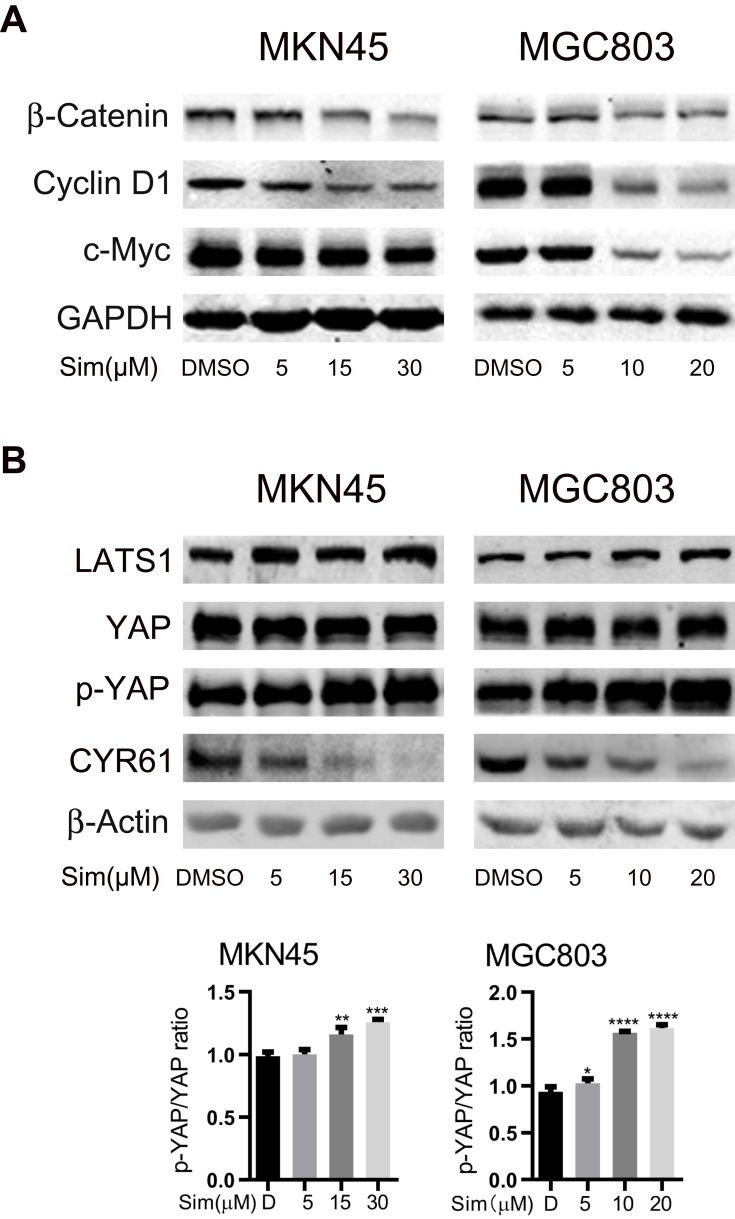
Simvastatin could inhibit proliferation, migration and invasion, and promote the apoptosis in gastric cancer cells. Mechanistic studies showed that simvastatin treatment could inhibit the expression of β-catenin and the activity of YAP and the downstream targets of YAP and β-catenin in gastric cancer cells. Moreover, we found that YAP and β-catenin could form a positive feedback loop in gastric cancer cells. Further investigation revealed that simvastatin mainly acted through by inhibiting the activity of RhoA to inhibit YAP and β-catenin, and the geranylgeranyl pyrophosphate pathway mediated this regulation.
Statins represent a promising therapeutic option for gastric cancer by simultaneously targeting YAP and β-catenin signaling.
他汀类药物通过抑制HMG-CoA还原酶来降低血液胆固醇水平,已在许多癌细胞中显示出抗癌作用。然而,他汀类药物在胃癌中的作用仍不清楚。本研究旨在探讨他汀类药物是否能拮抗胃癌细胞的进展,并试图找出其分子机制。
检测并比较辛伐他汀对胃癌细胞形态、增殖、迁移、凋亡和侵袭的影响。采用蛋白质免疫印迹法、细胞活力测定、荧光和转染技术研究其作用的分子机制以及YAP与β-连环蛋白信号之间的相互作用。
辛伐他汀可抑制胃癌细胞的增殖、迁移和侵袭,并促进其凋亡。机制研究表明,辛伐他汀处理可抑制胃癌细胞中β-连环蛋白的表达、YAP的活性以及YAP和β-连环蛋白的下游靶点。此外,我们发现YAP和β-连环蛋白在胃癌细胞中可形成正反馈环。进一步研究表明,辛伐他汀主要通过抑制RhoA的活性来抑制YAP和β-连环蛋白,并且香叶基香叶基焦磷酸途径介导了这种调节。
他汀类药物通过同时靶向YAP和β-连环蛋白信号通路,为胃癌提供了一种有前景的治疗选择。