Gatt Justine M, Alexander Rebecca, Emond Alan, Foster Kim, Hadfield Kristin, Mason-Jones Amanda, Reid Steve, Theron Linda, Ungar Michael, Wouldes Trecia A, Wu Qiaobing
Neuroscience Research Australia, Randwick, NSW, Australia.
School of Psychology, University of New South Wales, Sydney, NSW, Australia.
Front Psychiatry. 2020 Mar 9;10:997. doi: 10.3389/fpsyt.2019.00997. eCollection 2019.
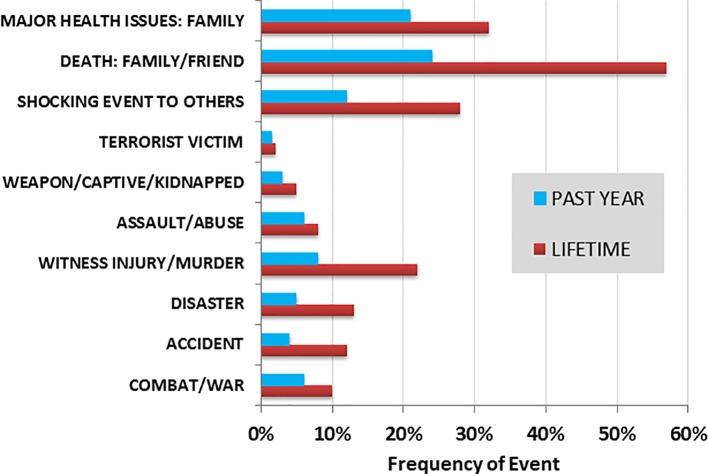
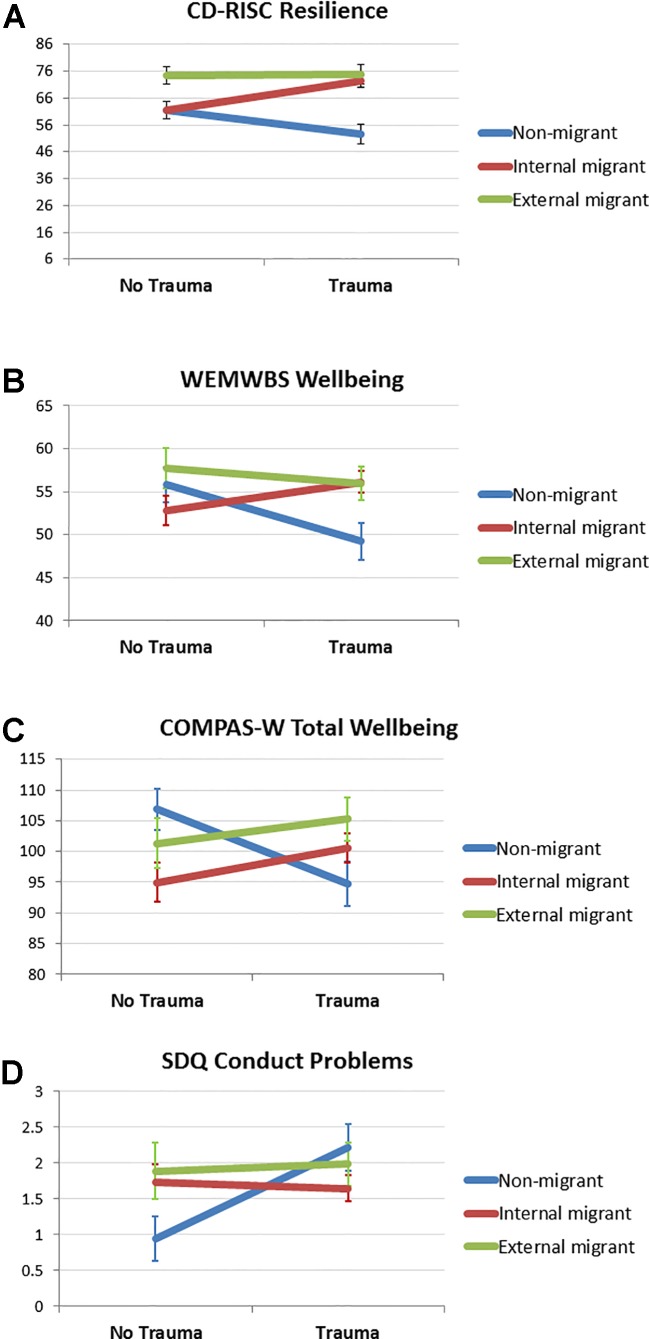
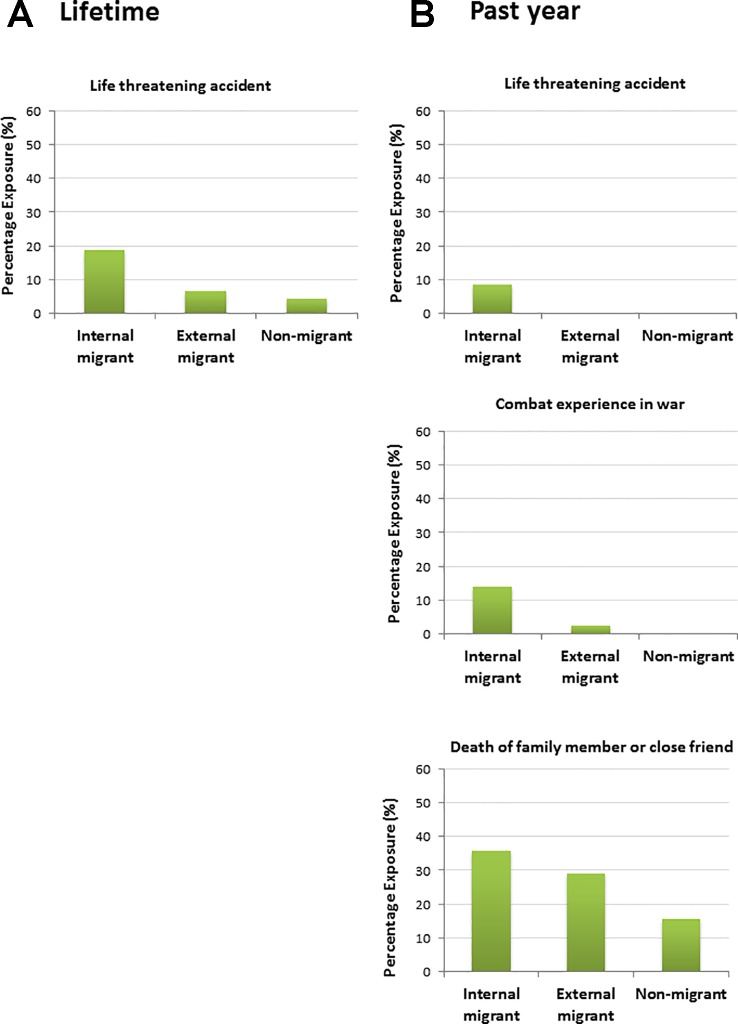
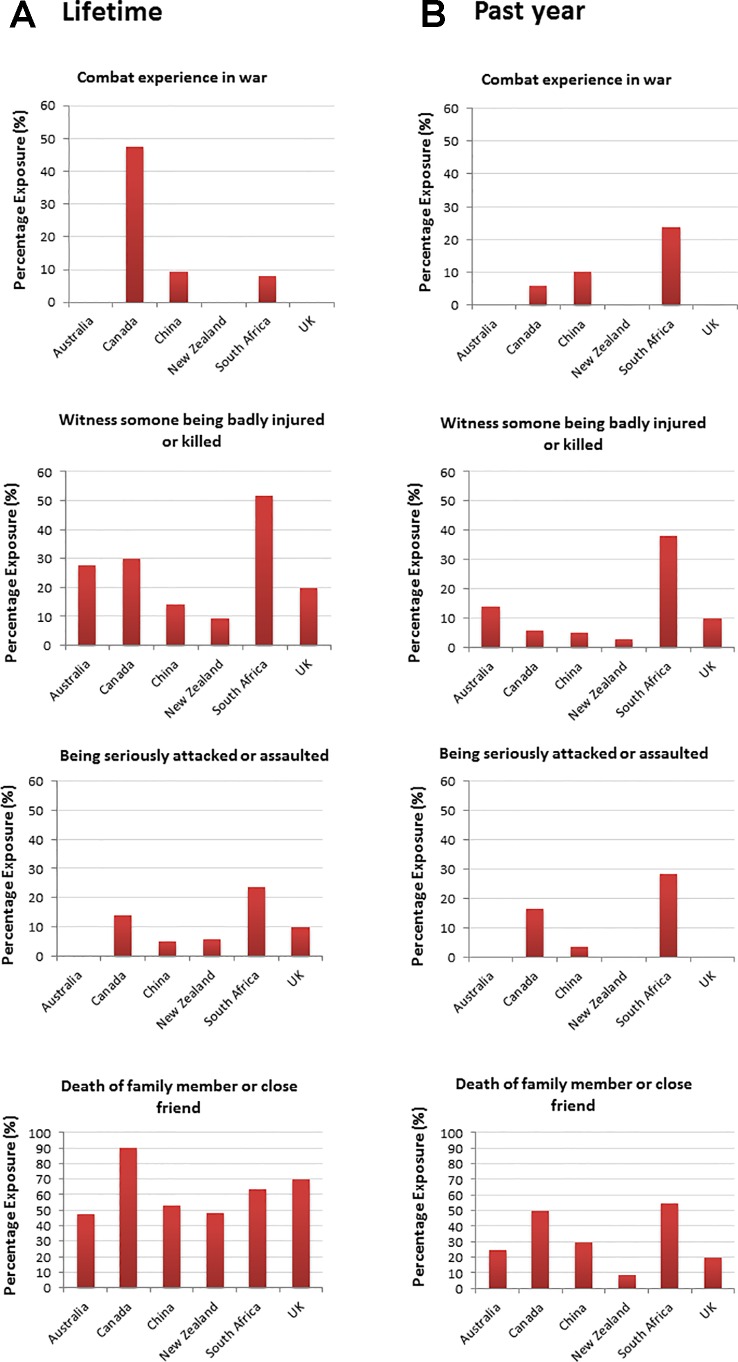
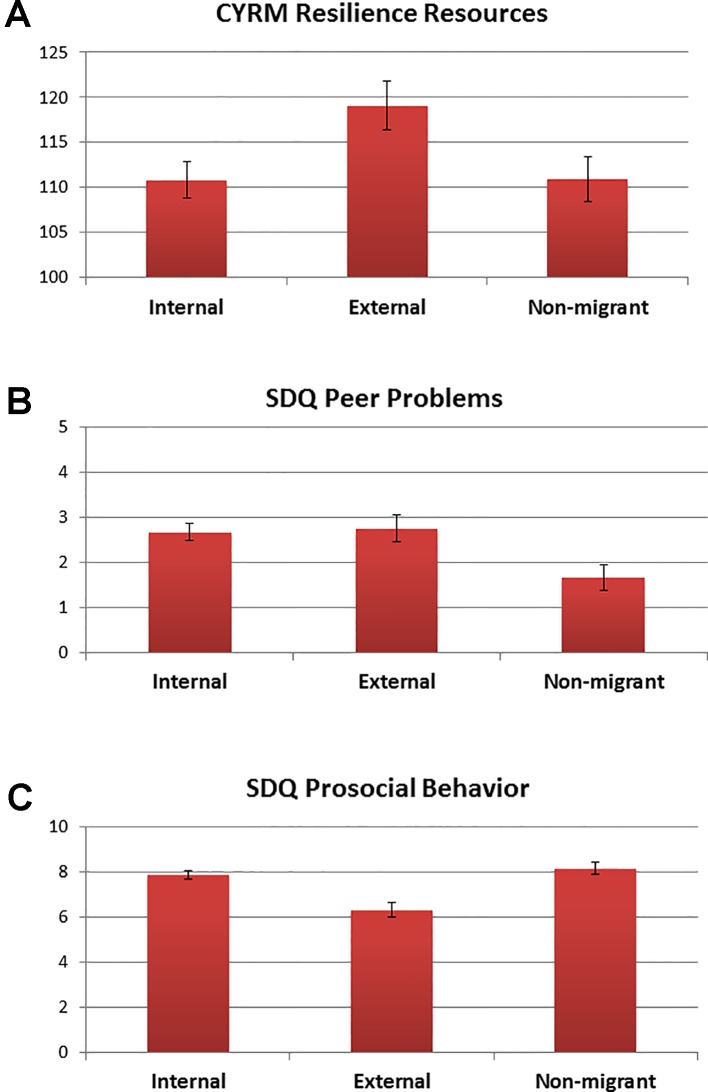
Resilience is a dynamic process of positive adaptation to significant adversity. While there has been substantial focus on risks and negative outcomes associated with youth migrancy, there is limited evidence of the relationship between the adversity of migration, and resilience, wellbeing, and positive mental health in adolescents. This international study aimed to explore the differences in resilience, wellbeing, and mental health behaviors in migrant and non-migrant adolescents tested across six countries (Australia, New Zealand, UK, China, South Africa, and Canada) with varying levels of trauma exposure. The study was a cross-sectional survey design with a convenience sample of 194 10-17 year old migrants and non-migrants. The migrant sample included both "internal" migrants (change of residence within a country) and "external" migrants (change of residence across national borders) for comparison. Across the sites, migrants reported a higher mean number of traumatic events for the past year than non-migrants, with internal migrants reporting more events than external migrants overall. South African adolescents reported a higher mean number of traumatic events for the past year than all other sites. External migrants reported higher resilience scores yet reduced prosocial behaviors relative to internal migrants and non-migrants, whereas both internal and external migrants reported higher peer problems than non-migrants. When considering the interacting effects of trauma, the presence or absence of trauma did not appear to impact migrant scores in terms of resilience, wellbeing, or conduct problems. In comparison, trauma-exposed non-migrants showed detriments relative to trauma-exposed migrant peers for all of these measures. In conclusion, the survey tool was found to be reliable and acceptable for use in international studies of different samples of adolescent migrants. Overall, migrant adolescents showed greater resilience resources than non-migrants and, although the migrants experienced more traumatic events, the impact of trauma on mental health outcomes was greater in the non-migrants. There is a need for further research with larger prospective sample sizes to investigate how levels of resilience and wellbeing vary over time and across countries, and the ways resilience can be promoted in adolescents exposed to trauma, regardless of migrancy status.
复原力是对重大逆境进行积极适应的动态过程。虽然人们大量关注与青少年移民相关的风险和负面结果,但关于移民逆境与青少年的复原力、幸福感和积极心理健康之间关系的证据有限。这项国际研究旨在探讨在六个国家(澳大利亚、新西兰、英国、中国、南非和加拿大)对受不同程度创伤影响的移民和非移民青少年进行测试时,他们在复原力、幸福感和心理健康行为方面的差异。该研究采用横断面调查设计,以194名10至17岁的移民和非移民作为便利样本。移民样本包括“国内”移民(在一个国家内改变居住地)和“国际”移民(跨国境改变居住地)以便进行比较。在所有调查地点,移民报告的过去一年创伤事件平均数量高于非移民,总体上国内移民报告的事件比国际移民更多。南非青少年报告的过去一年创伤事件平均数量高于所有其他地点。与国内移民和非移民相比,国际移民报告的复原力得分更高,但亲社会行为减少,而国内和国际移民报告的同伴问题都比非移民更多。在考虑创伤的交互作用时,创伤的存在与否似乎并未在复原力、幸福感或行为问题方面影响移民得分。相比之下,在所有这些指标上,经历创伤的非移民相对于经历创伤的移民同伴表现出不利。总之,该调查工具被认为在对不同样本的青少年移民进行国际研究时是可靠且可用的。总体而言,移民青少年比非移民表现出更强的复原力资源,尽管移民经历了更多创伤事件,但创伤对非移民心理健康结果的影响更大。需要进一步开展研究,采用更大规模的前瞻性样本,以调查复原力和幸福感水平如何随时间和国家而变化,以及如何在经历创伤的青少年中促进复原力,无论其移民身份如何。