Kozieł Monika, Potpara Tatjana S, Lip Gregory Y H
Liverpool Centre for Cardiovascular Science University of Liverpool and Liverpool Heart & Chest Hospital Liverpool UK.
Division of Medical Sciences in Zabrze Department of Cardiology Congenital Heart Diseases and Electrotherapy Medical University of Silesia Katowice Poland.
Res Pract Thromb Haemost. 2020 Mar 9;4(3):357-365. doi: 10.1002/rth2.12319. eCollection 2020 Mar.
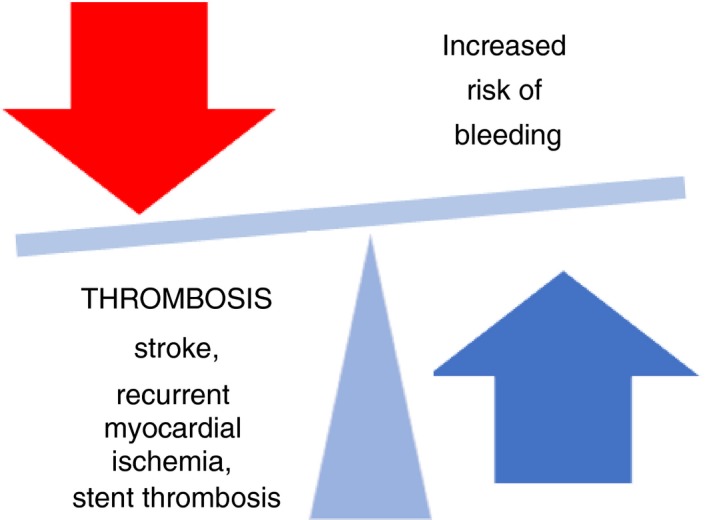
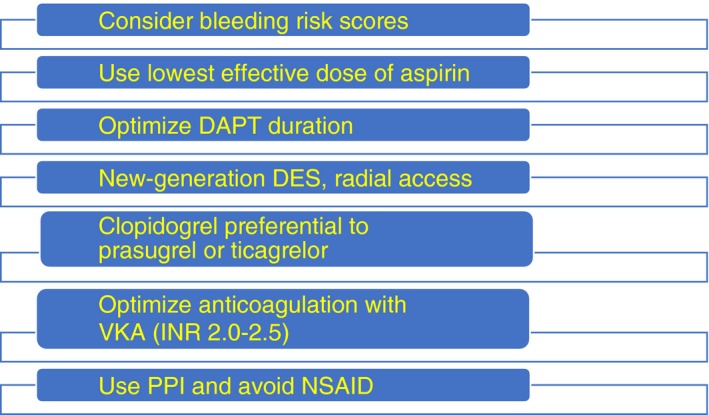
Patients with atrial fibrillation (AF) and acute coronary syndrome (ACS) are at high risk of stroke, recurrent coronary ischemic events, and cardiovascular mortality. The composition of antithrombotic therapy including an oral anticoagulant and antiplatelet drug(s) should be tailored according to the individual patient's risk profile, to reduce the bleeding risk and maintain antithrombotic effect. There is no single antithrombotic treatment regimen that would fit to all patients with AF and ACS. However, available data promote the use of full-dose direct oral anticoagulants (DOACs) (dabigatran 150 mg twice daily or apixaban 5 mg twice daily) or rivaroxaban 15 mg once daily in patients with AF and ACS or percutaneous coronary intervention (PCI). For many patients, a DOAC plus P2Y inhibitor early after ACS and/or PCI would be optimal, whereas a longer course of triple therapy should be used in patients at high thrombotic risk.
心房颤动(AF)合并急性冠状动脉综合征(ACS)的患者发生卒中、复发性冠状动脉缺血事件及心血管死亡的风险很高。包括口服抗凝药和抗血小板药物在内的抗栓治疗方案应根据患者个体风险状况进行调整,以降低出血风险并维持抗栓效果。没有一种单一的抗栓治疗方案适用于所有AF合并ACS的患者。然而,现有数据支持在AF合并ACS或接受经皮冠状动脉介入治疗(PCI)的患者中使用全剂量直接口服抗凝药(DOACs)(达比加群150mg每日两次或阿哌沙班5mg每日两次)或利伐沙班15mg每日一次。对于许多患者,在ACS和/或PCI后早期使用DOAC加P2Y抑制剂是最佳选择,而对于血栓形成风险高的患者应采用更长疗程的三联疗法。