From the Cardiovascular Division, Department of Medicine, Brigham and Women's Hospital, Harvard Medical School, Boston, MA (R.P.M., P.L., D.L.B.).
Elucida Research LLC, Beverly, MA (R.P.M.).
Arterioscler Thromb Vasc Biol. 2020 May;40(5):1135-1147. doi: 10.1161/ATVBAHA.119.313286. Epub 2020 Mar 26.
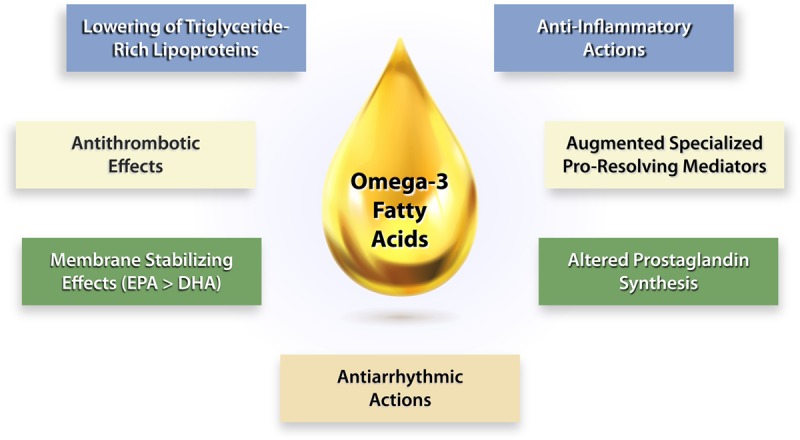
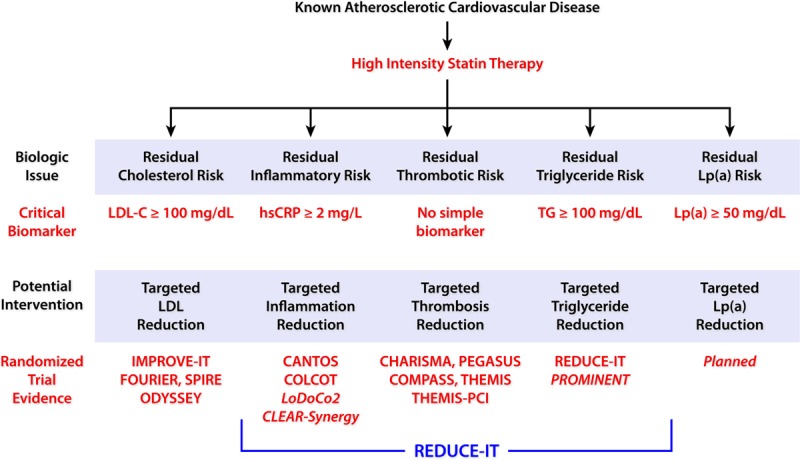
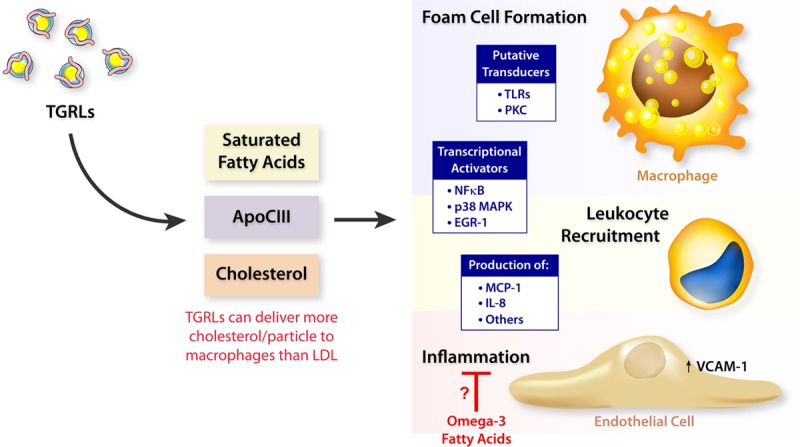
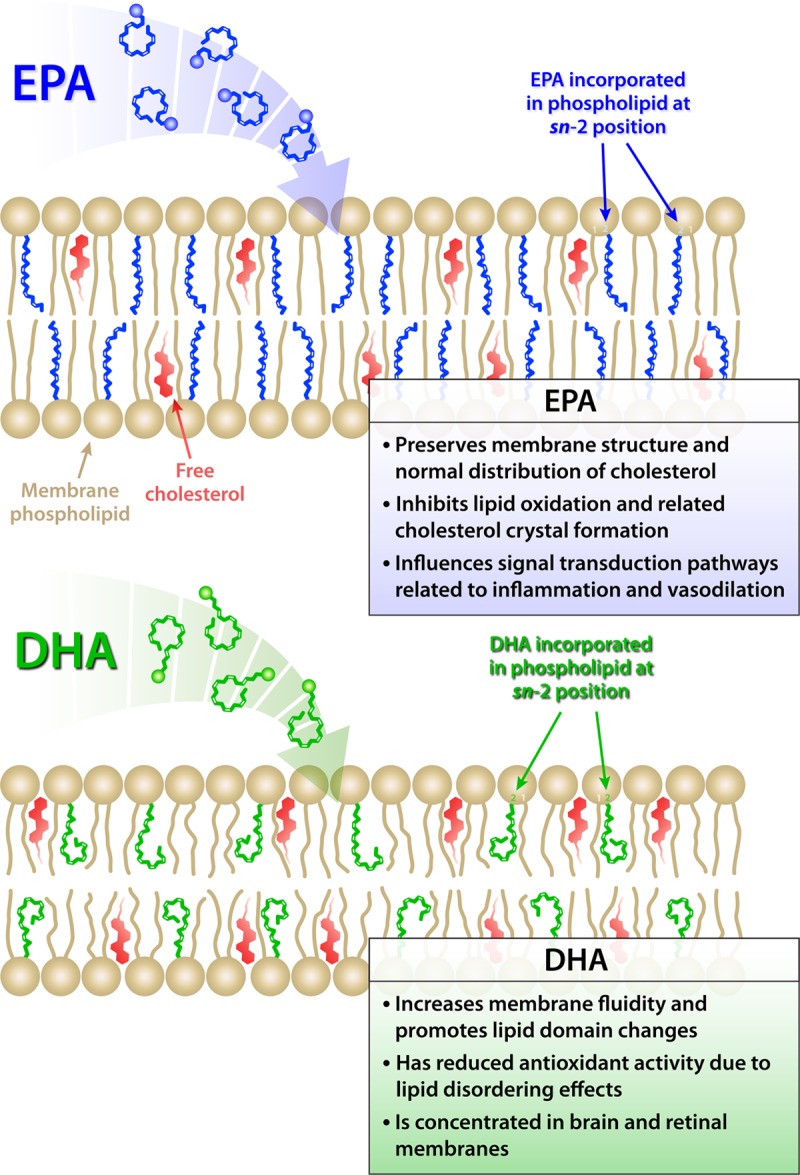
Patients with well-controlled LDL (low-density lipoprotein) levels still have residual cardiovascular risk associated with elevated triglycerides. Epidemiological studies have shown that elevated fasting triglyceride levels associate independently with incident cardiovascular events, and abundant recent human genetic data support the causality of TGRLs (triglyceride-rich lipoproteins) in atherothrombosis. Omega-3 fatty acids, such as eicosapentaenoic acid (EPA) and docosahexaenoic acid (DHA), lower blood triglyceride concentrations but likely exert additional atheroprotective properties at higher doses. Omega-3 fatty acids modulate T-cell differentiation and give rise to various prostaglandins and specialized proresolving lipid mediators that promote resolution of tissue injury and inflammation. The REDUCE-IT (Reduction of Cardiovascular Events with Icosapent Ethyl-Intervention Trial) with an EPA-only formulation lowered a composite of cardiovascular events by 25% in patients with established cardiovascular disease or diabetes mellitus and other cardiovascular risk factors. This clinical benefit likely arises from multiple molecular mechanisms discussed in this review. Indeed, human plaques readily incorporate EPA, which may render them less likely to trigger clinical events. EPA and DHA differ in their effects on membrane structure, rates of lipid oxidation, inflammatory biomarkers, and endothelial function as well as tissue distributions. Trials that have evaluated DHA-containing high-dose omega-3 fatty acids have thus far not shown the benefits of EPA alone demonstrated in REDUCE-IT. This review will consider the mechanistic evidence that helps to understand the potential mechanisms of benefit of EPA.
尽管 LDL(低密度脂蛋白)水平得到良好控制的患者仍存在与升高的甘油三酯相关的残余心血管风险。流行病学研究表明,空腹甘油三酯水平升高与心血管事件的发生独立相关,大量最近的人类遗传数据支持 TGRLs(富含甘油三酯的脂蛋白)在动脉粥样血栓形成中的因果关系。ω-3 脂肪酸,如二十碳五烯酸(EPA)和二十二碳六烯酸(DHA),可降低血液中的甘油三酯浓度,但在更高剂量下可能发挥额外的动脉保护作用。ω-3 脂肪酸调节 T 细胞分化,并产生各种前列腺素和专门的促解决脂质介质,促进组织损伤和炎症的解决。仅含有 EPA 的 REDUCE-IT(用二十碳五烯酸乙酯降低心血管事件的研究)使已患有心血管疾病或糖尿病和其他心血管危险因素的患者的心血管复合事件降低了 25%。这种临床益处可能源于本综述中讨论的多种分子机制。事实上,人类斑块很容易吸收 EPA,这可能使它们不太可能引发临床事件。EPA 和 DHA 在膜结构、脂质氧化率、炎症生物标志物和内皮功能以及组织分布方面的作用不同。迄今为止,评估含 DHA 的高剂量 ω-3 脂肪酸的试验并未显示 REDUCE-IT 中单独使用 EPA 所显示的益处。本综述将考虑有助于理解 EPA 获益潜在机制的机制证据。