Institute of Animal Science, the Chinese Academy of Agricultural Sciences, Beijing 10019, China.
College of Grassland Science and Technology, China Agricultural University, Beijing 100193, China.
Genes (Basel). 2020 Mar 24;11(3):345. doi: 10.3390/genes11030345.
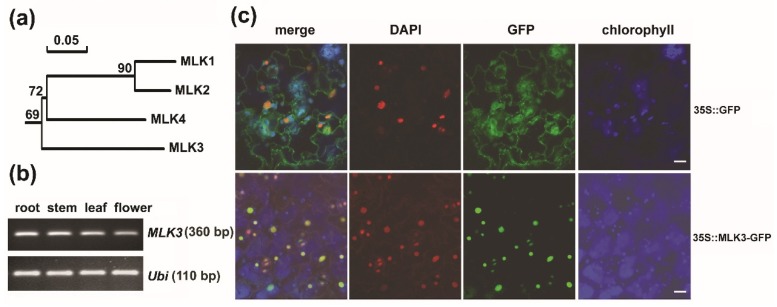
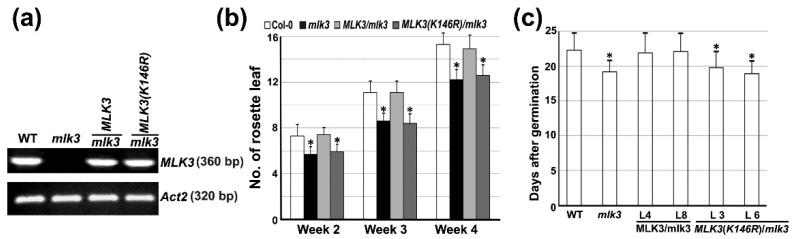
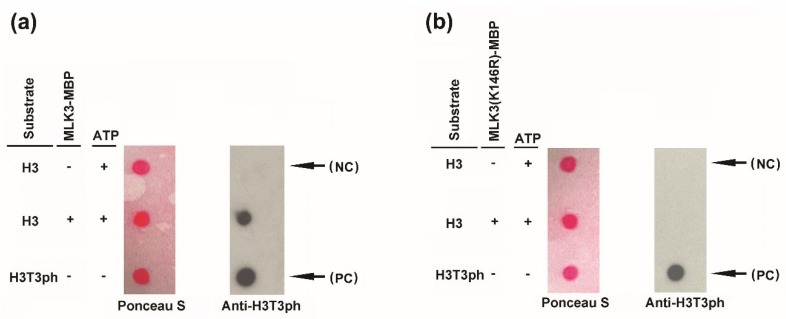
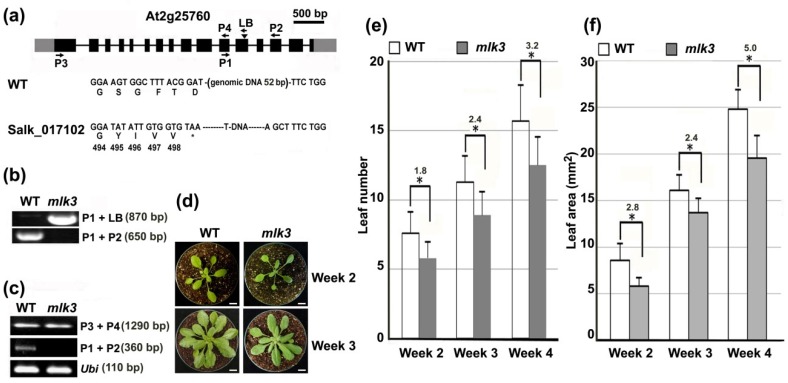
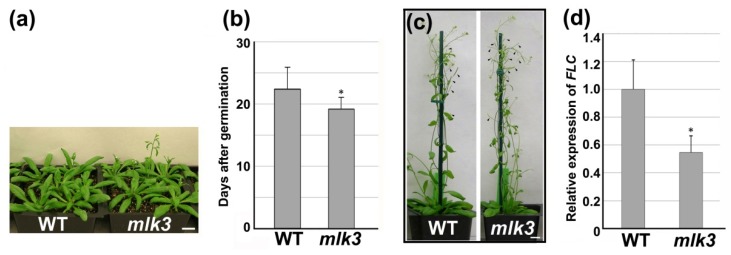
thaliana (), a family of the plant-specific casein kinase 1 (CK1), have been implicated collectively in multiple biological processes including flowering. Three of the four () have been characterized, however, little is known about , the most divergent member of Here, we demonstrated that disruption of transcript in caused early flowering with retarded leaf growth under long-day conditions. In vitro kinase assay showed the nuclear protein MLK3 phosphorylated histone 3 at threonine 3 (H3T3) and mutation of a conserved residue (K146R) abolished the catalytic activity. Ectopic expression of but not () rescued the morphological defects of , indicating that an intact MLK3 is critical for maintaining proper flowering time. Transcriptomic analysis revealed that the floral repressor C () was down-regulated significantly in , suggesting that negatively regulates flowering. Hence, plays a role in repressing the transition from vegetative to reproductive phase in . thaliana. This study sheds light on the delicate control of flowering time by . thaliana specific to the plant kingdom.
拟南芥(Arabidopsis thaliana)()是植物特异性酪蛋白激酶 1(CK1)家族的一员,它们共同参与了包括开花在内的多种生物学过程。这四个成员中的三个()已经被描述,然而,对于最具差异性的成员()知之甚少。在这里,我们证明了在长日照条件下,破坏()中的 转录本会导致早期开花和叶片生长迟缓。体外激酶实验表明,核蛋白 MLK3 磷酸化组蛋白 3 上的苏氨酸 3(H3T3),并且保守残基(K146R)的突变会使其丧失催化活性。 的异位表达而不是()挽救了 的形态缺陷,表明完整的 MLK3 对于维持适当的开花时间至关重要。转录组分析表明,在 中,花的阻遏物 C()显著下调,表明 负调控开花。因此,在拟南芥中, 起着抑制从营养生长到生殖生长阶段转变的作用。本研究揭示了拟南芥特有的开花时间的精细调控。