Retinal Degeneration Lab, Research Center Principe Felipe, c/ Eduardo Primo Yúfera 3, 46012, Valencia, Spain.
National Stem Cell Bank-Valencia Node, Proteomics, Genotyping and Cell Line Platform, PRB3, Research Center Principe Felipe, c/ Eduardo Primo Yúfera 3, 46012, Valencia, Spain.
Sci Rep. 2020 Mar 25;10(1):5426. doi: 10.1038/s41598-020-62047-2.
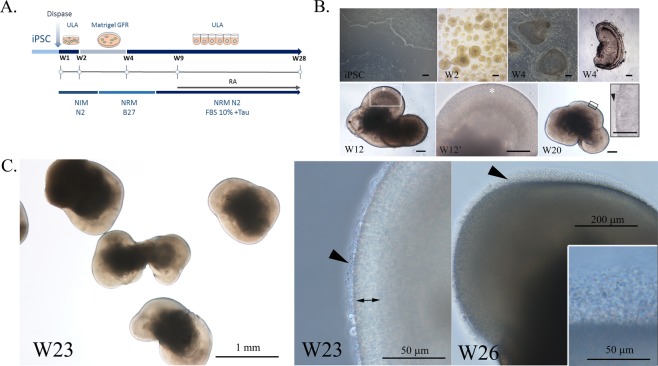
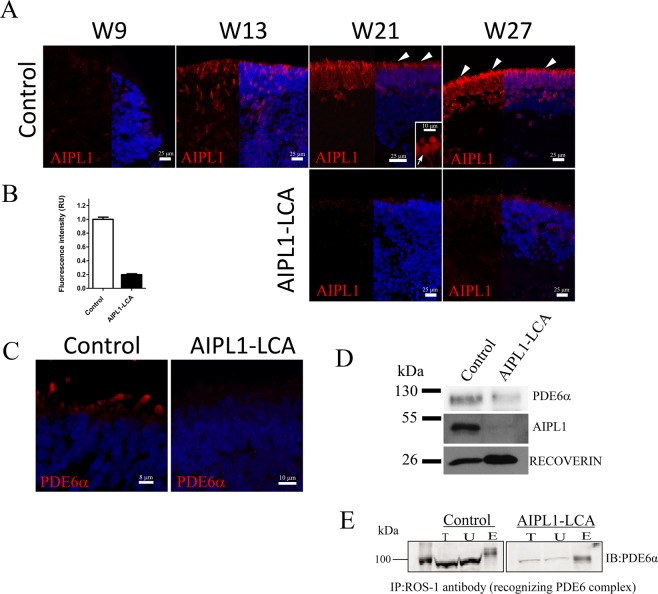
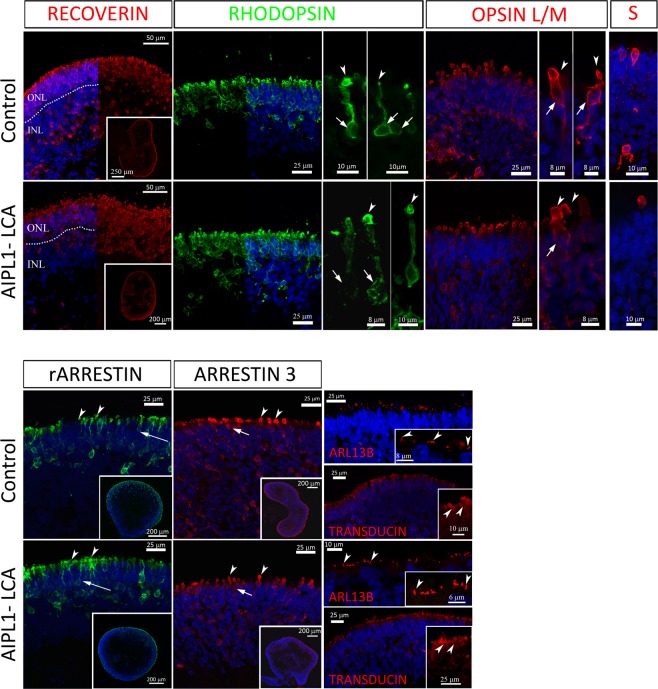
Aryl hydrocarbon receptor-interacting protein-like 1 (AIPL1) is a photoreceptor-specific chaperone that stabilizes the effector enzyme of phototransduction, cGMP phosphodiesterase 6 (PDE6). Mutations in the AIPL1 gene cause a severe inherited retinal dystrophy, Leber congenital amaurosis type 4 (LCA4), that manifests as the loss of vision during the first year of life. In this study, we generated three-dimensional (3D) retinal organoids (ROs) from human induced pluripotent stem cells (hiPSCs) derived from an LCA4 patient carrying a Cys89Arg mutation in AIPL1. This study aimed to (i) explore whether the patient hiPSC-derived ROs recapitulate LCA4 disease phenotype, and (ii) generate a clinically relevant resource to investigate the molecular mechanism of disease and safely test novel therapies for LCA4 in vitro. We demonstrate reduced levels of the mutant AIPL1 and PDE6 proteins in patient organoids, corroborating the findings in animal models; however, patient-derived organoids maintained retinal cell cytoarchitecture despite significantly reduced levels of AIPL1.
芳香烃受体相互作用蛋白样 1(AIPL1)是一种光感受器特异性伴侣蛋白,可稳定光转导的效应酶 cGMP 磷酸二酯酶 6(PDE6)。AIPL1 基因突变会导致严重的遗传性视网膜营养不良,即先天性黑蒙 4 型(LCA4),其特征是在生命的第一年视力丧失。在这项研究中,我们从携带 AIPL1 基因 Cys89Arg 突变的 LCA4 患者来源的诱导多能干细胞(hiPSC)中生成了三维(3D)视网膜类器官(RO)。本研究旨在(i)探讨患者来源的 hiPSC-RO 是否再现了 LCA4 疾病表型,以及(ii)生成一种临床相关的资源,用于体外研究疾病的分子机制并安全地测试 LCA4 的新型治疗方法。我们证明了患者类器官中突变型 AIPL1 和 PDE6 蛋白水平降低,与动物模型的发现相符;然而,尽管 AIPL1 水平显著降低,患者来源的类器官仍保持视网膜细胞细胞结构。