Al-Ani Mena R, Raju Tom K, Hachim Mahmood Y, Hachim Ibrahim Y, Elemam Noha M, Guimei Maha, Bendardaf Riyad, Maghazachi Azzam A
Department of Clinical Sciences, College of Medicine, University of Sharjah, Sharjah, 27272, United Arabs Emirates.
Sharjah Institute for Medical Research (SIMR), University of Sharjah, Sharjah 27272, United Arabs Emirates.
J Inflamm Res. 2020 Mar 10;13:151-164. doi: 10.2147/JIR.S243514. eCollection 2020.
To investigate, in detail, the effects of rituximab (RTX), an off-label drug for treating multiple sclerosis (MS) disease on preventing and/or ameliorating experimental autoimmune encephalomyelitis (EAE).
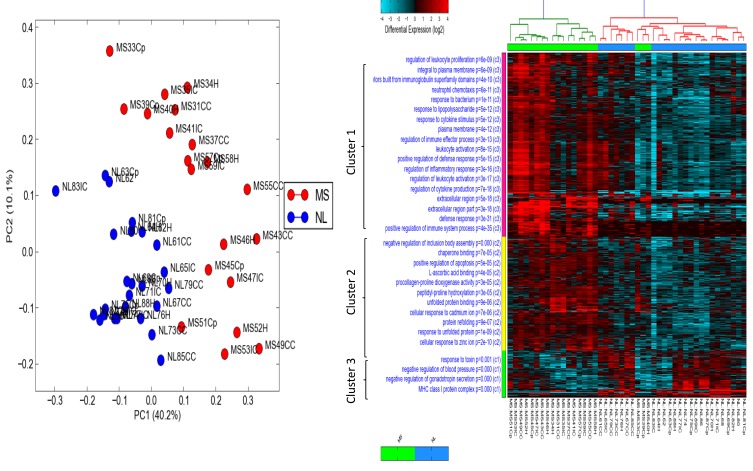
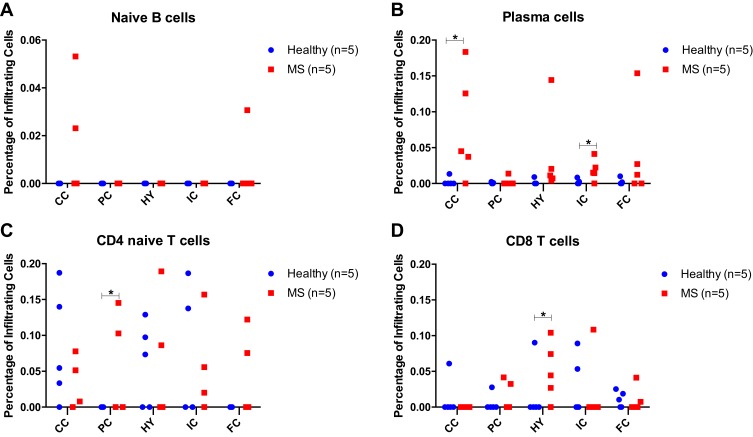
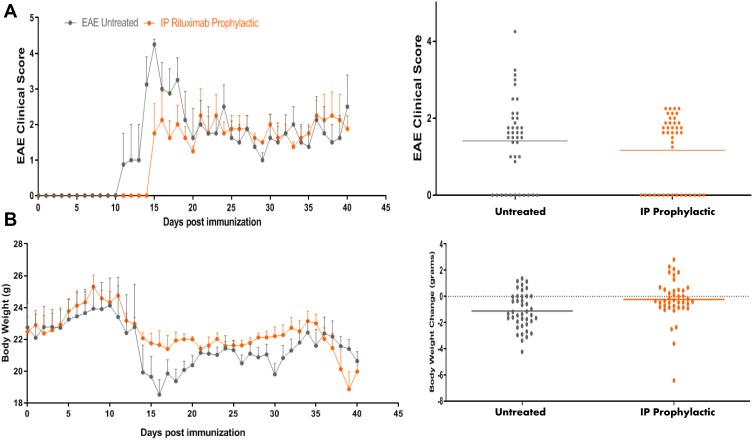
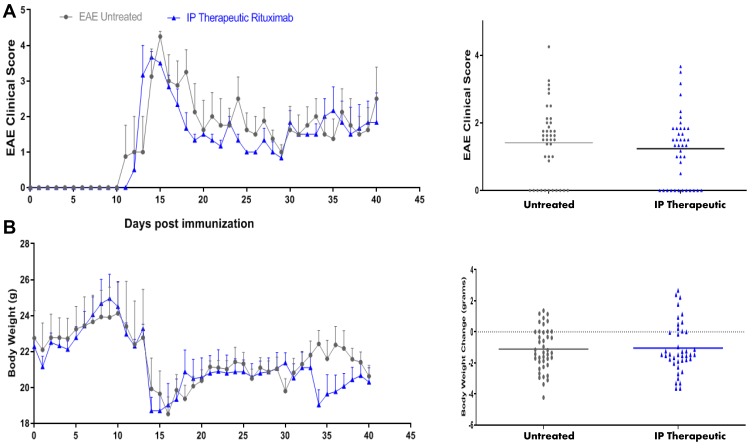
Using bioinformatics analysis of publicly available transcriptomics data, we determined the accumulation of B cells, plasma cells and T cells in different compartments of multiple sclerosis patients (MS) and healthy individual brains. Based on these observations and on the literature search, we dosed RTX in EAE mice either orally, or injected intraperitoneally (IP). The latter route was used either prophylactically (asymptomatic stage; upon the induction of the disease), or therapeutically (acute stage; upon the appearance of the first sign of the disease). Further, we used RTX as a preventive drug either as a single agent or in combination with other routes of administration.
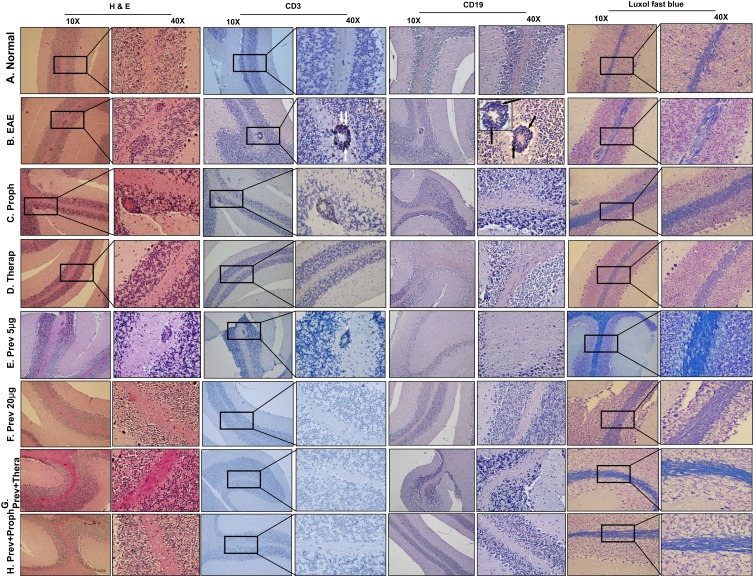
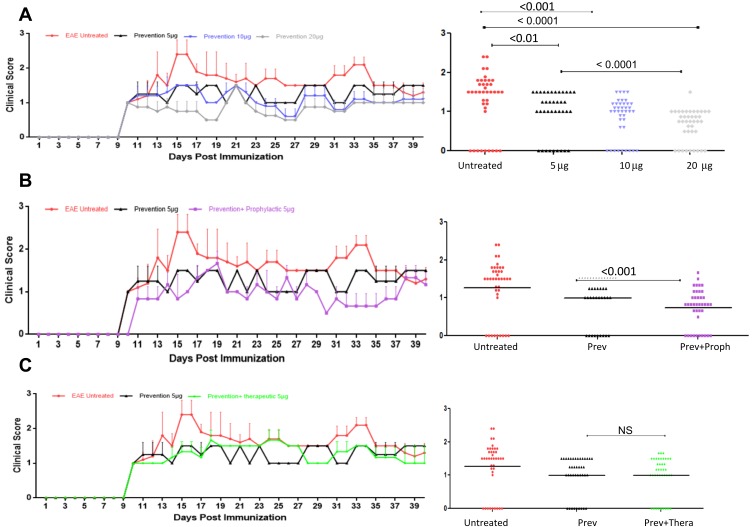
Because no complete recovery was observed when RTX was used prophylactically or therapeutically, we devised another protocol of injecting this drug before the onset of the disease and designated this regiment as prevention. We demonstrated that the 20 μg/mouse prevention completely reduced the EAE clinical score, impaired infiltration of T and B cells into the perivascular space of mice brains, along with inhibiting the inflammation and demyelination. However, the 5 and 10 μg/mouse doses although reduced all aspects of inflammation in these mice, their effects were not as potent as the 20 μg/mouse RTX dose. Finally, we combined the 5 μg/mouse prevention treatment with either the prophylactic or therapeutic regimen and observed a robust effect.
We observed that combinatorial regimens resulted in further reduction of inflammation, T and B cell extravasation into the brains of EAE mice and improved the re-myelination.
详细研究利妥昔单抗(RTX),一种用于治疗多发性硬化症(MS)的非标签药物,对预防和/或改善实验性自身免疫性脑脊髓炎(EAE)的作用。
通过对公开可用的转录组学数据进行生物信息学分析,我们确定了多发性硬化症患者(MS)和健康个体大脑不同区域中B细胞、浆细胞和T细胞的积聚情况。基于这些观察结果和文献检索,我们给EAE小鼠口服或腹腔注射(IP)RTX。后一种给药途径用于预防性给药(无症状期;疾病诱导后)或治疗性给药(急性期;疾病首次出现症状后)。此外,我们将RTX作为预防药物单独使用或与其他给药途径联合使用。
由于在预防性或治疗性使用RTX时未观察到完全恢复,我们设计了另一种在疾病发作前注射该药物的方案,并将该方案指定为预防。我们证明,20μg/小鼠的预防剂量可完全降低EAE临床评分,减少T细胞和B细胞向小鼠脑周血管间隙的浸润,同时抑制炎症和脱髓鞘。然而,5μg/小鼠和10μg/小鼠剂量虽然减少了这些小鼠炎症的各个方面,但其效果不如20μg/小鼠的RTX剂量。最后,我们将5μg/小鼠的预防治疗与预防性或治疗性方案联合使用,观察到了显著效果。
我们观察到联合方案可进一步减轻炎症,减少T细胞和B细胞向EAE小鼠脑内的渗出,并改善再髓鞘化。