Bleyen Nele, Smets Steven, Small Joe, Moors Hugo, Leys Natalie, Albrecht Achim, De Cannière Pierre, Schwyn Bernhard, Wittebroodt Charles, Valcke Elie
1Belgian Nuclear Research Centre SCK•CEN, Boeretang 200, 2400 Mol, Belgium.
2National Nuclear Laboratory NLL, Chadwick House, Birchwood Park, WA3 6AS Warrington, UK.
Swiss J Geosci. 2017;110(1):355-374. doi: 10.1007/s00015-016-0256-x. Epub 2017 Feb 24.
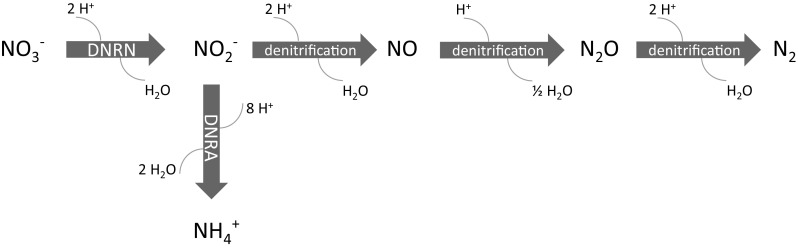
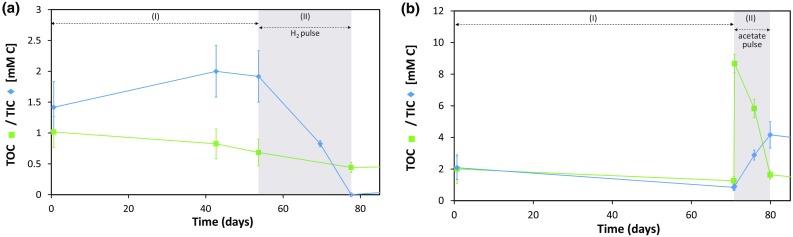
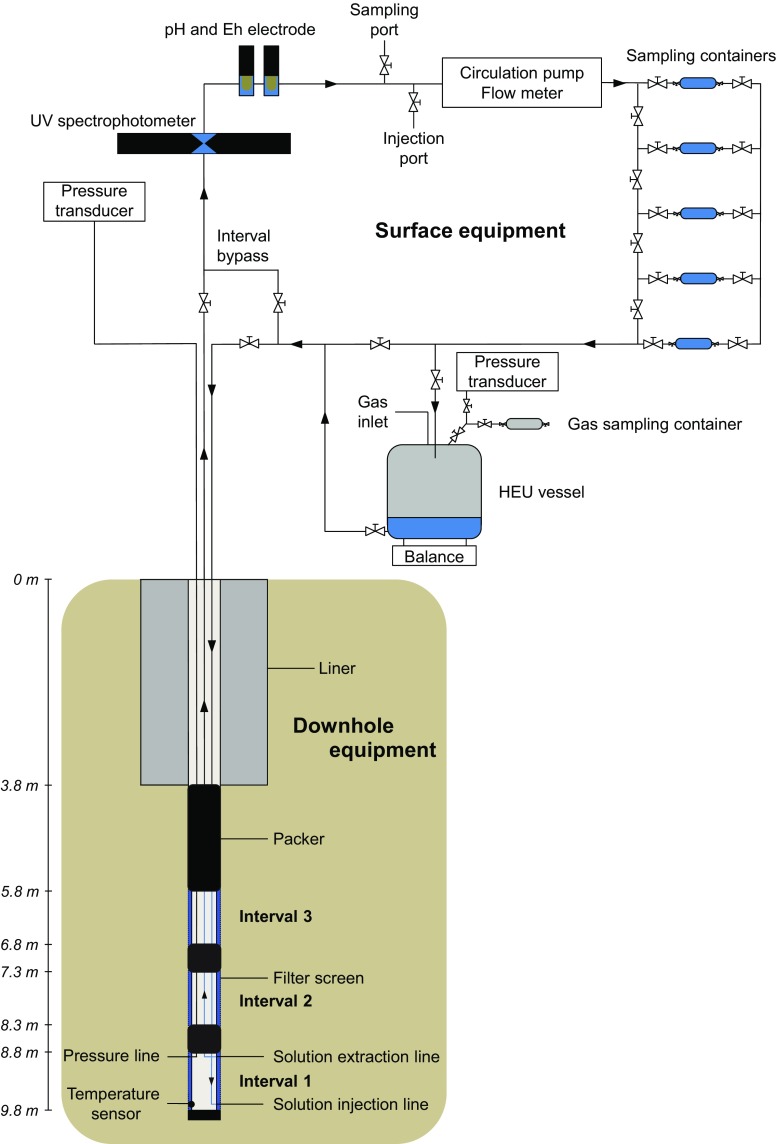
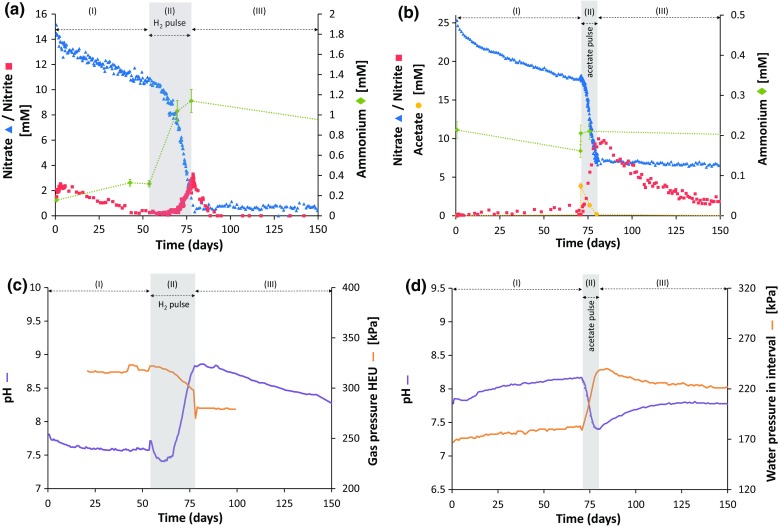
At the Mont Terri rock laboratory (Switzerland), an in situ experiment is being carried out to examine the fate of nitrate leaching from nitrate-containing bituminized radioactive waste, in a clay host rock for geological disposal. Such a release of nitrate may cause a geochemical perturbation of the clay, possibly affecting some of the favorable characteristics of the host rock. In this in situ experiment, combined transport and reactivity of nitrate is studied inside anoxic and water-saturated chambers in a borehole in the Opalinus Clay. Continuous circulation of the solution from the borehole to the surface equipment allows a regular sampling and online monitoring of its chemical composition. In this paper, in situ microbial nitrate reduction in the Opalinus Clay is discussed, in the presence or absence of additional electron donors relevant for the disposal concept and likely to be released from nitrate-containing bituminized radioactive waste: acetate (simulating bitumen degradation products) and H (originating from radiolysis and corrosion in the repository). The results of these tests indicate that-in case microorganisms would be active in the repository or the surrounding clay-microbial nitrate reduction can occur using electron donors naturally present in the clay (e.g. pyrite, dissolved organic matter). Nevertheless, non-reactive transport of nitrate in the clay is expected to be the main process. In contrast, when easily oxidizable electron donors would be available (e.g. acetate and H), the microbial activity will be strongly stimulated. Both in the presence of H and acetate, nitrite and nitrogenous gases are predominantly produced, although some ammonium can also be formed when H is present. The reduction of nitrate in the clay could have an impact on the redox conditions in the pore-water and might also lead to a gas-related perturbation of the host rock, depending on the electron donor used during denitrification.
在瑞士的蒙特特里岩石实验室,正在进行一项原位实验,以研究含硝酸盐的沥青固化放射性废物中硝酸盐淋滤在地质处置的黏土主岩中的归宿。硝酸盐的这种释放可能会引起黏土的地球化学扰动,可能会影响主岩的一些有利特性。在这项原位实验中,研究了奥帕林努斯黏土钻孔中缺氧且水饱和腔室内硝酸盐的联合迁移和反应活性。溶液从钻孔到地面设备的连续循环使得能够定期采样并在线监测其化学成分。本文讨论了在存在或不存在与处置概念相关且可能从含硝酸盐的沥青固化放射性废物中释放的额外电子供体的情况下,奥帕林努斯黏土中的原位微生物硝酸盐还原:乙酸盐(模拟沥青降解产物)和H(源自储存库中的辐射分解和腐蚀)。这些测试结果表明,如果微生物在储存库或周围黏土中具有活性,利用黏土中天然存在的电子供体(例如黄铁矿、溶解有机物)可以发生微生物硝酸盐还原。然而,预计硝酸盐在黏土中的非反应性迁移将是主要过程。相反,当有易于氧化的电子供体(例如乙酸盐和H)时,微生物活性将受到强烈刺激。在同时存在H和乙酸盐的情况下,主要产生亚硝酸盐和含氮气体,不过当存在H时也会形成一些铵。黏土中硝酸盐的还原可能会影响孔隙水中的氧化还原条件,并且根据反硝化过程中使用的电子供体,也可能导致主岩与气体相关的扰动。