Department of Psychiatry, The Second Xiangya Hospital of Central South University, Changsha, 410011, Hunan, China.
National Clinical Research Center on Mental Disorders, Changsha, 410011, Hunan, China.
Eur Arch Psychiatry Clin Neurosci. 2021 Jun;271(4):783-798. doi: 10.1007/s00406-020-01119-w. Epub 2020 Mar 25.
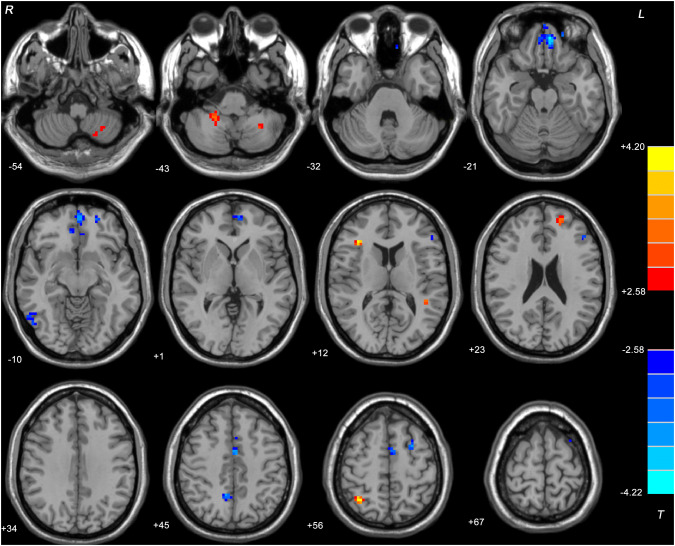
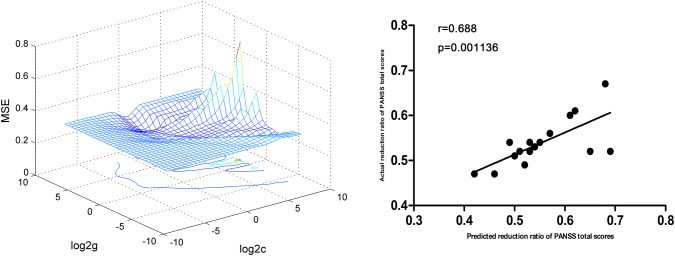
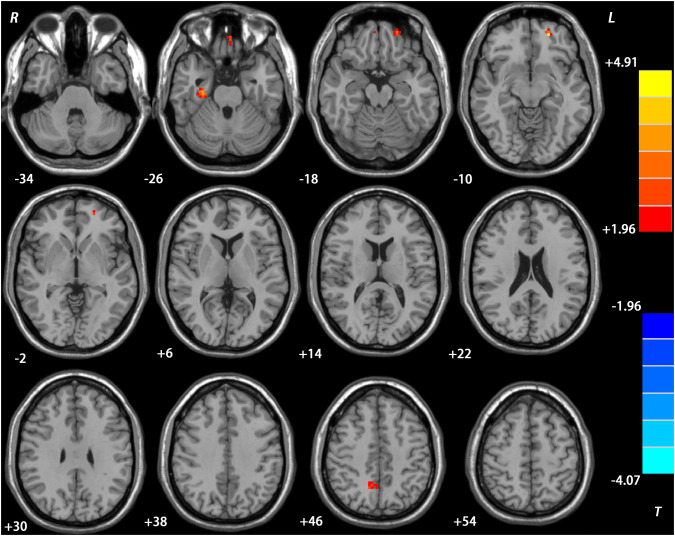
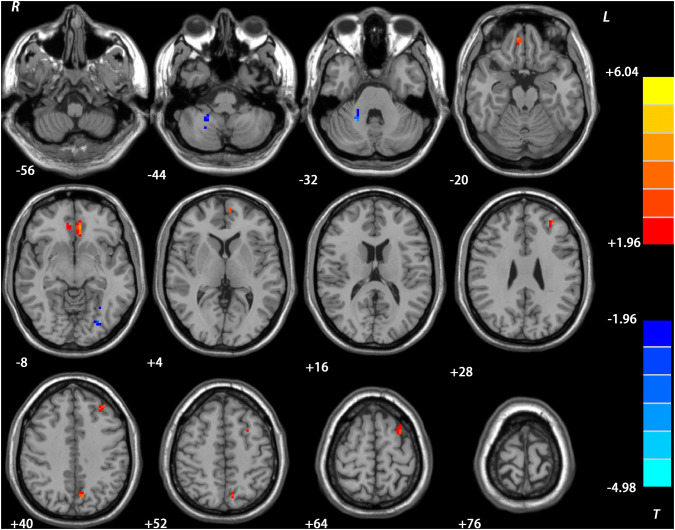
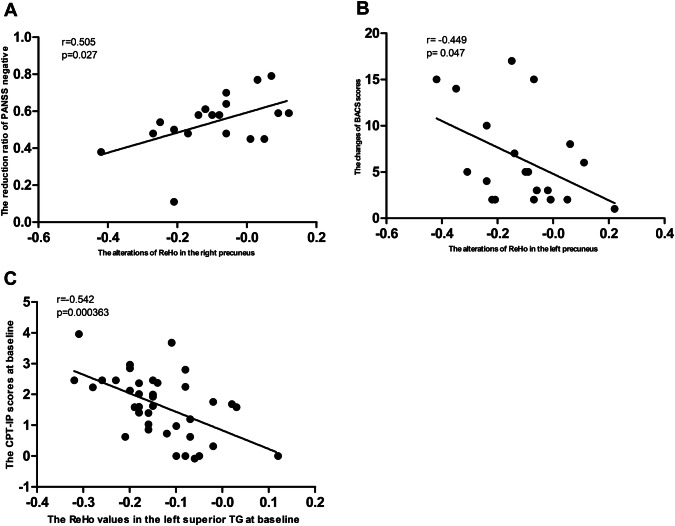
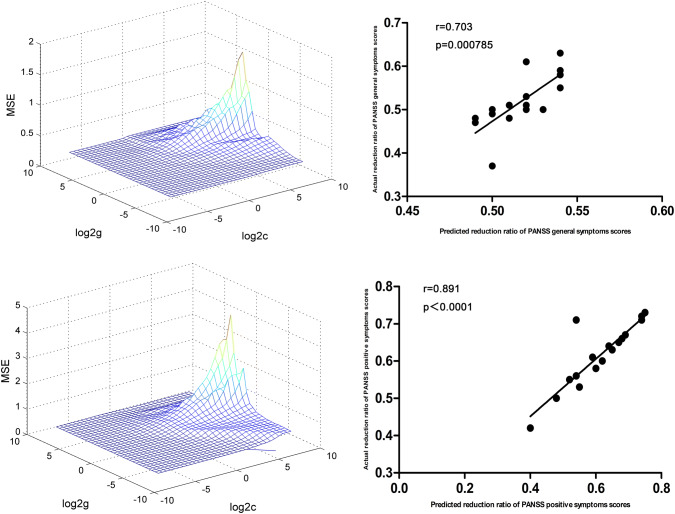
Previous studies have demonstrated the efficacy of metacognitive training (MCT) in schizophrenia. However, the underlying mechanisms related to therapeutic effect of MCT remain unknown. The present study explored the treatment effects of MCT on brain regional neural activity using regional homogeneity (ReHo) and whether these regions' activities could predict individual treatment response in schizophrenia. Forty-one patients with schizophrenia and 20 healthy controls were scanned using resting-state functional magnetic resonance imaging. Patients were randomly divided into drug therapy (DT) and drug plus psychotherapy (DPP) groups. The DT group received only olanzapine treatment, whereas the DPP group received olanzapine and MCT for 8 weeks. The results revealed that ReHo in the right precuneus, left superior medial prefrontal cortex (MPFC), right parahippocampal gyrus and left rectus was significantly increased in the DPP group after 8 weeks of treatment. Patients in the DT group showed significantly increased ReHo in the left ventral MPFC/anterior cingulate cortex (ACC), left superior MPFC/middle frontal gyrus (MFG), left precuneus, right rectus and left MFG, and significantly decreased ReHo in the bilateral cerebellum VIII and left inferior occipital gyrus (IOG) after treatment. Support vector regression analyses showed that high ReHo levels at baseline in the right precuneus and left superior MPFC could predict symptomatic improvement of Positive and Negative Syndrome Scale (PANSS) after 8 weeks of DPP treatment. Moreover, high ReHo levels at baseline and alterations of ReHo in the left ventral MPFC/ACC could predict symptomatic improvement of PANSS after 8 weeks of DT treatment. This study suggests that MCT is associated with the modulation of ReHo in schizophrenia. ReHo in the right precuneus and left superior MPFC may predict individual therapeutic response for MCT in patients with schizophrenia.
先前的研究已经证明了元认知训练(MCT)在精神分裂症中的疗效。然而,与 MCT 治疗效果相关的潜在机制尚不清楚。本研究使用局部一致性(ReHo)探讨了 MCT 对精神分裂症患者大脑区域神经活动的治疗效果,以及这些区域的活动是否可以预测精神分裂症患者的个体治疗反应。41 名精神分裂症患者和 20 名健康对照者接受静息态功能磁共振成像扫描。患者随机分为药物治疗(DT)和药物加心理治疗(DPP)组。DT 组仅接受奥氮平治疗,而 DPP 组接受奥氮平和 MCT 治疗 8 周。结果显示,8 周治疗后,DPP 组右侧楔前叶、左侧额上回(MPFC)、右侧海马旁回和左侧直回的 ReHo 显著增加。DT 组治疗后左侧腹侧 MPFC/前扣带回(ACC)、左侧额上回/中额回(MFG)、左侧楔前叶、右侧直回和左侧 MFG 的 ReHo 显著增加,双侧小脑 8 区和左侧枕下回(IOG)的 ReHo 显著降低。支持向量回归分析显示,8 周 DPP 治疗后,右侧楔前叶和左侧额上回的基线 ReHo 水平较高可预测阳性和阴性症状量表(PANSS)的症状改善。此外,基线时 ReHo 水平较高以及左侧腹侧 MPFC/ACC 的 ReHo 变化可预测 8 周 DT 治疗后 PANSS 的症状改善。本研究表明,MCT 与精神分裂症患者 ReHo 的调节有关。右侧楔前叶和左侧额上回的 ReHo 可能预测精神分裂症患者接受 MCT 治疗的个体治疗反应。