Core for Cell Technology, Pontifícia Universidade Católica do Paraná (PUCPR), Curitiba, Paraná, Brazil.
Department of Animal Science, Pontifícia Universidade Católica do Paraná (PUCPR), Curitiba, Paraná, Brazil.
Cell Transplant. 2020 Jan-Dec;29:963689720913254. doi: 10.1177/0963689720913254.
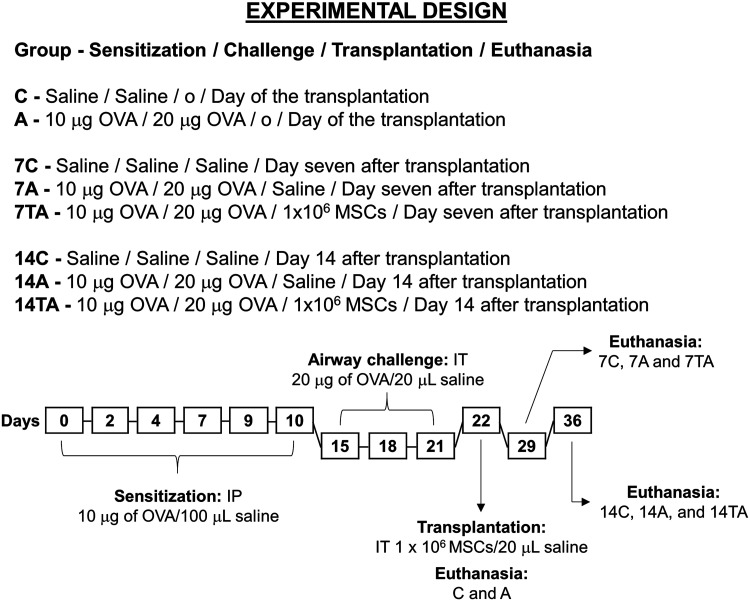
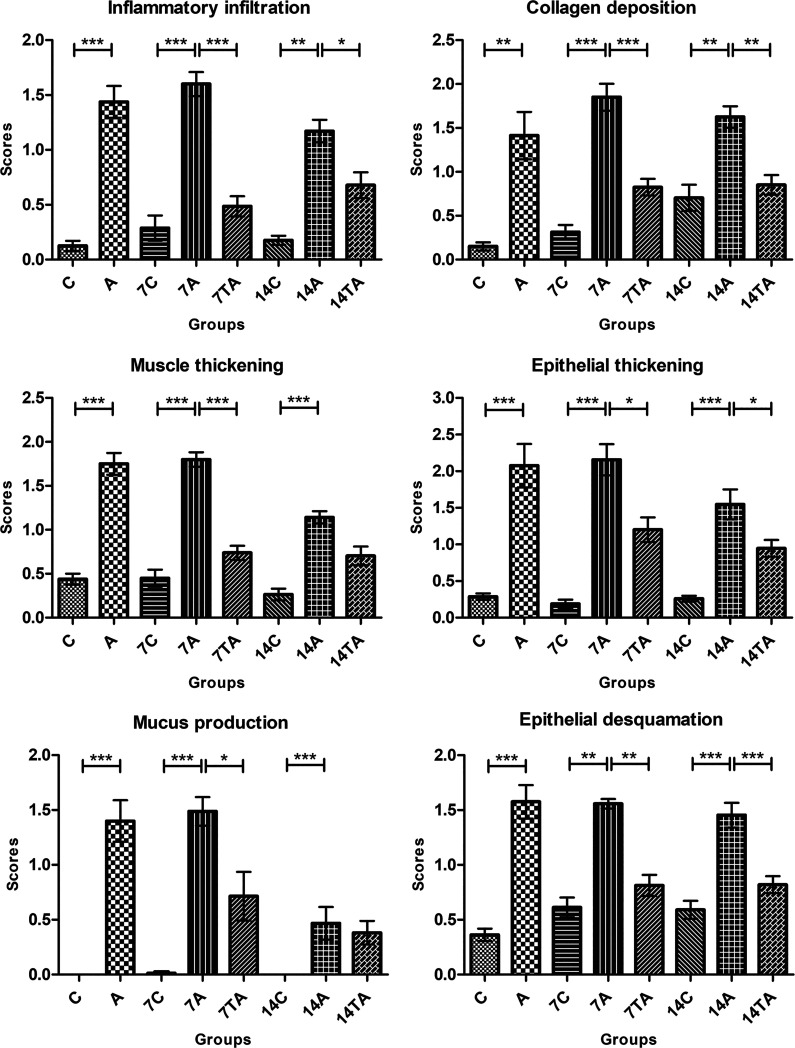
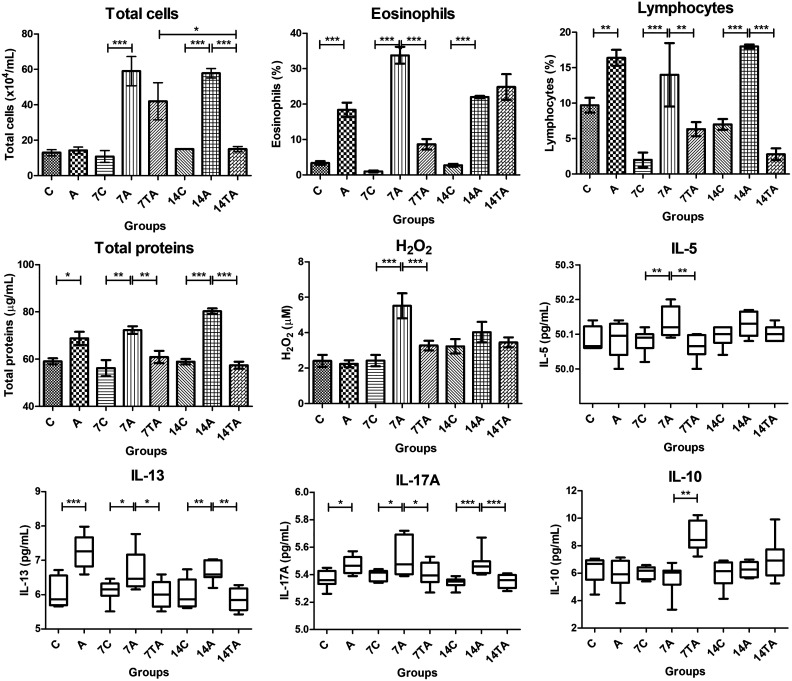
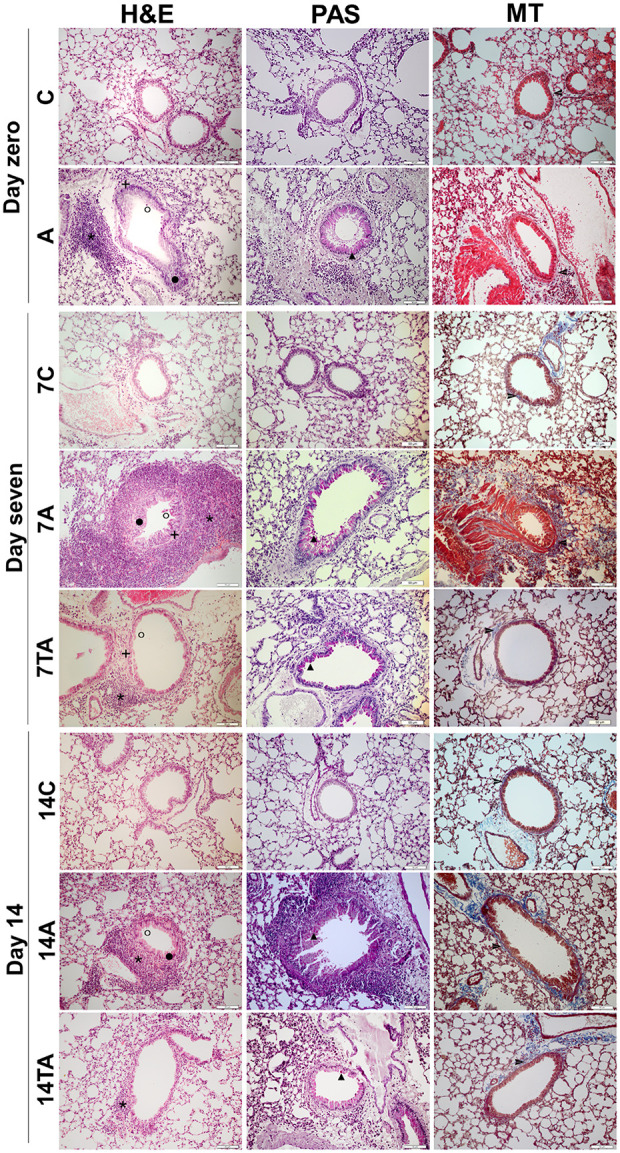
Mesenchymal stem cell (MSC) research has demonstrated the potential of these cells to modulate lung inflammatory processes and tissue repair; however, the underlying mechanisms and treatment durability remain unknown. Here, we investigated the therapeutic potential of human bone marrow-derived MSCs in the inflammatory process and pulmonary remodeling of asthmatic BALB/c mice up to 14 d after transplantation. Our study used ovalbumin to induce allergic asthma in male BALB/c mice. MSCs were injected intratracheally in the asthma groups. Bronchoalveolar lavage fluid (BALF) was collected, and cytology was performed to measure the total protein, hydrogen peroxide (HO), and proinflammatory (IL-5, IL-13, and IL-17A) and anti-inflammatory (IL-10) interleukin (IL) levels. The lungs were removed for the histopathological evaluation. On day zero, the eosinophil and lymphochte percentages, total protein concentrations, and IL-13 and IL-17A levels in the BALF were significantly increased in the asthma group, proving the efficacy of the experimental model of allergic asthma. On day 7, the MSC-treated group exhibited significant reductions in the eosinophil, lymphocyte, total protein, HO, IL-5, IL-13, and IL-17A levels in the BALF, while the IL-10 levels were significantly increased. On day 14, the total cell numbers and lymphocyte, total protein, IL-13, and IL-17A levels in the BALF in the MSC-treated group were significantly decreased. A significant decrease in airway remodeling was observed on days 7 and 14 in almost all bronchioles, which showed reduced inflammatory infiltration, collagen deposition, muscle and epithelial thickening, and mucus production. These results demonstrate that treatment with a single injection of MSCs reduces the pathophysiological events occurring in an experimental model of allergic asthma by controlling the inflammatory process up to 14 d after transplantation.
间充质干细胞 (MSC) 研究表明,这些细胞具有调节肺部炎症过程和组织修复的潜力;然而,潜在机制和治疗持久性仍不清楚。在这里,我们研究了人骨髓来源的 MSC 在卵清蛋白诱导的 BALB/c 哮喘小鼠肺部炎症过程和重塑中的治疗潜力,直到移植后 14 天。我们的研究使用卵清蛋白诱导雄性 BALB/c 小鼠发生过敏性哮喘。在哮喘组中通过气管内注射 MSC。收集支气管肺泡灌洗液 (BALF),并进行细胞学检查以测量总蛋白、过氧化氢 (HO) 和促炎 (IL-5、IL-13 和 IL-17A) 和抗炎 (IL-10) 白细胞介素 (IL) 水平。取出肺脏进行组织病理学评估。在第 0 天,哮喘组 BALF 中的嗜酸性粒细胞和淋巴细胞百分比、总蛋白浓度以及 IL-13 和 IL-17A 水平显著增加,证明了过敏性哮喘实验模型的有效性。在第 7 天,MSC 治疗组 BALF 中的嗜酸性粒细胞、淋巴细胞、总蛋白、HO、IL-5、IL-13 和 IL-17A 水平显著降低,而 IL-10 水平显著升高。在第 14 天,MSC 治疗组 BALF 中的总细胞数和淋巴细胞、总蛋白、IL-13 和 IL-17A 水平显著降低。在第 7 天和第 14 天,几乎所有细支气管中的气道重塑都显著减少,表现为炎症浸润、胶原蛋白沉积、肌肉和上皮增厚以及黏液产生减少。这些结果表明,单次注射 MSC 可通过控制移植后 14 天内的炎症过程来减少过敏性哮喘实验模型中的病理生理事件。