Department of Microbiology and Immunology, Seoul National University College of Medicine, Seoul, Korea.
Department of Biomedical Science, Seoul National University Graduate School, Seoul, Korea.
Cell Transplant. 2020 Jan-Dec;29:963689720913876. doi: 10.1177/0963689720913876.
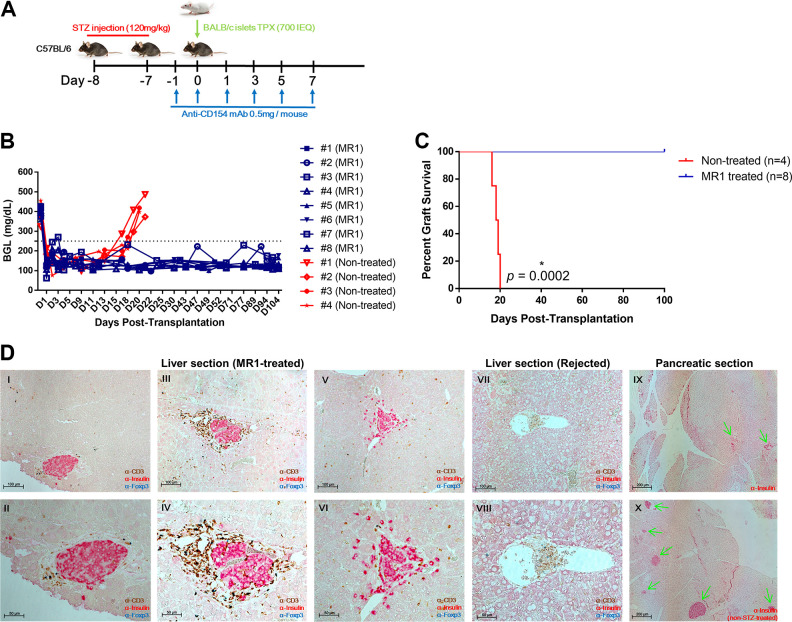
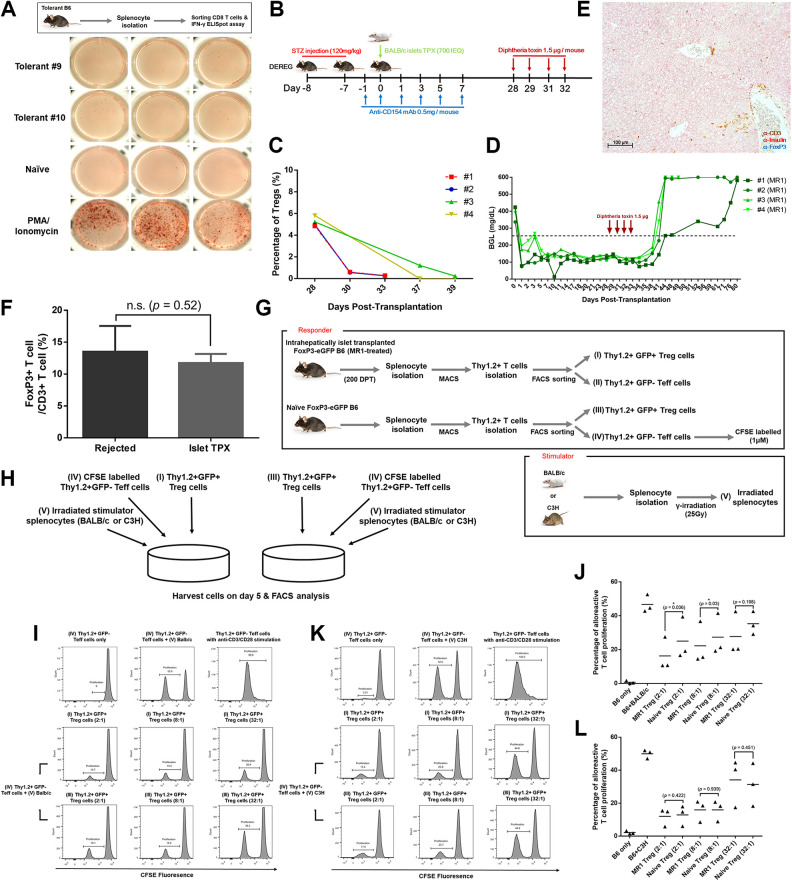
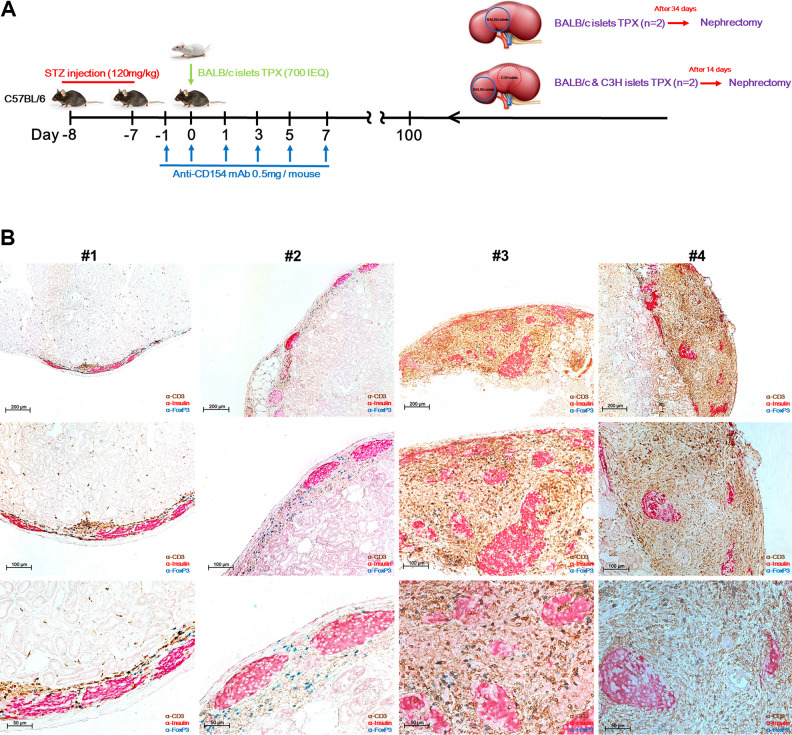
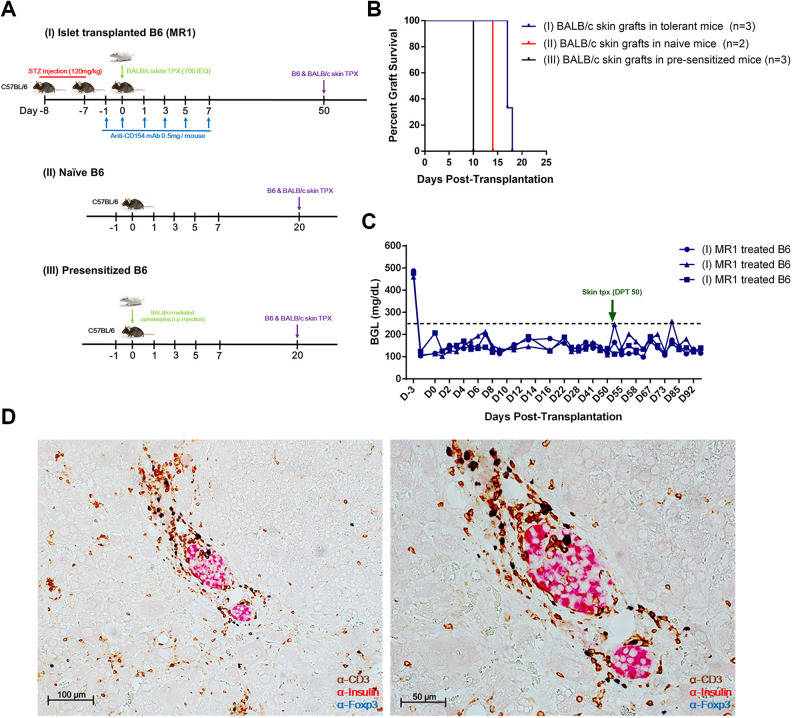
Anti-CD154 blockade-based regimens remain unequaled in prolonging graft survival in various organ transplantation models. Several studies have focused on transplantation tolerance with the anti-CD154 blockade, but none of these studies has investigated the mechanisms associated with its use as the sole treatment in animal models, delaying our understanding of anti-CD154 blockade-mediated immune tolerance. The purpose of this study was to investigate the mechanism underlying the anti-CD154 monoclonal antibody (mAb) blockade in inducing immune tolerance using an intrahepatic murine allogeneic islet transplantation model. Allogeneic BALB/c AnHsd (BALB/c) islets were infused into the liver of diabetic C57BL/6 (B6) mice via the cecal vein. Anti-CD154 mAb (MR1) was administered on -1, 0, 1, 3, 5, and 7 d posttransplantation at 0.5 mg per mouse. We showed that short-term MR1 monotherapy could prolong the allogeneic islet grafts to more than 250 d in the murine intrahepatic islet transplantation model. The second islet grafts transplanted under the kidney capsule of the recipients were protected from rejection. We also found that rejection of same-donor skin grafts transplanted to the tolerant mice was modestly delayed. Using a DEREG mouse model, FoxP3+ regulatory T (Treg) cells were shown to play important roles in transplantation tolerance. In mixed lymphocyte reactions, Treg cells from the tolerant mice showed more potency in suppressing BALB/c splenocyte-stimulated Teff cell proliferation than those from naïve mice. In this study, we demonstrated for the first time that a short-term anti-CD154 mAb single treatment could induce FoxP3+ Treg cell-mediated immune tolerance in the intrahepatic murine allogeneic islet transplantation model.
抗 CD154 阻断疗法在延长各种器官移植模型中的移植物存活方面仍然无与伦比。有几项研究集中在抗 CD154 阻断的移植耐受上,但这些研究都没有研究与单独使用该药物作为动物模型治疗相关的机制,这延迟了我们对抗 CD154 阻断介导免疫耐受的理解。本研究旨在使用肝内同种异体胰岛移植模型研究抗 CD154 单克隆抗体(mAb)阻断诱导免疫耐受的机制。将同种异体 BALB/c AnHsd(BALB/c)胰岛通过盲肠静脉输注到糖尿病 C57BL/6(B6)小鼠的肝脏中。在移植后 -1、0、1、3、5 和 7 天,每天每只小鼠给予 0.5mg 的抗 CD154 mAb(MR1)。我们表明,短期 MR1 单药治疗可以将同种异体胰岛移植物在小鼠肝内胰岛移植模型中延长至 250 天以上。在接受者的肾脏包膜下移植的第二个胰岛移植物免受排斥。我们还发现,对耐受小鼠进行同种供体皮肤移植的排斥反应也被适度延迟。使用 DEREG 小鼠模型,发现 FoxP3+调节性 T(Treg)细胞在移植耐受中起重要作用。在混合淋巴细胞反应中,来自耐受小鼠的 Treg 细胞在抑制 BALB/c 脾细胞刺激效应 T 细胞增殖方面比来自幼稚小鼠的 Treg 细胞更有效。在这项研究中,我们首次证明,短期抗 CD154 mAb 单一治疗可以在肝内同种异体胰岛移植模型中诱导 FoxP3+Treg 细胞介导的免疫耐受。