Jazieh Abdul-Rahman, Al Hadab Abdulrahman, Al Olayan Ashwaq, AlHejazi Ayman, Al Safi Faisal, Al Qarni Abullah, Farooqui Faisal, Al Mutairi Nashmia, Alenazi Thamer H
Department of Oncology, King Abdulaziz Medical City, King Saud bin Abdulaziz University for Health Sciences, King Abdullah International Medical Research Center, Riyadh, Saudi Arabia.
Infection Disease Division, Department of Medicine, King Abdulaziz Medical City, King Saud bin Abdulaziz University for Health Sciences, King Abdullah International Medical Research Center, Riyadh, Saudi Arabia.
JCO Glob Oncol. 2020 Mar;6:518-524. doi: 10.1200/GO.20.00063.
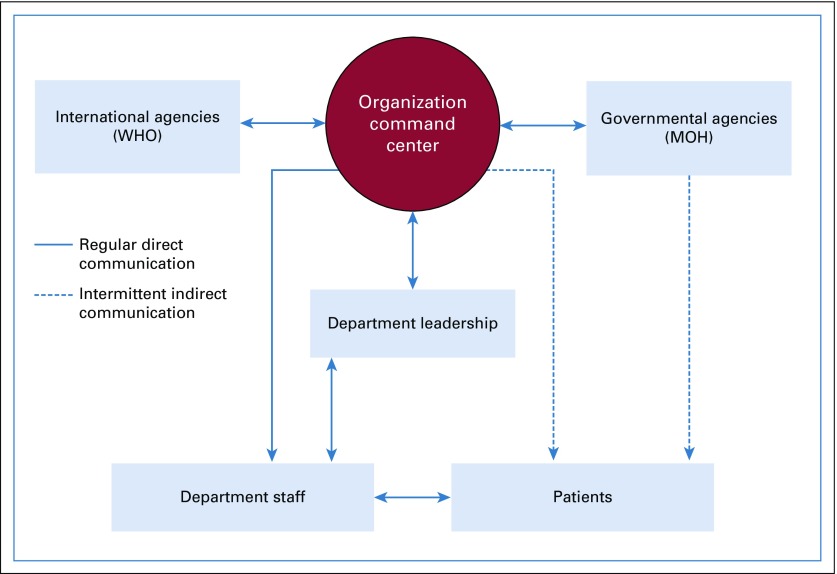
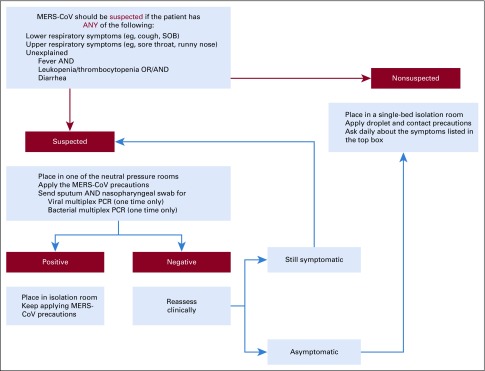
Outbreaks of infectious etiology, particularly those caused by a novel virus that has no known treatment or vaccine, may result in the interruption of medical care provided to patients with cancer and put them at risk for undertreatment in addition to the risk of being exposed to infection, a life-threatening event among patients with cancer. This article describes the approach used to manage patients with cancer during a large-scale Middle East respiratory syndrome-coronavirus hospital outbreak in Saudi Arabia to ensure continuity of care and minimize harm from treatment interruption or acquiring infection. The approach taken toward managing this high-risk situation (COVID-19) could be easily adopted by health care organizations and would be helpful to ensure readiness for the occurrence of future outbreaks of different infectious etiologies like those recent episodes of new coronavirus.
由感染性病因引起的疫情,尤其是由一种尚无已知治疗方法或疫苗的新型病毒引发的疫情,可能会导致中断为癌症患者提供的医疗服务,使他们除了面临感染风险(这在癌症患者中是危及生命的事件)之外,还面临治疗不足的风险。本文描述了在沙特阿拉伯发生的中东呼吸综合征冠状病毒大规模医院疫情期间,用于管理癌症患者的方法,以确保医疗服务的连续性,并将治疗中断或感染所造成的危害降至最低。针对管理这种高风险情况(2019冠状病毒病)所采取的方法,医疗保健机构可以轻松采用,这将有助于确保为未来发生的不同感染性病因疫情(如新出现的冠状病毒近期引发的疫情)做好准备。