CiSTEM laboratory, Catholic Induced Pluripotent Stem Cell (iPSC) Research Center, College of Medicine, The Catholic University of Korea, Seoul, Republic of Korea.
Department of Biomedicine & Health Science, Seoul St. Mary's Hospital, College of Medicine, The Catholic University of Korea, Seoul, Republic of Korea.
PLoS One. 2020 Mar 27;15(3):e0230719. doi: 10.1371/journal.pone.0230719. eCollection 2020.
Epidemiologically, cigarette smoking is a well-known risk factor for the pathogenesis of rheumatoid arthritis (RA). However, there has been few plausible explanations why cigarette smoking aggravated RA. We investigated the causal effect of smoking in experimental model of arthritis development.
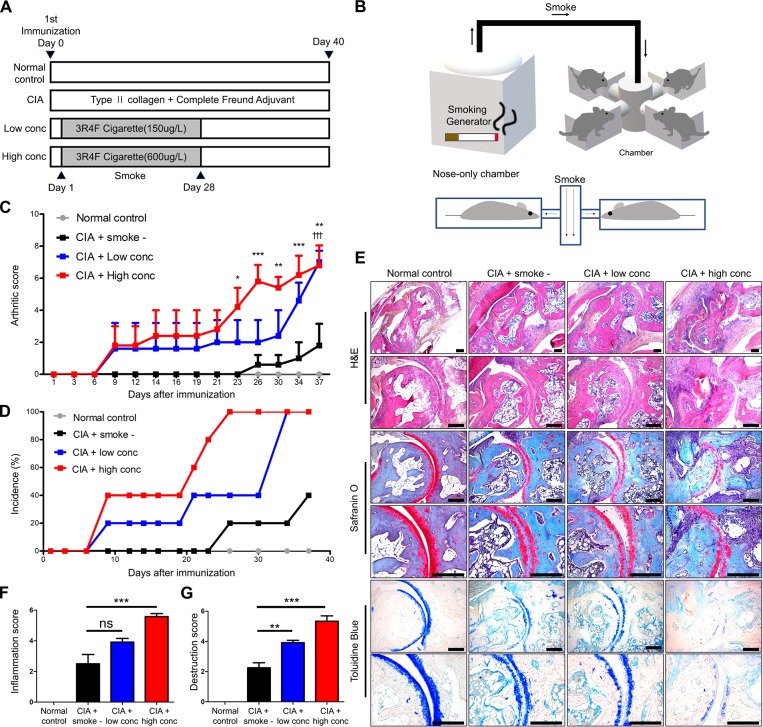
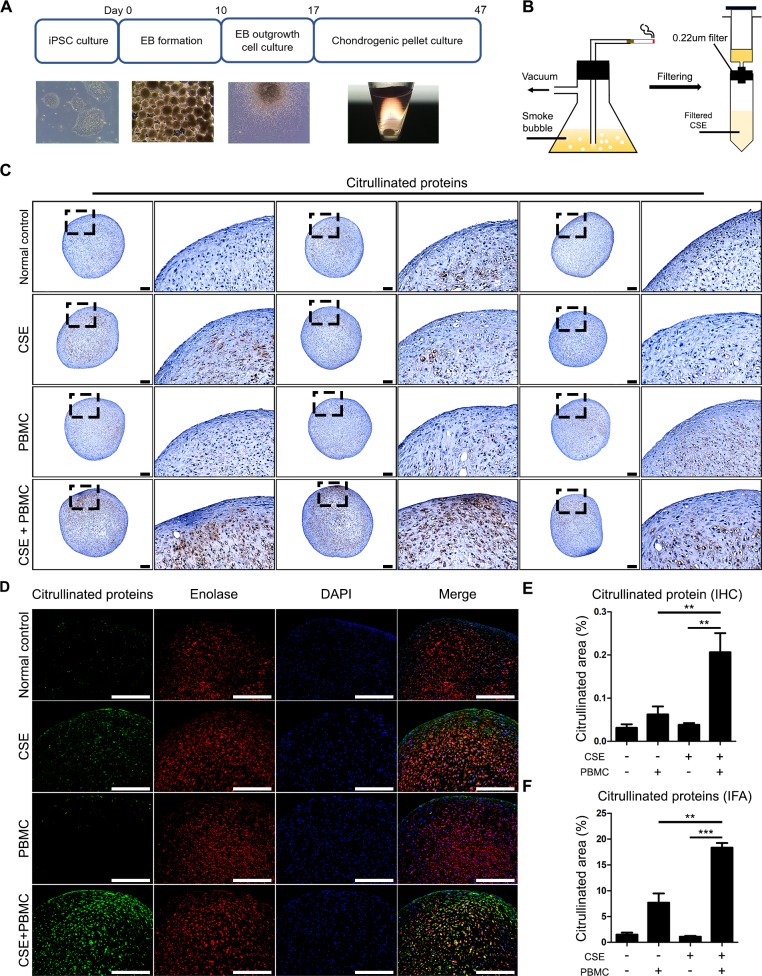
During induction of experimental arthritis with collagen challenge, mice were exposed to a smoking environment with 3R4F cigarettes. Generated smoke was delivered to mice through a nose-only exposure chamber (ISO standard 3308). Human cartilage pellet was challenged by cigarette smoke extract to identify citrullinating potential in vitro.
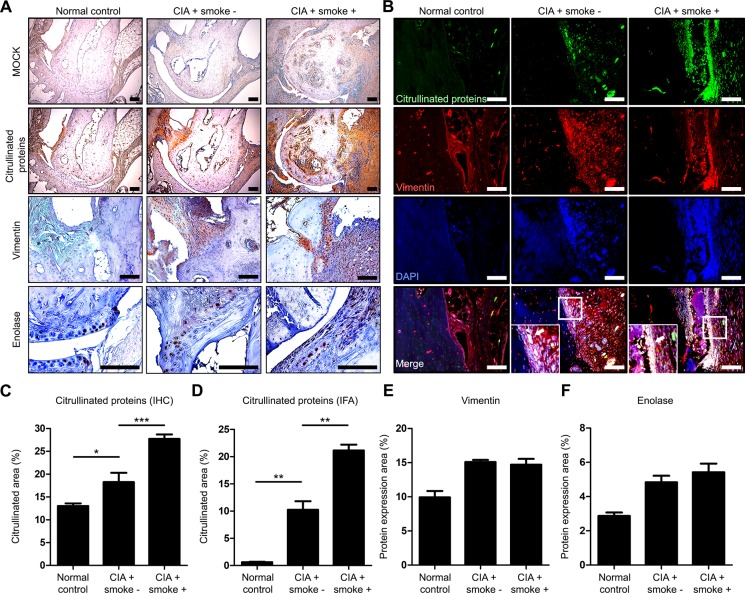
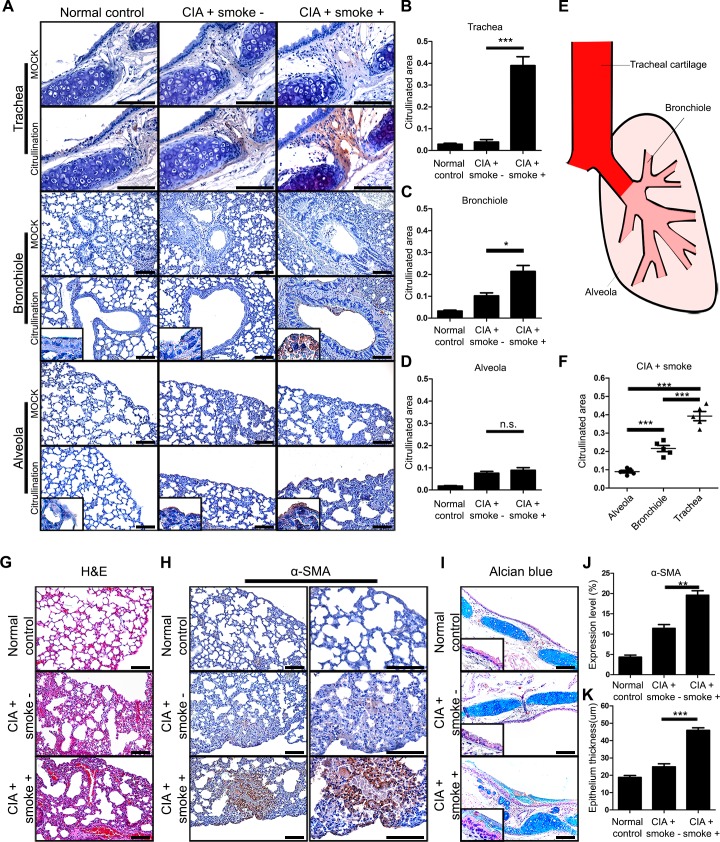
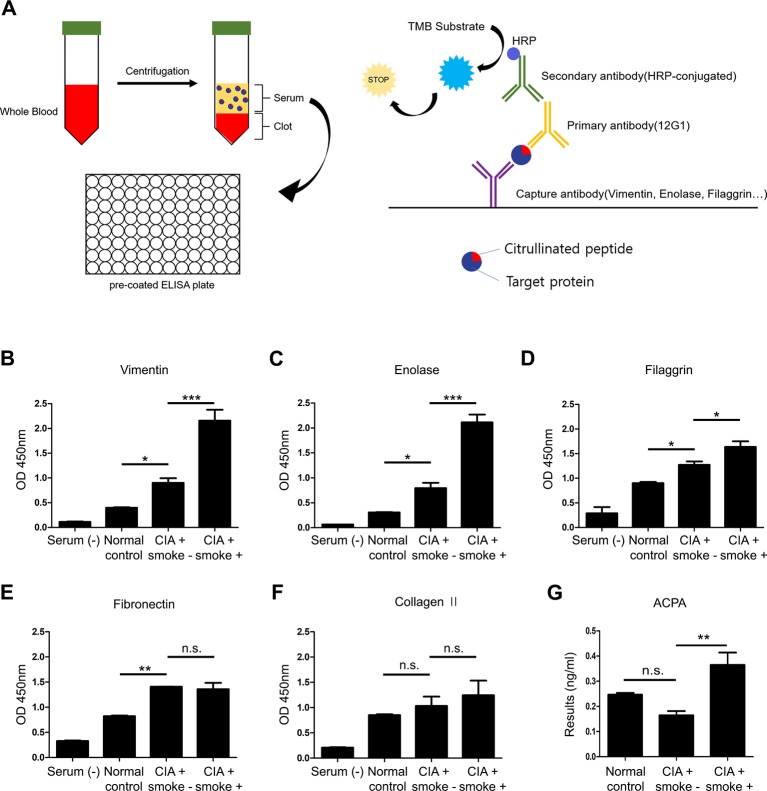
Cigarette smoke exacerbated arthritis in a collagen-induced arthritis (CIA) model. Exposure to smoke accelerated the onset of arthritis by 2 weeks compared to the conventional model without smoke. Citrullination of lung tissue as well as tarsal joints were revealed in smoke-aggravated CIA mice. Interestingly, tracheal cartilage was a core organ regarding intensity and area size of citrullination. The trachea might be an interesting organ in viewpoint of sharing cartilage with joint and direct smoke exposure. Anti-CCP antibodies were barely detected in the serum of CIA mice, they were significantly elevated in cigarette smoke group. Citrullinated antigens were increased in the serum of smoke-exposed mice. Lastly, a cigarette smoke extract enhanced human cartilage citrullination in vitro.
Missing link of arthritic mechanism between smoke and RA could be partially explained by tracheal citrullination. To control tracheal cartilage citrullination may be beneficial for preventing arthritis development or aggravation if cigarette smoke is becoming a risk factor to pre-arthritic individual.
从流行病学角度来看,吸烟是类风湿关节炎(RA)发病的一个已知危险因素。然而,吸烟为什么会加重 RA 尚缺乏合理的解释。我们研究了吸烟对关节炎发展实验模型的因果影响。
在胶原诱导的关节炎实验诱导期间,用 3R4F 香烟使小鼠暴露于吸烟环境中。通过鼻式暴露室(ISO 3308 标准)将生成的烟雾输送给小鼠。用香烟烟雾提取物对人软骨球进行体外挑战,以确定瓜氨酸化潜力。
香烟烟雾在胶原诱导的关节炎(CIA)模型中加重了关节炎。与没有烟雾的常规模型相比,烟雾暴露使关节炎的发病提前了 2 周。在烟雾加重的 CIA 小鼠中,肺组织和跗关节都发生了瓜氨酸化。有趣的是,气管软骨是瓜氨酸化强度和面积最大的核心器官。从共享关节和直接暴露于烟雾的角度来看,气管可能是一个有趣的器官。在 CIA 小鼠的血清中几乎检测不到抗 CCP 抗体,但在香烟烟雾组中显著升高。在暴露于烟雾的小鼠血清中,瓜氨酸化抗原增加。最后,香烟烟雾提取物增强了体外人软骨的瓜氨酸化。
烟雾与 RA 之间关节炎发病机制的缺失环节部分可以通过气管瓜氨酸化来解释。如果吸烟成为关节炎前期个体的危险因素,控制气管软骨瓜氨酸化可能有助于预防关节炎的发生或加重。