Liu Chunfang, Ma Zhan, Cai Zhen, Zhang Fengyu, Liu Cheng, Chen Tingjin, Peng Danni, Xu Xiaohong, Lin Hui-Kuan
1Department of Laboratory Medicine, Huashan Hospital, Shanghai Medical College, Fudan University, Shanghai, 200040 China.
2Department of Cancer Biology, Wake Forest School of Medicine, Winston-Salem, NC 27157 USA.
Cell Discov. 2020 Mar 24;6:15. doi: 10.1038/s41421-020-0145-3. eCollection 2020.
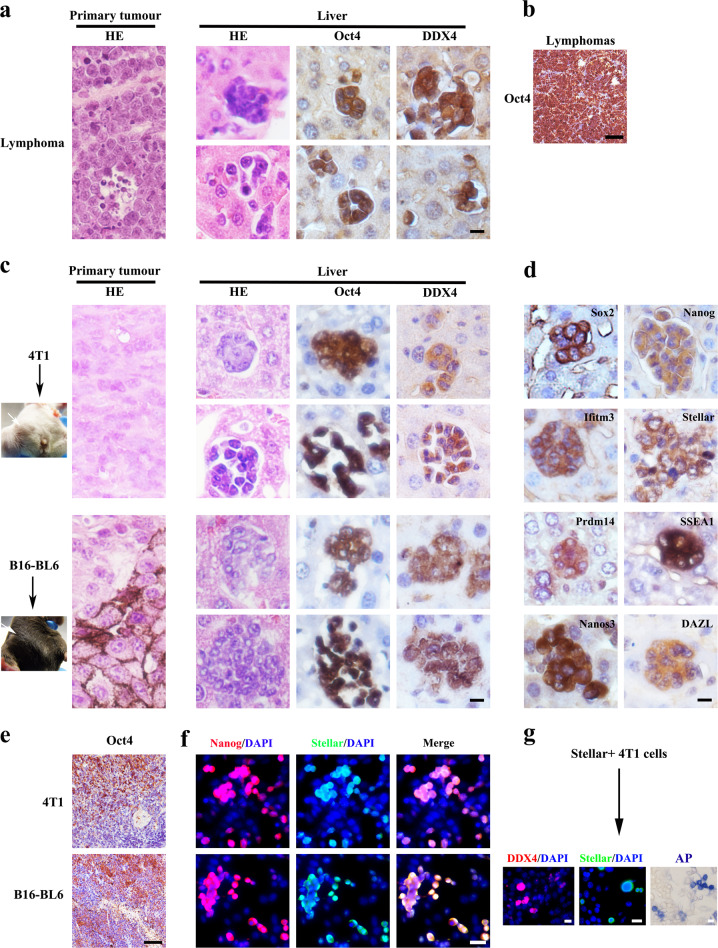
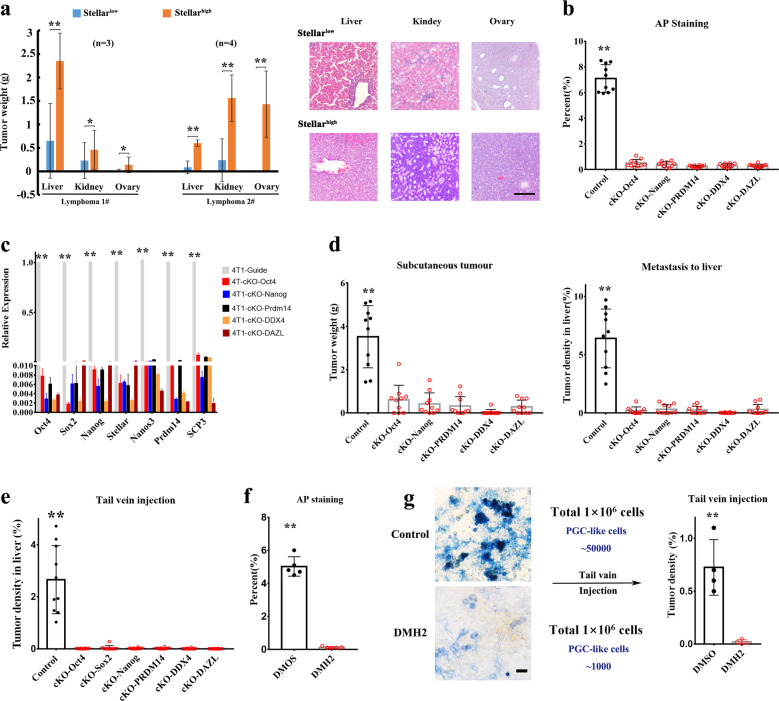
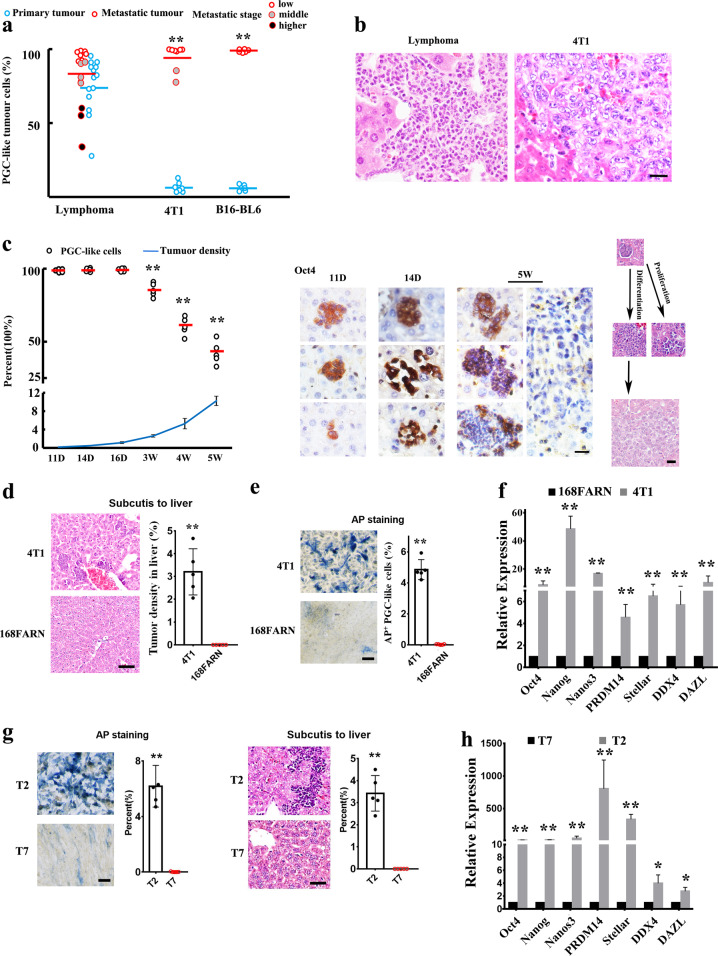
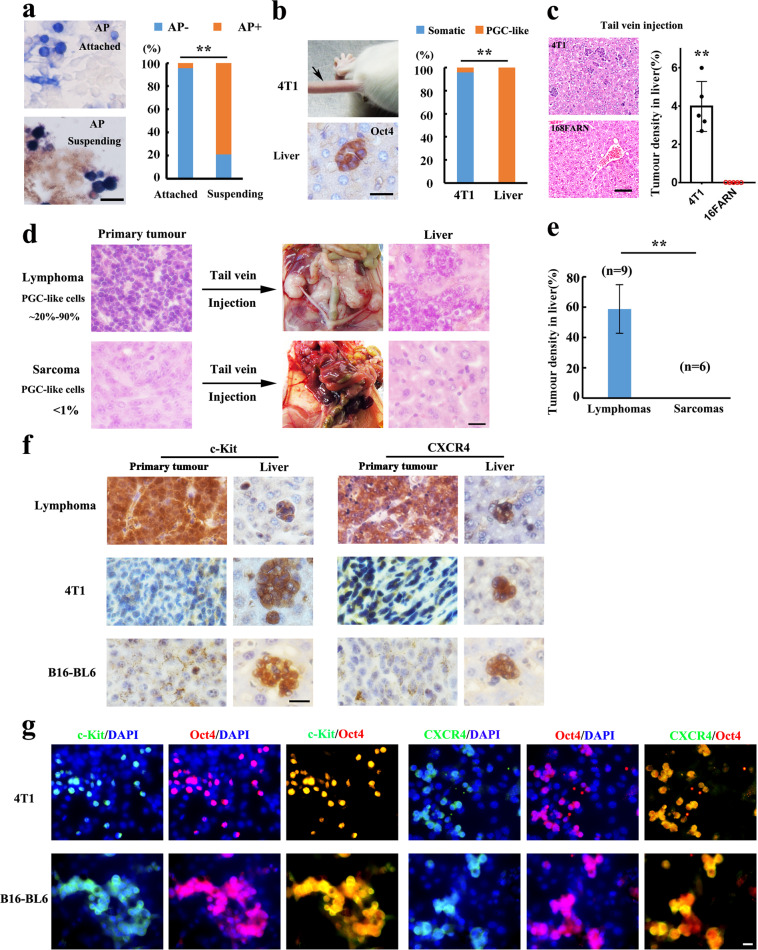
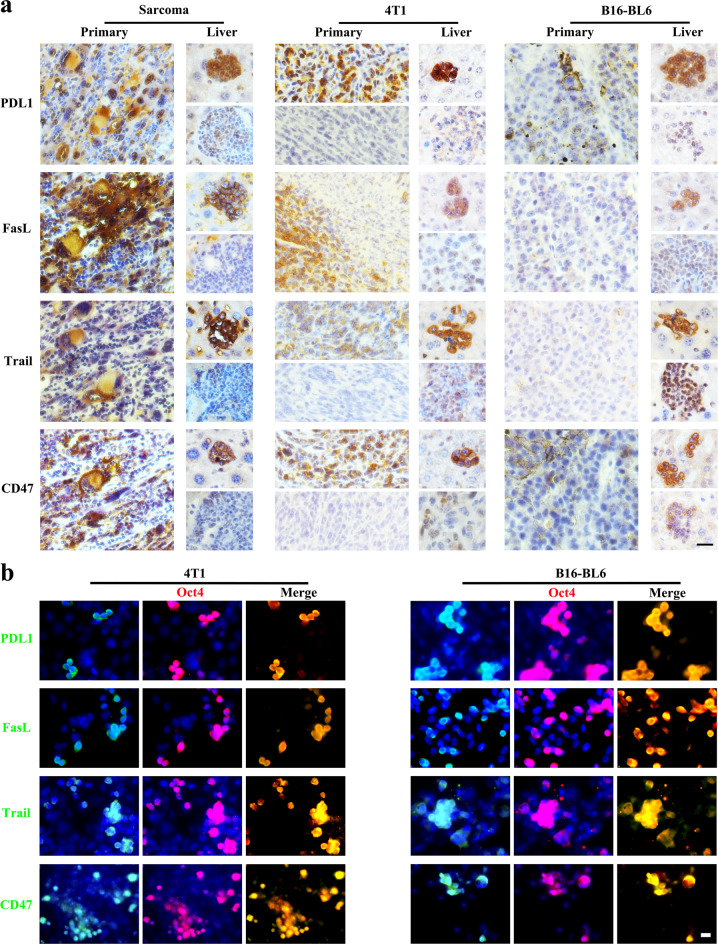
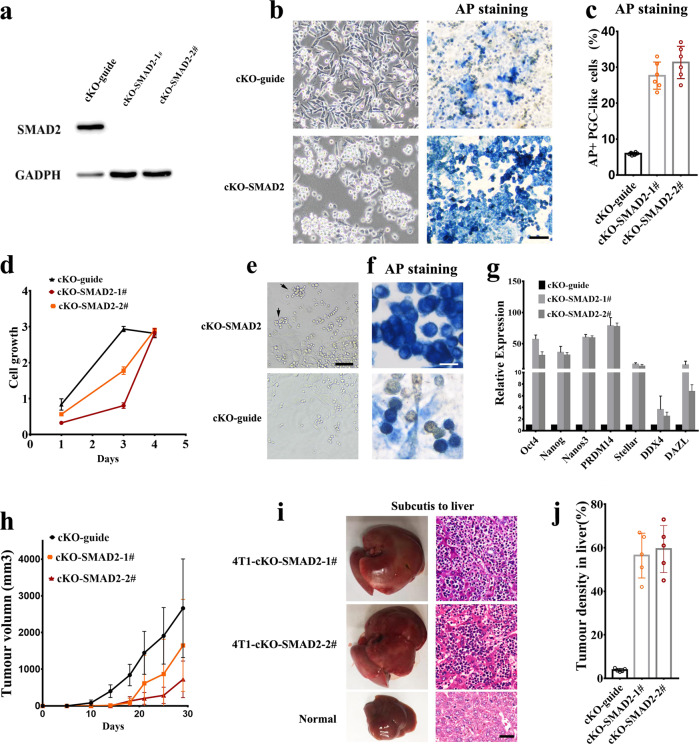
Liver metastasis, characterized by the spread of tumors to the liver from other areas, represents a deadly disease with poor prognosis. Currently, there is no effective therapeutic strategies and/or agents to combat liver metastasis primarily due to the insufficient understanding of liver metastasis. To develop a promising strategy for targeting liver metastasis, understanding of a cell origin responsible for liver metastasis and how this cell can be pharmacologically eliminated are therefore crucial. Using diverse tumor models including genetic mouse model and syngeneic tumor models, we identified primordial germ cell (PGC)-like tumor cells, which are enriched in earliest liver micro-metastasis (up to 99%), as a cell origin of liver metastasis. PGC-like tumor cells formed earliest micro-metastasis in liver and gradually differentiated into non-PGC-like tumor cells to constitute late macro-metastasis in the course of tumor metastasis. The liver metastasis-initiating cells (PGC-like tumor cells) display cell renewal and differentiation capabilities, resemble primordial germ cells (PGCs) in morphology and PGC marker gene expression, and express higher level of the genes linked to metastasis and immune escape compared with non-PGC-like tumor cells. Of note, Stellar PGC-like tumor cells, but not Stellar non-PGC-like cells, sorted from primary tumors of mice readily form liver metastasis. Depletion of PGC-like tumor cells through genetic depletion of any of key germ cell genes impairs liver metastasis, while increased PGC-like tumor cells by SMAD2 knockout is correlated with markedly enhanced liver metastasis. Finally, we present the proof of principle evidence that pharmacologically targeting BMP pathways serves as a promising strategy to eliminate PGC-like tumor cells leading to abrogating liver metastasis. Collectively, our study identifies PGC-like tumor cells as a cell origin of liver metastasis, whose depletion by genetically targeting core PGC developmental genes or pharmacologically inhibiting BMP pathways serves a promising strategy for targeting liver metastasis.
肝转移是指肿瘤从其他部位扩散至肝脏,是一种预后较差的致命疾病。目前,由于对肝转移的认识不足,尚无有效的治疗策略和/或药物来对抗肝转移。因此,为了开发一种有前景的肝转移靶向策略,了解肝转移的细胞起源以及如何从药理学角度消除这种细胞至关重要。我们使用了包括基因小鼠模型和同基因肿瘤模型在内的多种肿瘤模型,确定了原始生殖细胞样肿瘤细胞是肝转移的细胞起源,这种细胞在最早的肝脏微转移中富集(高达99%)。在肿瘤转移过程中,原始生殖细胞样肿瘤细胞在肝脏中形成最早的微转移,并逐渐分化为非原始生殖细胞样肿瘤细胞,从而构成晚期大转移。肝转移起始细胞(原始生殖细胞样肿瘤细胞)具有细胞更新和分化能力,在形态和原始生殖细胞标记基因表达方面类似于原始生殖细胞(PGC),并且与非原始生殖细胞样肿瘤细胞相比,表达更高水平的与转移和免疫逃逸相关的基因。值得注意的是,从小鼠原发性肿瘤中分离出的恒星原始生殖细胞样肿瘤细胞,而非恒星非原始生殖细胞样细胞,很容易形成肝转移。通过基因敲除任何关键生殖细胞基因来耗尽原始生殖细胞样肿瘤细胞会损害肝转移,而通过敲除SMAD2增加原始生殖细胞样肿瘤细胞则与肝转移显著增强相关。最后,我们提供了原理证据,即从药理学角度靶向骨形态发生蛋白(BMP)信号通路是一种有前景的策略,可以消除导致肝转移被废除的原始生殖细胞样肿瘤细胞。总之,我们的研究确定原始生殖细胞样肿瘤细胞是肝转移的细胞起源,通过基因靶向核心PGC发育基因或从药理学角度抑制BMP信号通路来耗尽这种细胞是一种有前景的肝转移靶向策略。