Department of Evolution and Ecology, University of California, Davis, Davis, California, United States of America.
PLoS Genet. 2020 Mar 30;16(3):e1008645. doi: 10.1371/journal.pgen.1008645. eCollection 2020 Mar.
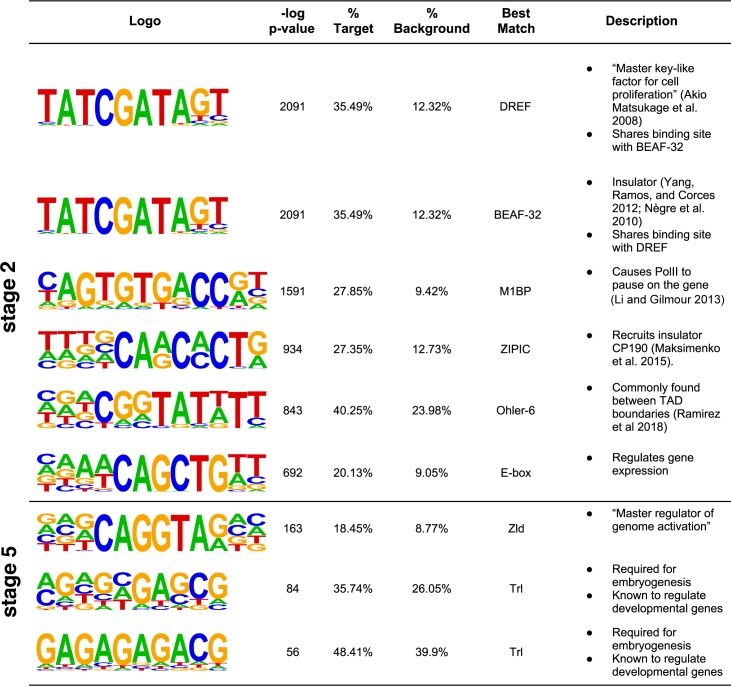
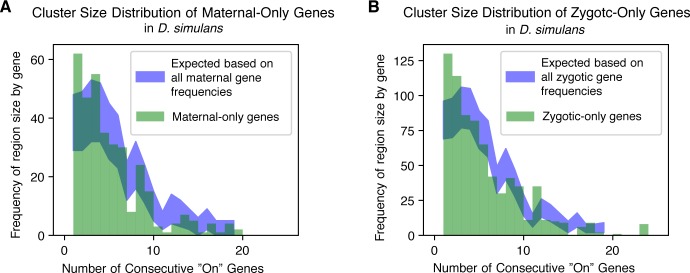
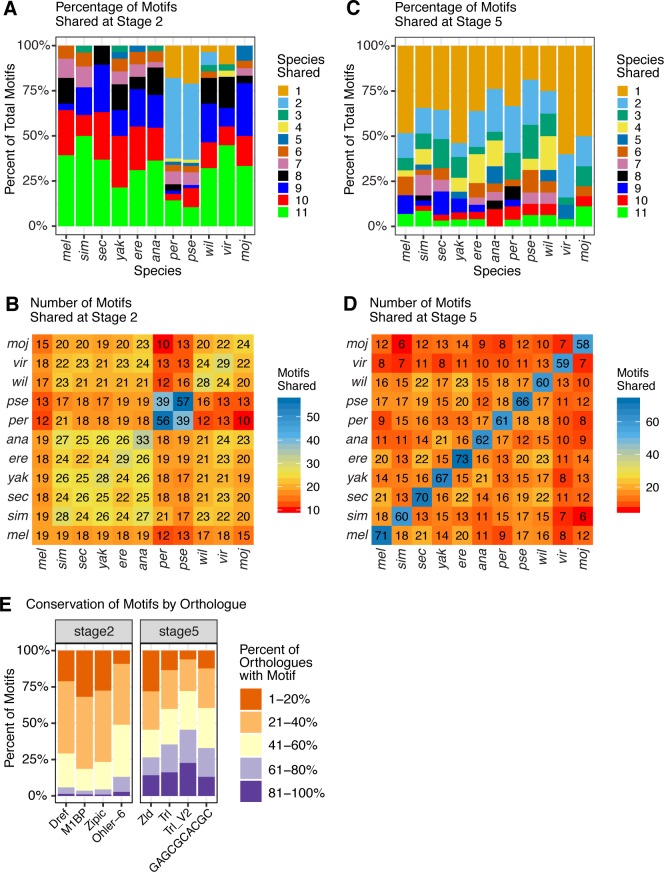
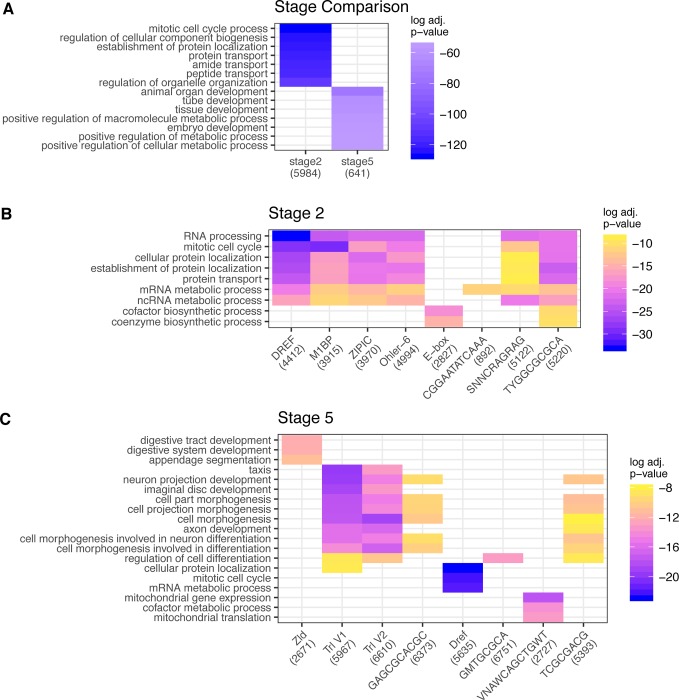
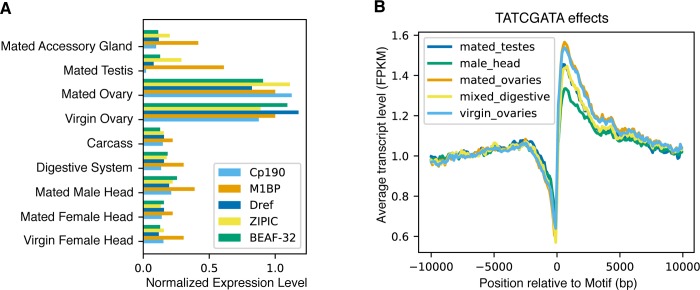
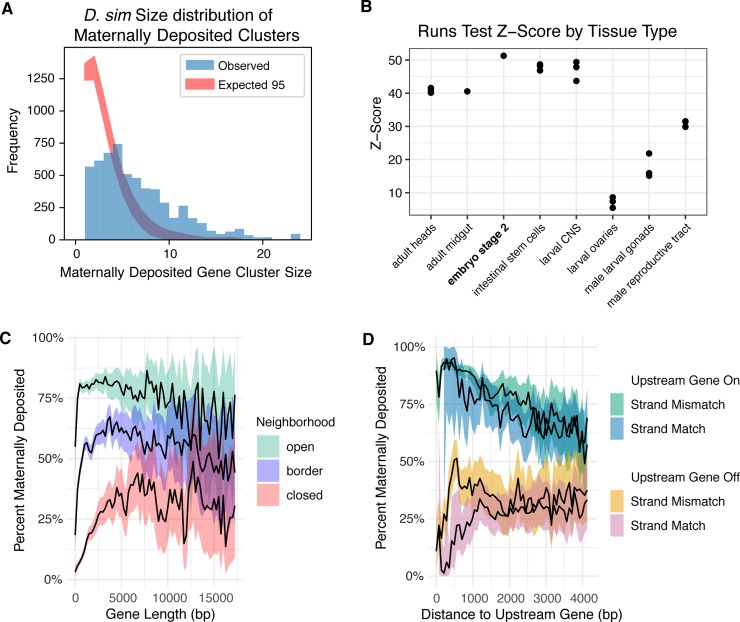
The gene products that drive early development are critical for setting up developmental trajectories in all animals. The earliest stages of development are fueled by maternally provided mRNAs until the zygote can take over transcription of its own genome. In early development, both maternally deposited and zygotically transcribed gene products have been well characterized in model systems. Previously, we demonstrated that across the genus Drosophila, maternal and zygotic mRNAs are largely conserved but also showed a surprising amount of change across species, with more differences evolving at the zygotic stage than the maternal stage. In this study, we use comparative methods to elucidate the regulatory mechanisms underlying maternal deposition and zygotic transcription across species. Through motif analysis, we discovered considerable conservation of regulatory mechanisms associated with maternal transcription, as compared to zygotic transcription. We also found that the regulatory mechanisms active in the maternal and zygotic genomes are quite different. For maternally deposited genes, we uncovered many signals that are consistent with transcriptional regulation at the level of chromatin state through factors enriched in the ovary, rather than precisely controlled gene-specific factors. For genes expressed only by the zygotic genome, we found evidence for previously identified regulators such as Zelda and GAGA-factor, with multiple analyses pointing toward gene-specific regulation. The observed mechanisms of regulation are consistent with what is known about regulation in these two genomes: during oogenesis, the maternal genome is optimized to quickly produce a large volume of transcripts to provide to the oocyte; after zygotic genome activation, mechanisms are employed to activate transcription of specific genes in a spatiotemporally precise manner. Thus the genetic architecture of the maternal and zygotic genomes, and the specific requirements for the transcripts present at each stage of embryogenesis, determine the regulatory mechanisms responsible for transcripts present at these stages.
驱动早期发育的基因产物对于所有动物建立发育轨迹至关重要。在胚胎能够接管自身基因组的转录之前,早期发育是由母体提供的 mRNA 提供燃料的。在早期发育中,母体沉积和合子转录的基因产物在模式系统中已经得到了很好的描述。以前,我们证明在果蝇属中,母体和合子的 mRNA 基本上是保守的,但在物种间也显示出了惊人的变化,合子阶段的变化比母体阶段多。在这项研究中,我们使用比较方法阐明了跨物种母体沉积和合子转录的调控机制。通过基序分析,我们发现与合子转录相比,与母体转录相关的调控机制有很大的保守性。我们还发现,在母体和合子基因组中活跃的调控机制是非常不同的。对于母体沉积的基因,我们发现了许多信号,这些信号与通过卵巢中富集的因子在染色质状态水平上的转录调控一致,而不是精确控制的基因特异性因子。对于仅由合子基因组表达的基因,我们发现了以前确定的调节因子(如 Zelda 和 GAGA 因子)的证据,多项分析都指向基因特异性调节。所观察到的调节机制与这两个基因组中已知的调节机制一致:在卵母细胞发生过程中,母体基因组被优化为快速产生大量的转录物,以提供给卵母细胞;在合子基因组激活后,采用机制以时空精确的方式激活特定基因的转录。因此,母体和合子基因组的遗传结构以及胚胎发生的每个阶段存在的转录本的特定要求,决定了负责这些阶段存在的转录本的调控机制。