Department of Metabolism and Endocrinology, The Second Xiangya Hospital, Central South University, Changsha, China.
Key Laboratory of Diabetes Immunology (Central South University), Ministry of Education, National Clinical Research Center for Metabolic Diseases, Changsha, China.
Front Endocrinol (Lausanne). 2020 Mar 12;11:119. doi: 10.3389/fendo.2020.00119. eCollection 2020.
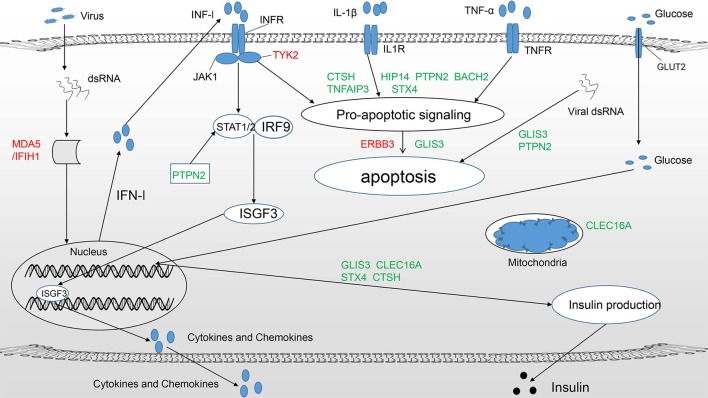
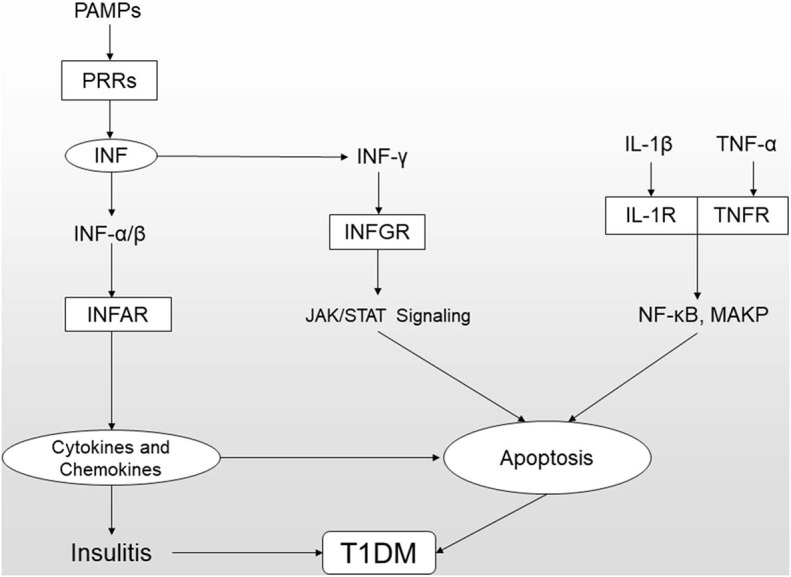
T1DM (type 1 diabetes mellitus), which results from the irreversible elimination of beta-cells mediated by autoreactive T cells, is defined as an autoimmune disease. It is widely accepted that T1DM is caused by a combination of genetic and environmental factors, but the precise underlying molecular mechanisms are still unknown. To date, more than 50 genetic risk regions contributing to the pathogenesis of T1DM have been identified by GWAS (genome-wide association studies). Notably, more than 60% of the identified candidate genes are expressed in islets and beta-cells, which makes it plausible that these genes act at the beta-cell level and play a key role in the pathogenesis of T1DM. In this review, we focus on the current status of candidate genes that act at the beta-cell level by regulating the innate immune response and antiviral activity, affecting susceptibility to proapoptotic stimuli and influencing the pancreatic beta-cell phenotype.
1 型糖尿病(type 1 diabetes mellitus,T1DM)是由自身反应性 T 细胞介导的β细胞不可逆性破坏所致,被定义为一种自身免疫性疾病。人们普遍认为,T1DM 是由遗传和环境因素共同作用引起的,但确切的潜在分子机制仍不清楚。迄今为止,通过全基因组关联研究(genome-wide association studies,GWAS)已经确定了 50 多个与 T1DM 发病机制相关的遗传风险区域。值得注意的是,超过 60%的已识别候选基因在胰岛和β细胞中表达,这表明这些基因在β细胞水平起作用,并在 T1DM 的发病机制中发挥关键作用。在这篇综述中,我们重点关注候选基因在β细胞水平上通过调节先天免疫反应和抗病毒活性、影响对促凋亡刺激的易感性以及影响胰腺β细胞表型的作用。