Department of Pharmacy, Beijing Chao-Yang Hospital, Capital Medical University, Beijing, China.
Cancer Sci. 2020 Jun;111(6):1887-1898. doi: 10.1111/cas.14397. Epub 2020 May 22.
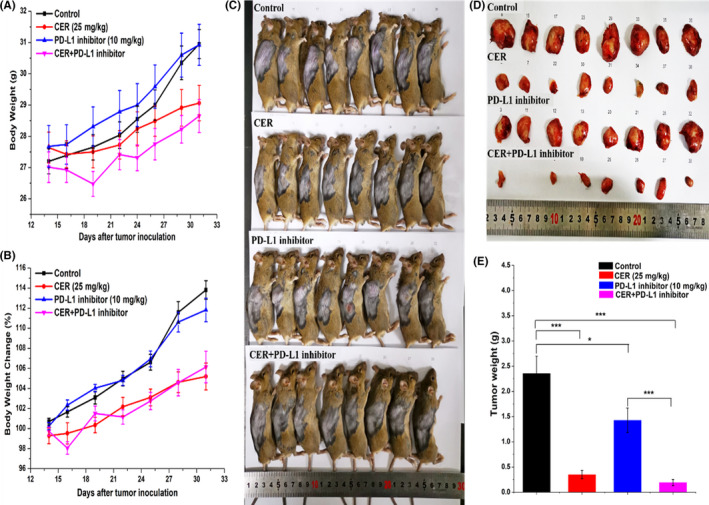
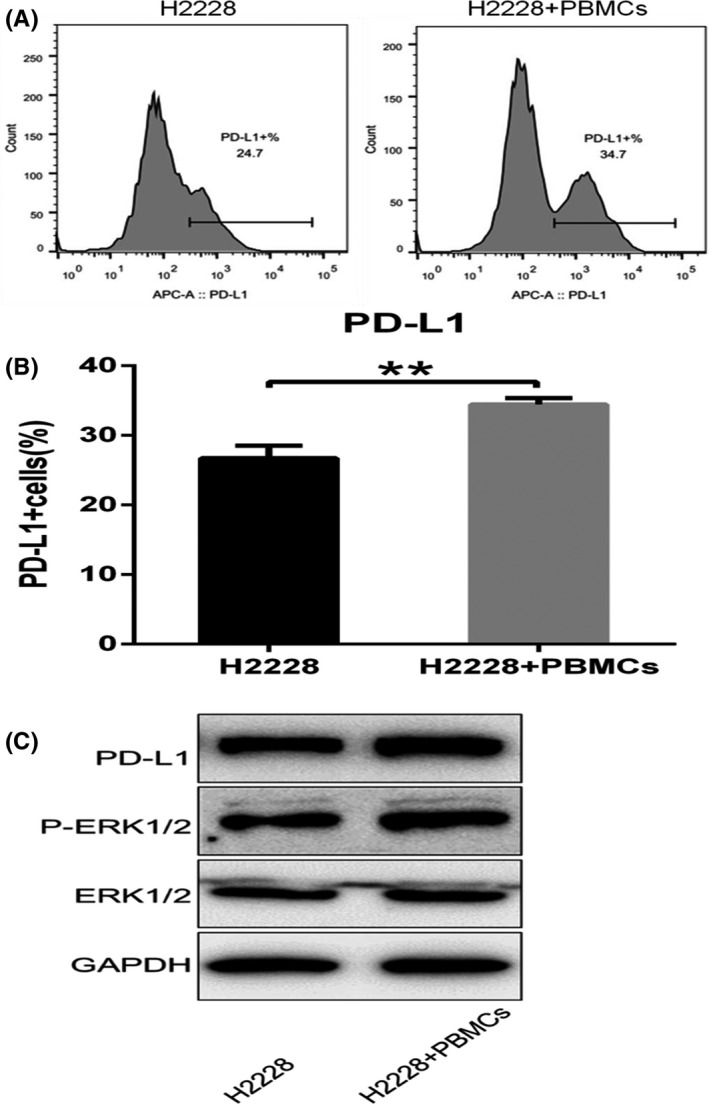
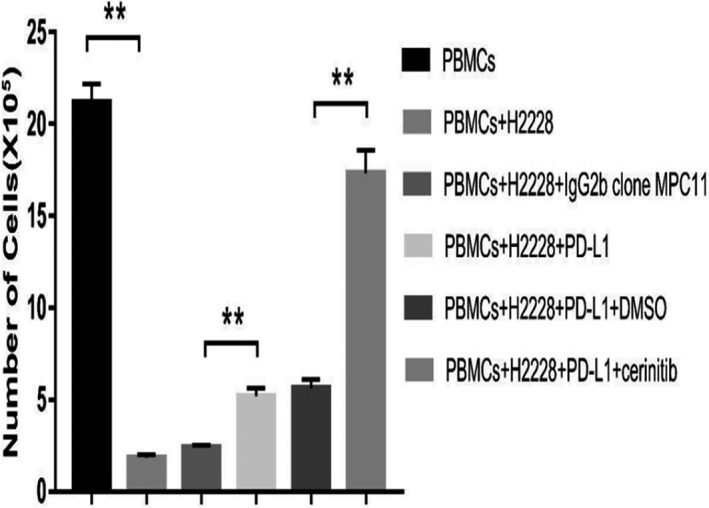
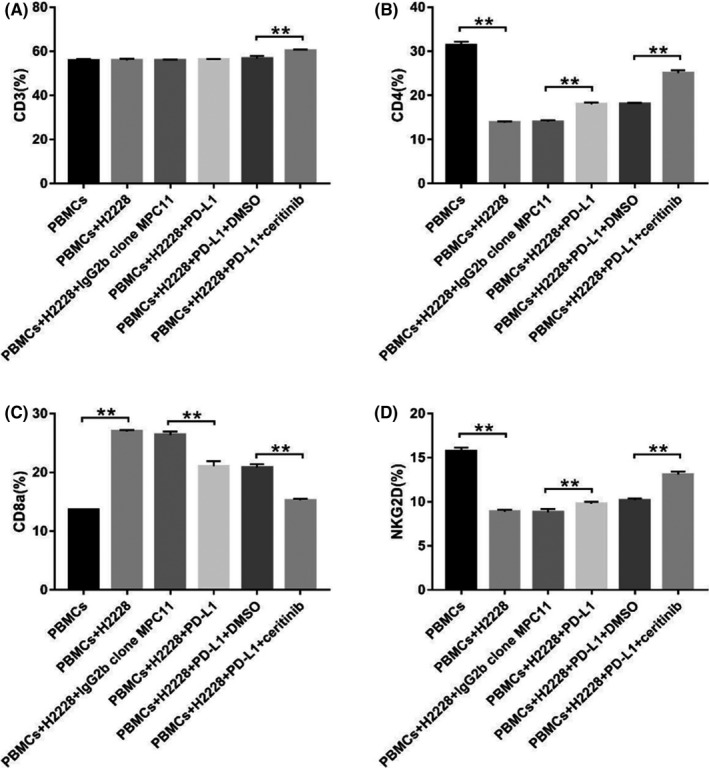
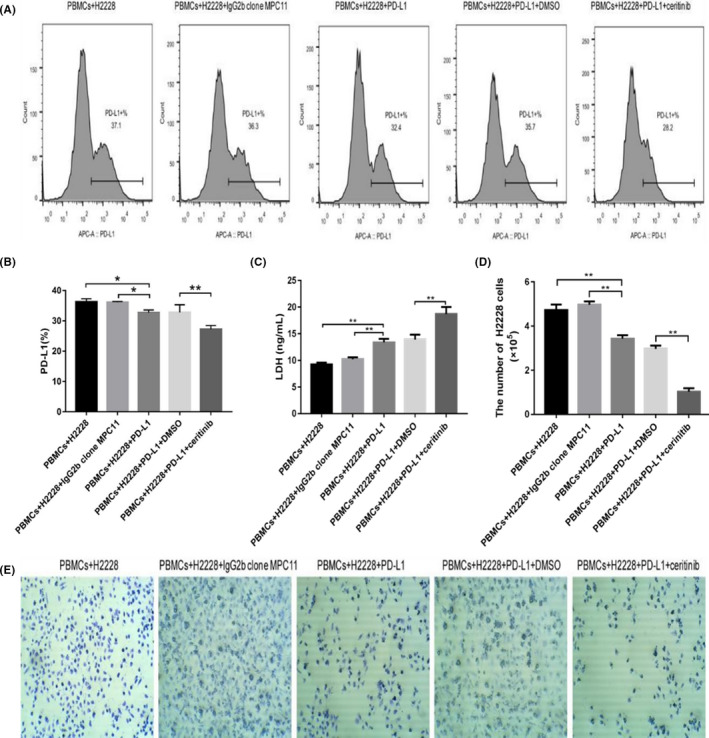
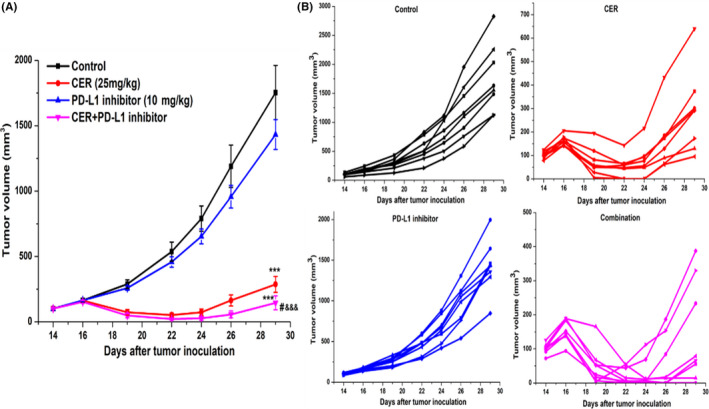
Both ceritinib (CER) and programmed cell death (PD)-1/PD ligand-1 (PD-L1) have brought significant breakthroughs for anaplastic lymphoma kinase (ALK)-rearranged non-small-cell lung cancer (NSCLC). However, the overall clinical efficacy of either CER or PD-1/PD-L1 inhibitor monotherapy has been limited to a large extent. In addition, the antitumor effect of combined CER and PD-L1 inhibitor in ALK-rearranged NSCLC is not fully understood. In H2228 cells, we examined the tumor killing effect of CER plus PD-L1 inhibitor in vitro by quantitative RT-PCR, flow cytometry, ELISA, western blot analysis, PBMC coculture system, and plasmid and transfection experiments. A Ba/F3 (EML4-ALK-WT) xenograft mouse model was also utilized to further evaluate the synergistic anticancer effects of CER and PD-L1 inhibitor in vivo. The coculture system of PBMCs with H2228 cells promotes the expression of PD-L1 and phospho-ERK, and combined treatments facilitate lymphocyte proliferation and activation, inhibit PD-L1 expression, and enhance lymphocyte cytotoxicity and cell death. In the in vivo NSCLC xenograft model, the volumes of tumors treated with CER and PD-L1 inhibitor in combination were significantly smaller than those treated with CER or PD-L1 alone. The relative tumor growth inhibitions were 84.9%, 20.0%, and 91.9% for CER, PD-L1 inhibitor, and CER plus PD-L1 groups, respectively. Ceritinib could synergize with PD-1/PD-L1 blockade to yield enhanced antitumor responses along with favorable tolerability of adverse effects. Ceritinib and PD-L1 inhibitor combined produced a synergistic antineoplastic efficacy in vitro and in vivo, which provides a key insight and proof of principle for evaluating CER plus PD-L1 blockade as combination therapy in clinical therapeutic practice.
克唑替尼(CER)和程序性死亡受体 1(PD-1)/程序性死亡受体配体 1(PD-L1)抑制剂都为间变性淋巴瘤激酶(ALK)重排的非小细胞肺癌(NSCLC)带来了显著的突破。然而,CER 或 PD-1/PD-L1 抑制剂单药治疗的总体临床疗效在很大程度上受到限制。此外,联合 CER 和 PD-L1 抑制剂在 ALK 重排的 NSCLC 中的抗肿瘤作用尚未完全阐明。在 H2228 细胞中,我们通过定量 RT-PCR、流式细胞术、ELISA、western blot 分析、PBMC 共培养系统和质粒转染实验,检测了 CER 联合 PD-L1 抑制剂在体外的肿瘤杀伤作用。还利用 Ba/F3(EML4-ALK-WT)异种移植小鼠模型进一步评估 CER 和 PD-L1 抑制剂在体内的协同抗癌作用。H2228 细胞与 PBMC 共培养系统促进了 PD-L1 和磷酸化 ERK 的表达,联合治疗促进淋巴细胞增殖和激活,抑制 PD-L1 表达,增强淋巴细胞细胞毒性和细胞死亡。在体内 NSCLC 异种移植模型中,与 CER 或 PD-L1 单药治疗相比,CER 和 PD-L1 抑制剂联合治疗的肿瘤体积明显更小。CER、PD-L1 抑制剂和 CER 加 PD-L1 组的相对肿瘤生长抑制率分别为 84.9%、20.0%和 91.9%。克唑替尼可与 PD-1/PD-L1 阻断协同作用,产生增强的抗肿瘤反应,同时具有良好的不良反应耐受性。CER 和 PD-L1 抑制剂在体外和体内联合产生协同抗肿瘤疗效,为评估 CER 联合 PD-L1 阻断作为临床治疗实践中的联合治疗提供了关键的见解和原理证明。