INM - Leibniz Institute for New Materials, Campus D2 2, 66123, Saarbrücken, Germany.
Chemistry Department, Saarland University, 66123, Saarbrücken, Germany.
BMC Mol Cell Biol. 2020 Mar 30;21(1):22. doi: 10.1186/s12860-020-00267-0.
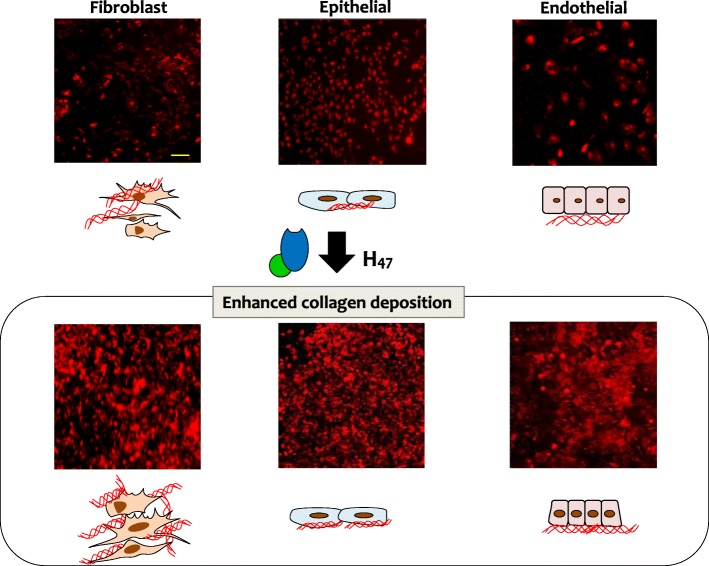
Collagen is a structural protein that provides mechanical stability and defined architectures to skin. In collagen-based skin disorders this stability is lost, either due to mutations in collagens or in the chaperones involved in collagen assembly. This leads to chronic wounds, skin fragility, and blistering. Existing approaches to treat such conditions rely on administration of small molecules to simulate collagen production, like 4-phenylbutyrate (4-PBA) or growth factors like TGF-β. However, these molecules are not specific for collagen synthesis, and result in unsolicited side effects. Hsp47 is a collagen-specific chaperone with a major role in collagen biosynthesis. Expression levels of Hsp47 correlate with collagen deposition. This article explores the stimulation of collagen deposition by exogenously supplied Hsp47 (collagen specific chaperone) to skin cells, including specific collagen subtypes quantification.
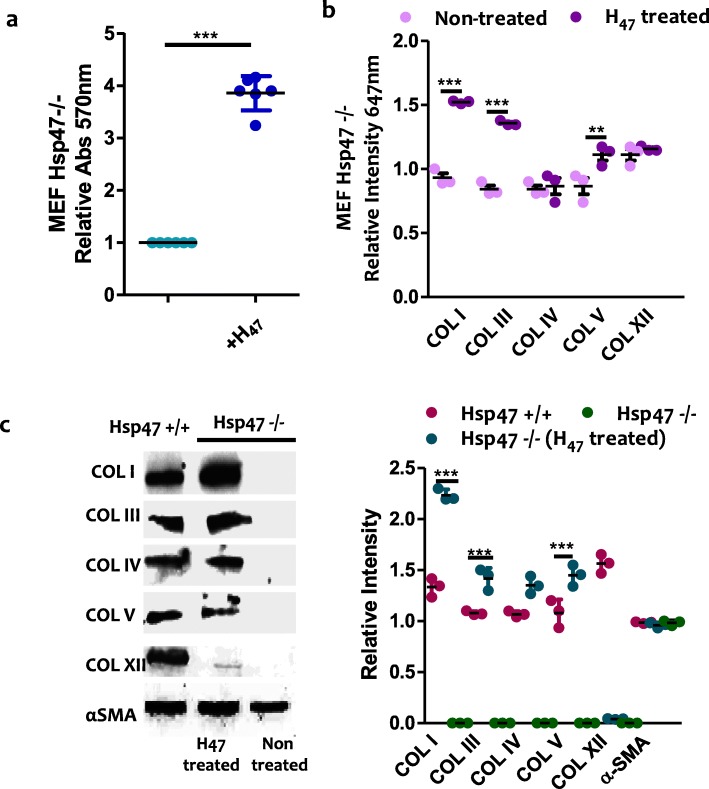
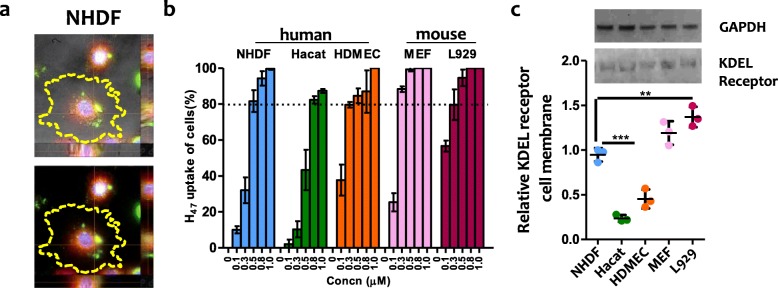
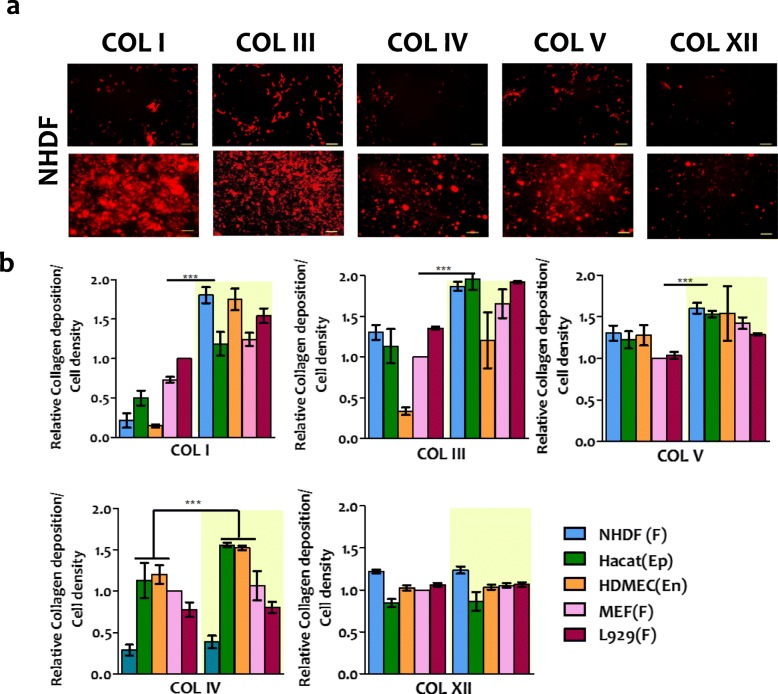
Here we quantify the collagen deposition level and the types of deposited collagens after Hsp47 stimulation in different in vitro cultures of cells from human skin tissue (fibroblasts NHDF, keratinocytes HaCat and endothelial cells HDMEC) and mouse fibroblasts (L929 and MEF). We find upregulated deposition of fibrillar collagen subtypes I, III and V after Hsp47 delivery. Network collagen IV deposition was enhanced in HaCat and HDMECs, while fibril-associated collagen XII was not affected by the increased intracellular Hsp47 levels. The deposition levels of fibrillar collagen were cell-dependent i.e. Hsp47-stimulated fibroblasts deposited significantly higher amount of fibrillar collagen than Hsp47-stimulated HaCat and HDMECs.
A 3-fold enhancement of collagen deposition was observed in fibroblasts upon repeated dosage of Hsp47 within the first 6 days of culture. Our results provide fundamental understanding towards the idea of using Hsp47 as therapeutic protein to treat collagen disorders.
胶原蛋白是一种结构蛋白,为皮肤提供机械稳定性和特定的结构。在基于胶原蛋白的皮肤疾病中,这种稳定性丧失,要么是由于胶原蛋白的突变,要么是由于参与胶原蛋白组装的伴侣蛋白的突变。这导致慢性伤口、皮肤脆弱和起泡。治疗此类疾病的现有方法依赖于施用小分子来模拟胶原蛋白的产生,如 4-苯丁酸(4-PBA)或 TGF-β 等生长因子。然而,这些分子对胶原蛋白合成不是特异性的,并且会产生不必要的副作用。Hsp47 是一种胶原蛋白特异性伴侣蛋白,在胶原蛋白生物合成中起主要作用。Hsp47 的表达水平与胶原蛋白沉积相关。本文探讨了外源性提供 Hsp47(胶原蛋白特异性伴侣蛋白)对皮肤细胞的胶原蛋白沉积的刺激作用,包括对特定胶原蛋白亚型的定量。
我们在来自人皮肤组织(成纤维细胞 NHDF、角质形成细胞 HaCat 和内皮细胞 HDMEC)和小鼠成纤维细胞(L929 和 MEF)的不同体外细胞培养中,定量了 Hsp47 刺激后胶原蛋白沉积水平和沉积的胶原蛋白类型。我们发现 Hsp47 递送后 I、III 和 V 型纤维状胶原蛋白的沉积水平上调。网络状胶原蛋白 IV 的沉积在 HaCat 和 HDMEC 中增强,而纤维相关胶原蛋白 XII 不受细胞内 Hsp47 水平升高的影响。纤维状胶原蛋白的沉积水平是细胞依赖性的,即 Hsp47 刺激的成纤维细胞比 Hsp47 刺激的 HaCat 和 HDMEC 沉积的纤维状胶原蛋白显著更多。
在培养的前 6 天内,重复给予 Hsp47 可使成纤维细胞中的胶原蛋白沉积增强 3 倍。我们的结果为使用 Hsp47 作为治疗蛋白治疗胶原蛋白疾病的想法提供了基本的理解。