Section Molecular Neurobiology, Department of Biomedical Sciences of Cells & Systems, University of Groningen, University Medical Center Groningen, Antonius Deusinglaan 1, 9713 AV Groningen, The Netherlands.
Department of Biomedical Engineering, University of Groningen, University Medical Center Groningen, Antonius Deusinglaan 1, 9713 AV Groningen, The Netherlands.
Int J Mol Sci. 2022 Jul 29;23(15):8418. doi: 10.3390/ijms23158418.
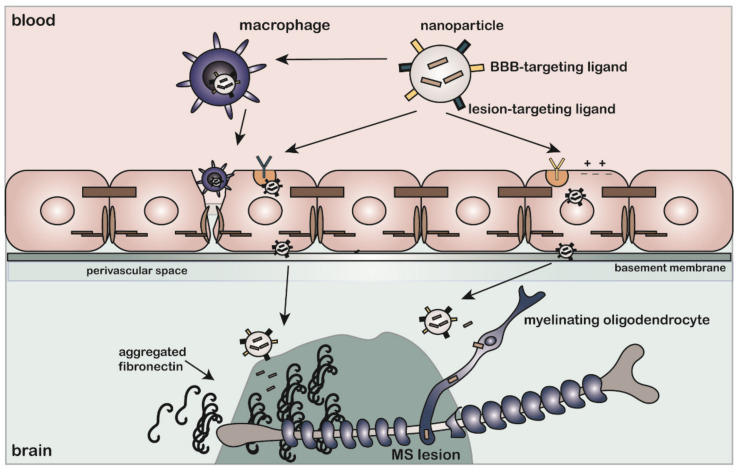
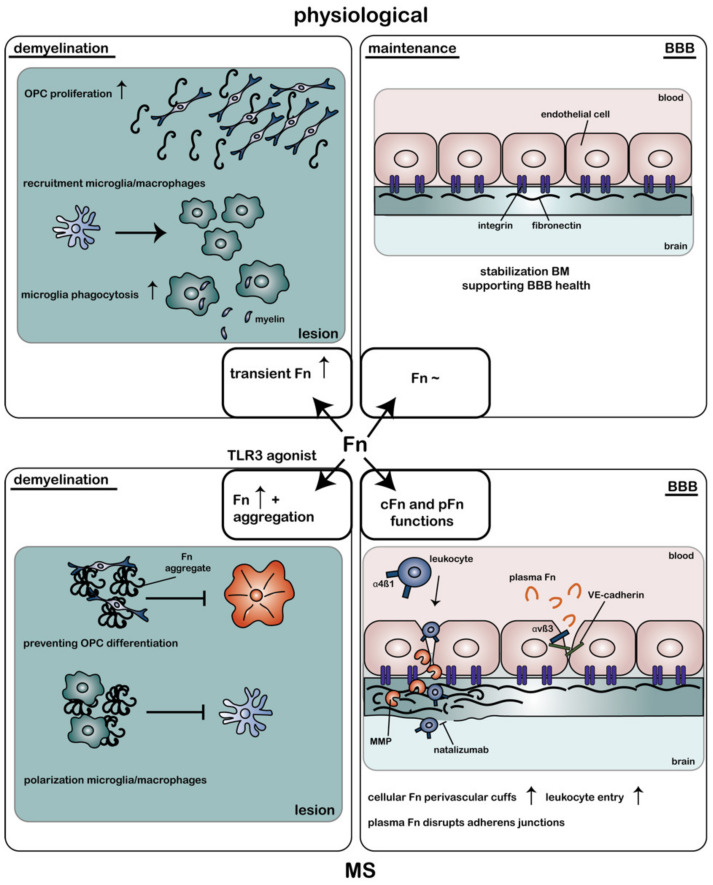
Multiple sclerosis (MS) is a neuroinflammatory and neurodegenerative disease with unknown etiology that can be characterized by the presence of demyelinated lesions. Prevailing treatment protocols in MS rely on the modulation of the inflammatory process but do not impact disease progression. Remyelination is an essential factor for both axonal survival and functional neurological recovery but is often insufficient. The extracellular matrix protein fibronectin contributes to the inhibitory environment created in MS lesions and likely plays a causative role in remyelination failure. The presence of the blood-brain barrier (BBB) hinders the delivery of remyelination therapeutics to lesions. Therefore, therapeutic interventions to normalize the pathogenic MS lesion environment need to be able to cross the BBB. In this review, we outline the multifaceted roles of fibronectin in MS pathogenesis and discuss promising therapeutic targets and agents to overcome fibronectin-mediated inhibition of remyelination. In addition, to pave the way for clinical use, we reflect on opportunities to deliver MS therapeutics to lesions through the utilization of nanomedicine and discuss strategies to deliver fibronectin-directed therapeutics across the BBB. The use of well-designed nanocarriers with appropriate surface functionalization to cross the BBB and target the lesion sites is recommended.
多发性硬化症(MS)是一种病因不明的神经炎症和神经退行性疾病,其特征是存在脱髓鞘病变。目前 MS 的主要治疗方案依赖于炎症过程的调节,但并不影响疾病的进展。髓鞘再生对于轴突存活和神经功能恢复至关重要,但往往不足。细胞外基质蛋白纤维连接蛋白促进了 MS 病变中抑制性环境的形成,并可能在髓鞘再生失败中起因果作用。血脑屏障(BBB)的存在阻碍了髓鞘再生治疗药物到达病变部位。因此,需要能够穿过血脑屏障的治疗干预措施来使 MS 病变环境正常化。在这篇综述中,我们概述了纤维连接蛋白在 MS 发病机制中的多方面作用,并讨论了有希望的治疗靶点和药物,以克服纤维连接蛋白介导的髓鞘再生抑制。此外,为了为临床应用铺平道路,我们反思了通过利用纳米医学将 MS 治疗药物递送到病变部位的机会,并讨论了跨越血脑屏障递送达纤维连接蛋白靶向治疗药物的策略。建议使用经过精心设计的纳米载体,并进行适当的表面功能化,以穿过血脑屏障并靶向病变部位。