Department of Oncology, Lombardi Comprehensive Cancer Center, Georgetown University, Room 175, Building D, 4000 Reservoir Rd NW, Washington, DC, 20057, USA.
MedStar Georgetown University Hospital, Washington, DC, USA.
BMC Med Genomics. 2020 Mar 30;13(1):56. doi: 10.1186/s12920-020-0706-1.
The established role miRNA-mRNA regulation of gene expression has in oncogenesis highlights the importance of integrating miRNA with downstream mRNA targets. These findings call for investigations aimed at identifying disease-associated miRNA-mRNA pairs. Hierarchical integrative models (HIM) offer the opportunity to uncover the relationships between disease and the levels of different molecules measured in multiple omic studies.
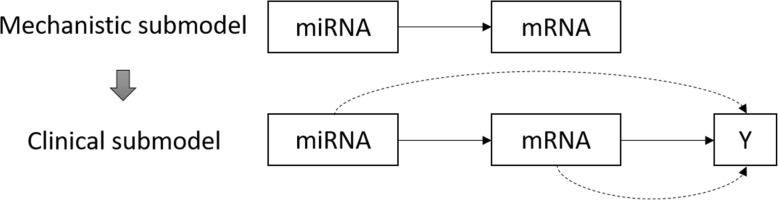
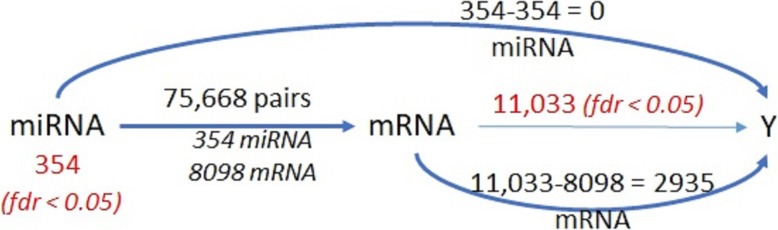
The HIM model we formulated for analysis of mRNA-seq and miRNA-seq data can be specified with two levels: (1) a mechanistic submodel relating mRNAs to miRNAs, and (2) a clinical submodel relating disease status to mRNA and miRNA, while accounting for the mechanistic relationships in the first level.
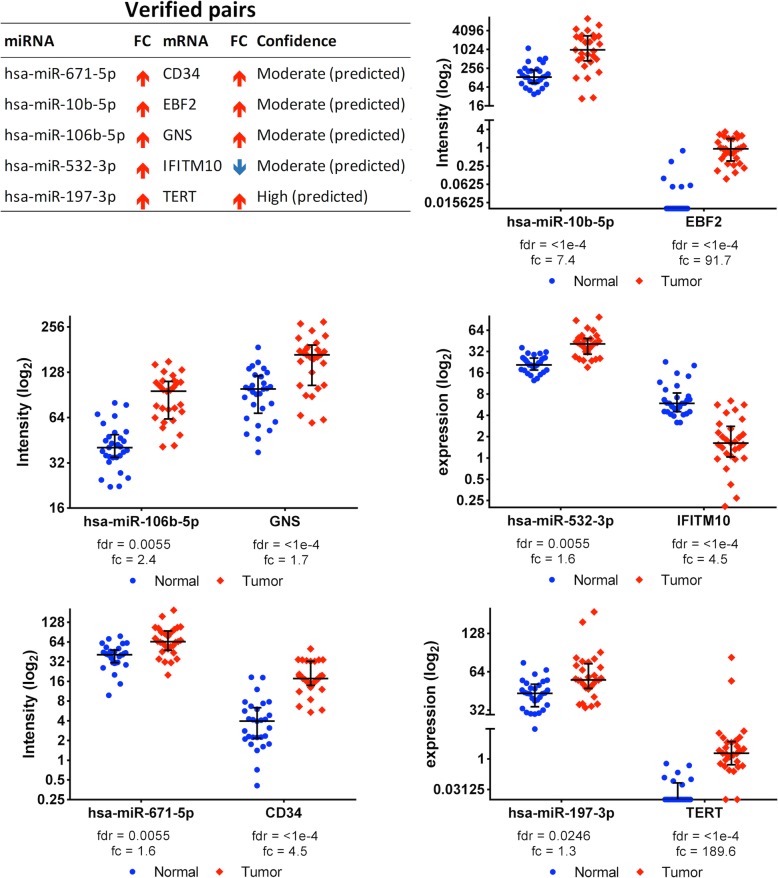
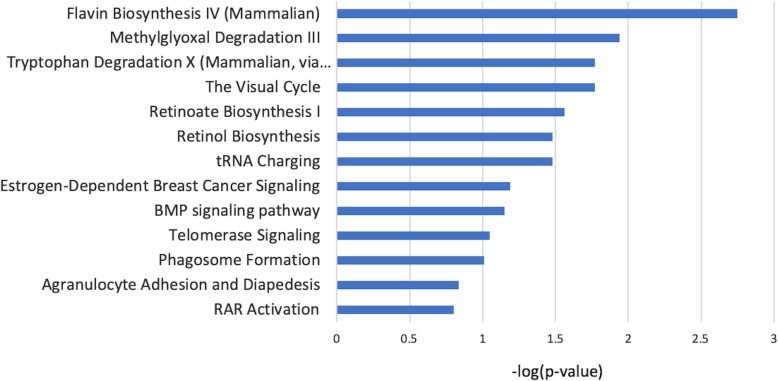
mRNA-seq and miRNA-seq data were acquired by analysis of tumor and normal liver tissues from 30 patients with hepatocellular carcinoma (HCC). We analyzed the data using HIM and identified 157 significant miRNA-mRNA pairs in HCC. The majority of these molecules have already been independently identified as being either diagnostic, prognostic, or therapeutic biomarker candidates for HCC. These pairs appear to be involved in processes contributing to the pathogenesis of HCC involving inflammation, regulation of cell cycle, apoptosis, and metabolism. For further evaluation of our method, we analyzed miRNA-seq and mRNA-seq data from TCGA network. While some of the miRNA-mRNA pairs we identified by analyzing both our and TCGA data are previously reported in the literature and overlap in regulation and function, new pairs have been identified that may contribute to the discovery of novel targets.
The results strongly support the hypothesis that miRNAs are important regulators of mRNAs in HCC. Furthermore, these results emphasize the biological relevance of studying miRNA-mRNA pairs.
miRNA-mRNA 对基因表达的调控作用在肿瘤发生中已得到确立,这凸显了将 miRNA 与下游 mRNA 靶标整合的重要性。这些发现呼吁开展旨在识别与疾病相关的 miRNA-mRNA 对的研究。分层综合模型(HIM)提供了发现疾病与多种组学研究中测量的不同分子水平之间关系的机会。
我们为分析 mRNA-seq 和 miRNA-seq 数据而制定的 HIM 模型可以在两个层次上进行指定:(1)一个将 mRNAs 与 miRNAs 相关联的机制子模型,(2)一个将疾病状态与 mRNA 和 miRNA 相关联的临床子模型,同时考虑到第一个层次中的机制关系。
通过对 30 名肝细胞癌(HCC)患者的肿瘤和正常肝组织进行分析,获得了 mRNA-seq 和 miRNA-seq 数据。我们使用 HIM 对数据进行了分析,在 HCC 中鉴定出 157 个显著的 miRNA-mRNA 对。这些分子中的大多数已经被独立鉴定为 HCC 的诊断、预后或治疗生物标志物候选物。这些对似乎涉及到涉及炎症、细胞周期调节、细胞凋亡和代谢的 HCC 发病机制的过程。为了进一步评估我们的方法,我们分析了 TCGA 网络中的 miRNA-seq 和 mRNA-seq 数据。虽然我们通过分析自己和 TCGA 的数据鉴定出的一些 miRNA-mRNA 对在文献中有报道,并且在调控和功能上存在重叠,但也鉴定出了一些新的对,它们可能有助于发现新的靶标。
这些结果强烈支持 miRNA 是 HCC 中 mRNAs 重要调控因子的假设。此外,这些结果强调了研究 miRNA-mRNA 对的生物学相关性。