Macdonald Stuart J, Highfill Chad A
Department of Molecular Biosciences, University of Kansas, 4043 Haworth Hall, 1200 Sunnyside Avenue, Lawrence, KS, 66045, USA.
Center for Computational Biology, University of Kansas, Lawrence, KS, 66047, USA.
BMC Res Notes. 2020 Mar 30;13(1):188. doi: 10.1186/s13104-020-05035-z.
Segregating genetic variants contribute to the response to toxic, xenobiotic compounds, and identifying these causative sites can help describe the mechanisms underlying metabolism of toxic compounds. In previous work we implicated the detoxification gene Ugt86Dd in the genetic control of larval nicotine resistance in Drosophila melanogaster. Furthermore, we suggested that a naturally-occurring 22-bp deletion that leads to a stop codon in exon 2 of the gene markedly reduces resistance. Here we use homology directed CRISPR/Cas9 gene editing to specifically test this hypothesis.
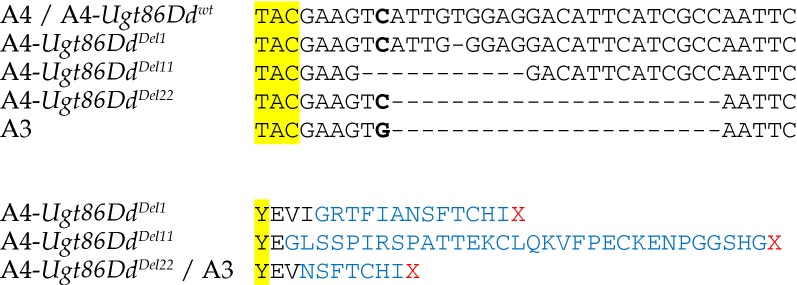
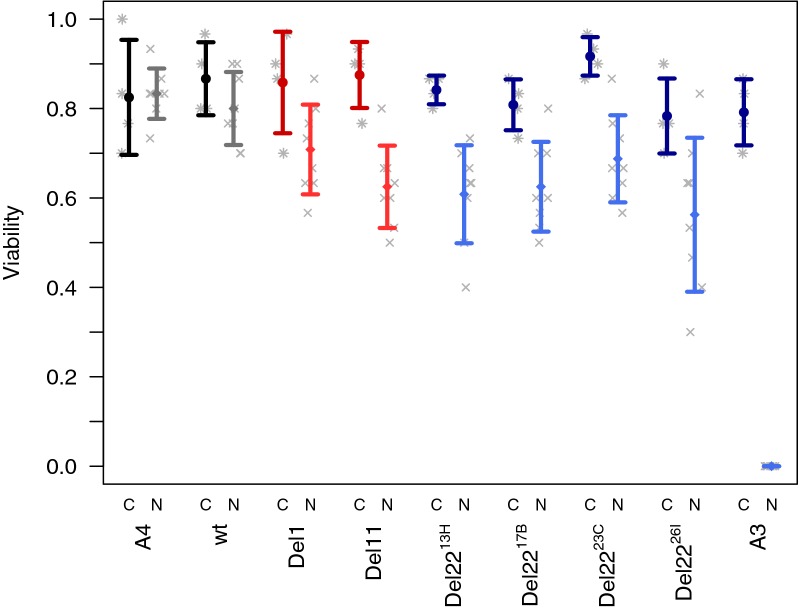
We edited chromosome three from an inbred strain named A4 which carries the insertion allele at Ugt86Dd, successfully generated four alleles carrying the 22-bp Ugt86Dd deletion, and substituted edited chromosomes back into the A4 background. The original A4 strain, and an un-edited control strain in the same A4 background, show no significant difference in egg-to-adult or larva-to-adult viability on either control media or nicotine-supplemented media, and only slightly delayed development in nicotine media. However, strains carrying the 22-bp deletion showed reduced viability in nicotine conditions, and significantly longer development. Our data strongly suggest that the naturally-occurring 22-bp insertion/deletion event in Ugt86Dd directly impacts variation in nicotine resistance in D. melanogaster.
分离出有助于对有毒的外源性化合物产生反应的基因变体,并确定这些致病位点有助于描述有毒化合物代谢的潜在机制。在之前的研究中,我们发现解毒基因Ugt86Dd参与了黑腹果蝇幼虫对尼古丁抗性的遗传控制。此外,我们还指出,该基因外显子2中一个导致终止密码子的自然发生的22碱基对缺失显著降低了抗性。在此,我们使用同源定向CRISPR/Cas9基因编辑技术来专门验证这一假设。
我们对来自名为A4的近交系的三号染色体进行编辑,该近交系在Ugt86Dd处携带插入等位基因,成功产生了四个携带22碱基对Ugt86Dd缺失的等位基因,并将编辑后的染色体替换回A4背景中。原始的A4品系以及同一A4背景下未编辑的对照品系,在对照培养基或添加尼古丁的培养基上,从卵到成虫或从幼虫到成虫的存活率均无显著差异,且在尼古丁培养基中发育仅略有延迟。然而,携带22碱基对缺失的品系在尼古丁条件下存活率降低,发育时间显著延长。我们的数据有力地表明,Ugt86Dd中自然发生的22碱基对插入/缺失事件直接影响黑腹果蝇对尼古丁抗性的差异。