Miao Tianxin, Little Andrew C, Aronshtam Alexander, Marquis Taylor, Fenn Spencer L, Hristova Milena, Krementsov Dimitry N, Vliet Albert van der, Spees Jeffrey L, Oldinski Rachael A
Bioengineering Program, College of Engineering and Mathematical Sciences, Larner College of Medicine, College of Engineering and Mathematical Sciences, University of Vermont, Burlington VT 05405, USA.
Cellular, Molecular and Biomedical Sciences Graduate Program, University of Vermont, Burlington, Vermont 05405, USA.
Nanomaterials (Basel). 2020 Mar 27;10(4):612. doi: 10.3390/nano10040612.
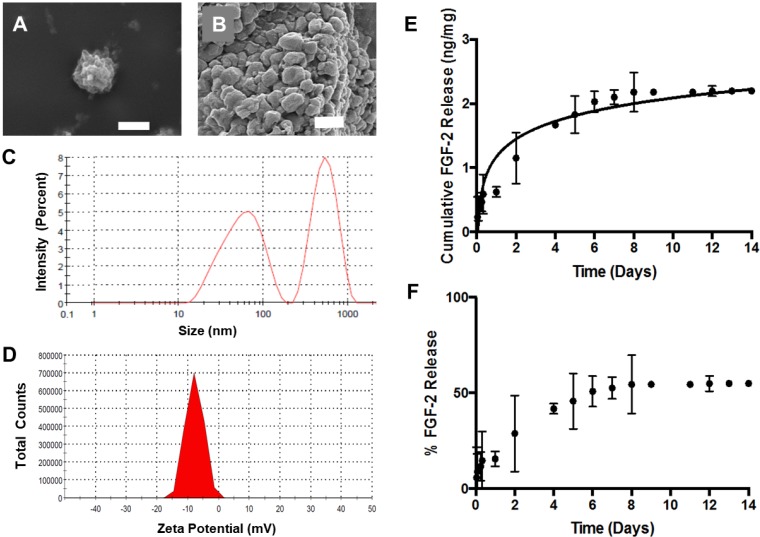
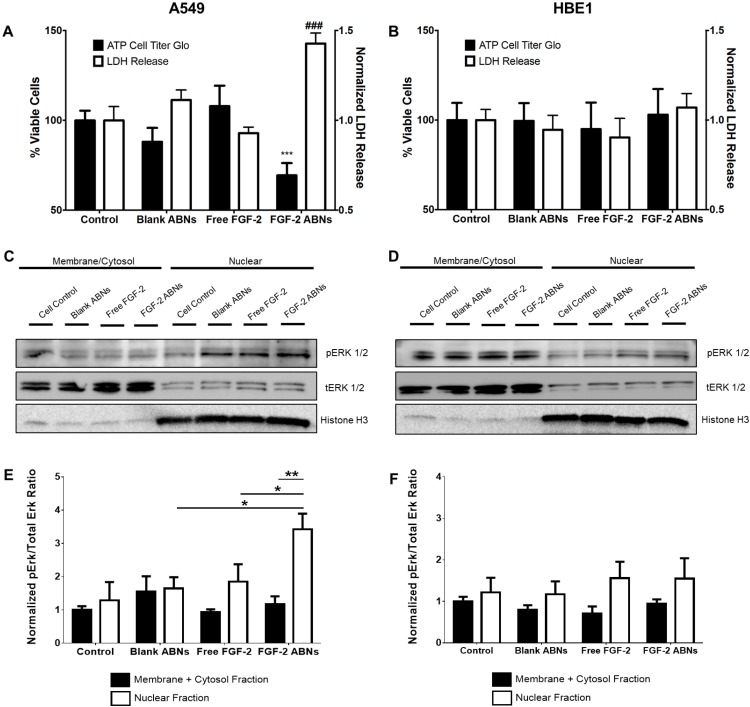
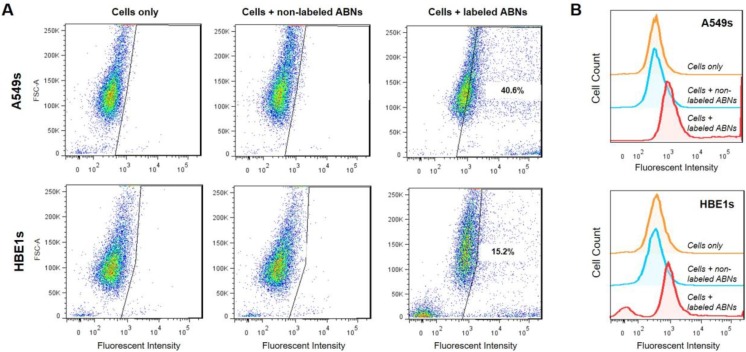
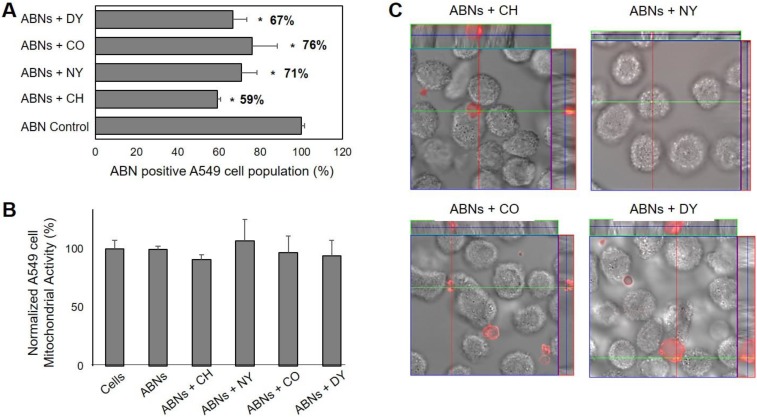
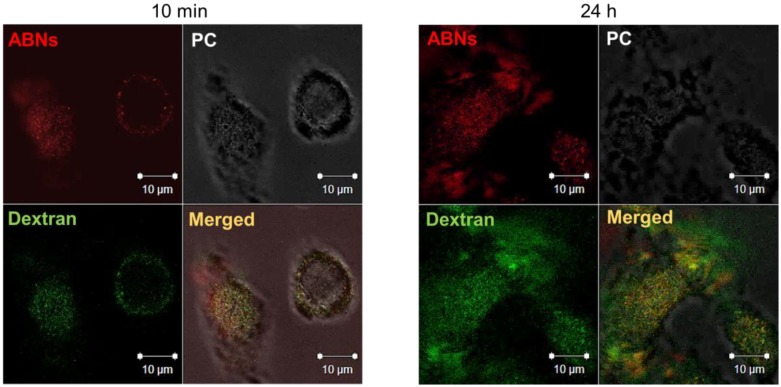
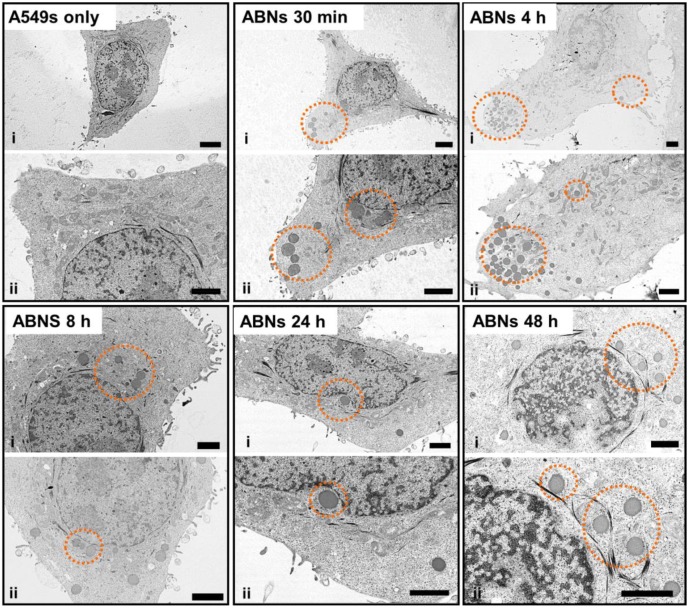
Innovative cancer treatments, which improve adjuvant therapy and reduce adverse events, are desperately needed. Nanoparticles provide controlled intracellular biomolecule delivery in the absence of activating external cell surface receptors. Prior reports suggest that intracrine signaling, following overexpression of basic fibroblast growth factor (FGF-2) after viral transduction, has a toxic effect on diseased cells. Herein, the research goals were to 1) encapsulate recombinant FGF-2 within stable, alginate-based nanoparticles (ABNs) for non-specific cellular uptake, and 2) determine the effects of ABN-mediated intracellular delivery of FGF-2 on cancer cell proliferation/survival. In culture, human alveolar adenocarcinoma basal epithelial cell line (A549s) and immortalized human bronchial epithelial cell line (HBE1s) internalized ABNs through non-selective endocytosis. Compared to A549s exposed to empty (i.e., blank) ABNs, the intracellular delivery of FGF-2 via ABNs significantly increased the levels of lactate dehydrogenase, indicating that FGF-2-ABN treatment decreased the transformed cell integrity. Noticeably, the nontransformed cells were not significantly affected by FGF-2-loaded ABN treatment. Furthermore, FGF-2-loaded ABNs significantly increased nuclear levels of activated-extracellular signal-regulated kinase ½ (ERK1/2) in A549s but had no significant effect on HBE1 nuclear ERK1/2 expression. Our novel intracellular delivery method of FGF-2 via nanoparticles resulted in increased cancer cell death via increased nuclear ERK1/2 activation.
急需创新的癌症治疗方法,以改善辅助治疗并减少不良事件。纳米颗粒可在不激活外部细胞表面受体的情况下实现细胞内生物分子的可控递送。先前的报道表明,病毒转导后碱性成纤维细胞生长因子(FGF-2)过表达后的内分泌信号传导对病变细胞具有毒性作用。在此,研究目标是:1)将重组FGF-2封装在基于藻酸盐的稳定纳米颗粒(ABN)中,以实现非特异性细胞摄取;2)确定ABN介导的FGF-2细胞内递送对癌细胞增殖/存活的影响。在培养中,人肺泡腺癌基底上皮细胞系(A549s)和永生化人支气管上皮细胞系(HBE1s)通过非选择性内吞作用内化ABN。与暴露于空(即空白)ABN的A549s相比,通过ABN进行的FGF-2细胞内递送显著增加了乳酸脱氢酶水平,表明FGF-2-ABN处理降低了转化细胞的完整性。值得注意的是,未转化细胞不受负载FGF-2的ABN处理的显著影响。此外,负载FGF-2的ABN显著增加了A549s中活化的细胞外信号调节激酶1/2(ERK1/2)的核水平,但对HBE1细胞核ERK1/2表达没有显著影响。我们通过纳米颗粒将FGF-2递送至细胞内的新方法通过增加核ERK1/2激活导致癌细胞死亡增加。