Paulo Lara M, Castilla-Archilla Juan, Ramiro-Garcia Javier, Escamez-Picón José Antonio, Hughes Dermot, Mahony Thérèse, Murray Michael, Wilmes Paul, O'Flaherty Vincent
Microbiology, School of Natural Sciences and Ryan Institute, NUI Galway, Galway, Ireland.
Dairy Processing Technology Centre (DPTC), Limerick, Ireland.
Front Bioeng Biotechnol. 2020 Mar 13;8:192. doi: 10.3389/fbioe.2020.00192. eCollection 2020.
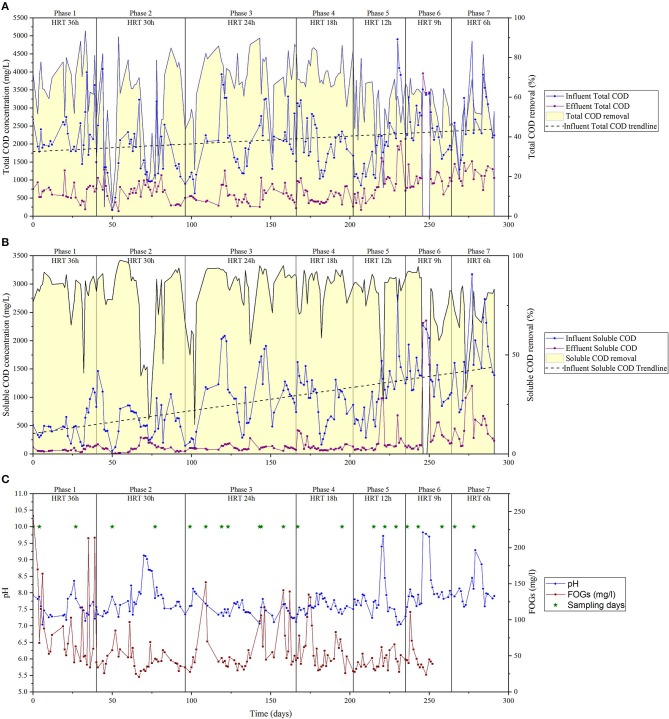
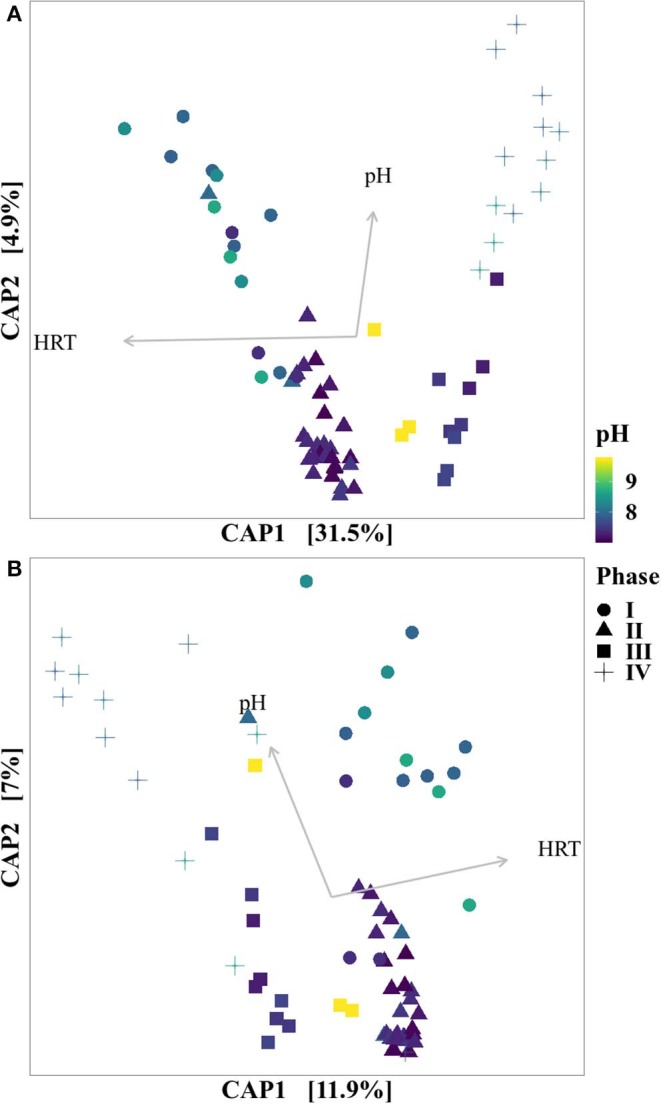
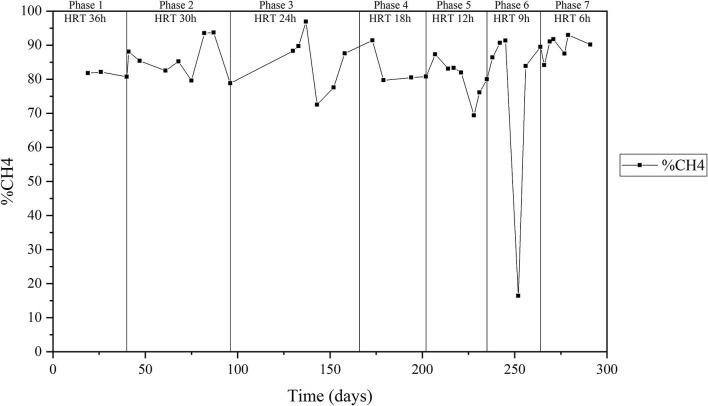
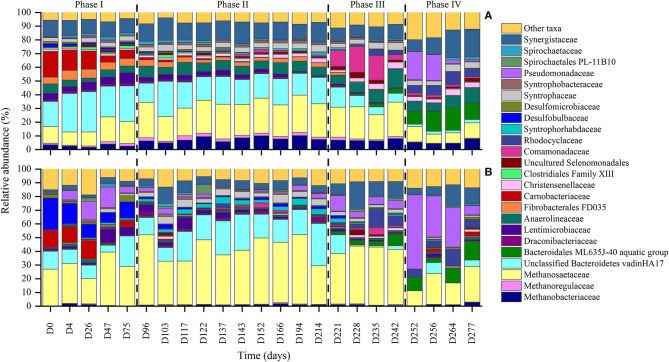
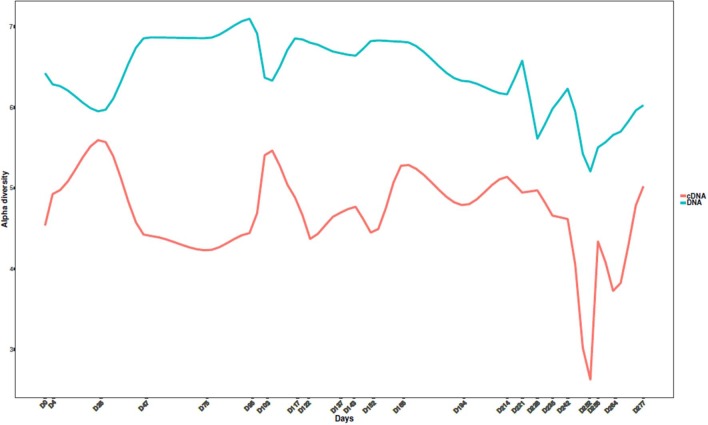
High-rate anaerobic digestion (AD) is a reliable, efficient process to treat wastewaters and is often operated at temperatures exceeding 30°C, involving energy consumption of biogas in temperate regions, where wastewaters are often discharged at variable temperatures generally below 20°C. High-rate ambient temperature AD, without temperature control, is an economically attractive alternative that has been proven to be feasible at laboratory-scale. In this study, an ambient temperature pilot scale anaerobic reactor (2 m) was employed to treat real dairy wastewater at a milk processing plant, at organic loading rates of 1.3 ± 0.6 to 10.6 ± 3.7 kg COD/m/day and hydraulic retention times (HRT) ranging from 36 to 6 h. Consistent high levels of COD removal efficiencies, ranging from 50 to 70% for total COD removal and 70 to 84% for soluble COD removal, were achieved during the trial. Within the reactor biomass, stable active archaeal populations were observed, consisting mainly of (previously ) species, which represented up to 47% of the relative abundant active species in the reactor. The decrease in HRT, combined with increases in the loading rate had a clear effect on shaping the structure and composition of the bacterial fraction of the microbial community, however, without affecting reactor performance. On the other hand, perturbances in influent pH had a strong impact, especially when pH went higher than 8.5, inducing shifts in the microbial community composition and, in some cases, affecting negatively the performance of the reactor in terms of COD removal and biogas methane content. For example, the main pH shock led to a drop in the methane content to 15%, COD removals decreased to 0%, while the archaeal population decreased to ~11% both at DNA and cDNA levels. Functional redundancy in the microbial community underpinned stable reactor performance and rapid reactor recovery after perturbations.
高速厌氧消化(AD)是一种可靠、高效的废水处理工艺,通常在超过30°C的温度下运行,这在温带地区涉及沼气能源消耗,而在这些地区,废水排放温度通常变化且普遍低于20°C。无温度控制的高速常温厌氧消化是一种经济上有吸引力的替代方案,已在实验室规模被证明是可行的。在本研究中,采用一个常温中试规模的厌氧反应器(2米)在一家牛奶加工厂处理实际的乳品废水,有机负荷率为1.3±0.6至10.6±3.7千克化学需氧量/立方米/天,水力停留时间(HRT)范围为36至6小时。在试验期间,实现了一致的高水平化学需氧量去除效率,总化学需氧量去除率为50%至70%,可溶性化学需氧量去除率为70%至84%。在反应器生物量中,观察到稳定的活跃古菌种群,主要由(以前的)物种组成,这些物种占反应器中相对丰富的活跃物种的47%。水力停留时间的减少,加上负荷率的增加,对微生物群落细菌部分的结构和组成形成有明显影响,然而,并未影响反应器性能。另一方面,进水pH值的扰动有强烈影响,特别是当pH值高于8.5时,会导致微生物群落组成发生变化,在某些情况下,会对反应器的化学需氧量去除和沼气甲烷含量性能产生负面影响。例如,主要的pH冲击导致甲烷含量降至15%,化学需氧量去除率降至0%,而古菌种群在DNA和cDNA水平均降至约11%。微生物群落中的功能冗余支撑了稳定的反应器性能以及扰动后反应器的快速恢复。