Cancer Center, Union Hospital, Tongji Medical College, Huazhong University of Science and Technology, Wuhan 430022, China.
Department of Thoracic Surgery, Union Hospital, Tongji Medical College, Huazhong University of Science and Technology, Wuhan, China.
Sci Adv. 2020 Mar 25;6(13):eaay9789. doi: 10.1126/sciadv.aay9789. eCollection 2020 Mar.
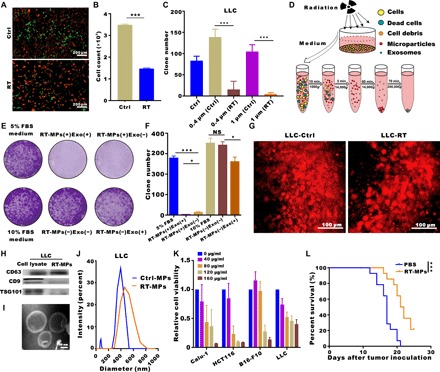
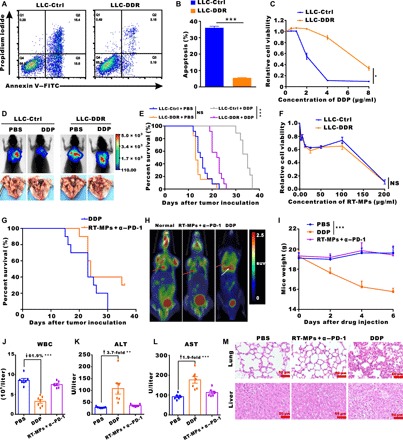
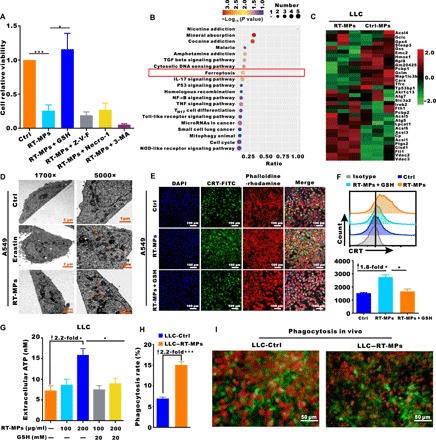
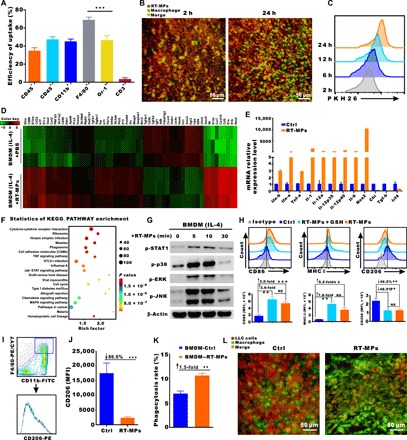
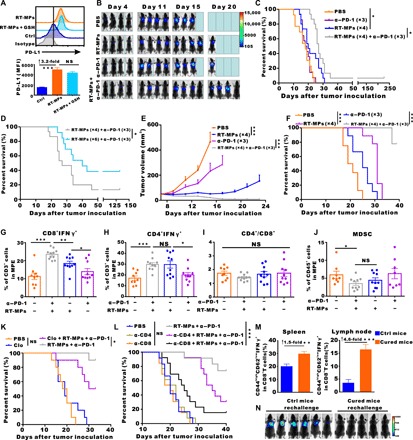
Radiotherapy (RT) is routinely used in cancer treatment, but expansion of its clinical indications remains challenging. The mechanism underlying the radiation-induced bystander effect (RIBE) is not understood and not therapeutically exploited. We suggest that the RIBE is predominantly mediated by irradiated tumor cell-released microparticles (RT-MPs), which induce broad antitumor effects and cause immunogenic death mainly through ferroptosis. Using a mouse model of malignant pleural effusion (MPE), we demonstrated that RT-MPs polarized microenvironmental M2 tumor-associated macrophages (M2-TAMs) to M1-TAMs and modulated antitumor interactions between TAMs and tumor cells. Following internalization of RT-MPs, TAMs displayed increased programmed cell death ligand 1 (PD-L1) expression, enhancing follow-up combined anti-PD-1 therapy that confers an ablative effect against MPE and cisplatin-resistant MPE mouse models. Immunological memory effects were induced.
放射治疗(RT)是癌症治疗的常规手段,但扩大其临床适应证仍然具有挑战性。辐射诱导旁观者效应(RIBE)的机制尚不清楚,也未得到治疗性利用。我们认为,RIBE 主要是由辐照肿瘤细胞释放的微颗粒(RT-MPs)介导的,这些微颗粒诱导广泛的抗肿瘤效应,并主要通过铁死亡导致免疫原性细胞死亡。利用恶性胸腔积液(MPE)的小鼠模型,我们证明 RT-MPs 使微环境中的 M2 肿瘤相关巨噬细胞(M2-TAMs)极化为 M1-TAMs,并调节 TAMs 和肿瘤细胞之间的抗肿瘤相互作用。RT-MPs 内化后,TAMs 表现出程序性细胞死亡配体 1(PD-L1)表达增加,增强了后续联合抗 PD-1 治疗,对 MPE 和顺铂耐药 MPE 小鼠模型具有消融作用。诱导了免疫记忆效应。