Gottfried Schatz Research Center for Cell Signaling, Metabolism and Aging, Molecular Biology & Biochemistry, Medical University of Graz, 8010 Graz, Austria.
BioMedical Center, Cell Biology, Ludwig Maximilians University Munich, 82152 Planegg-Martinsried, Germany.
Proc Natl Acad Sci U S A. 2020 Apr 14;117(15):8503-8514. doi: 10.1073/pnas.1918944117. Epub 2020 Mar 31.
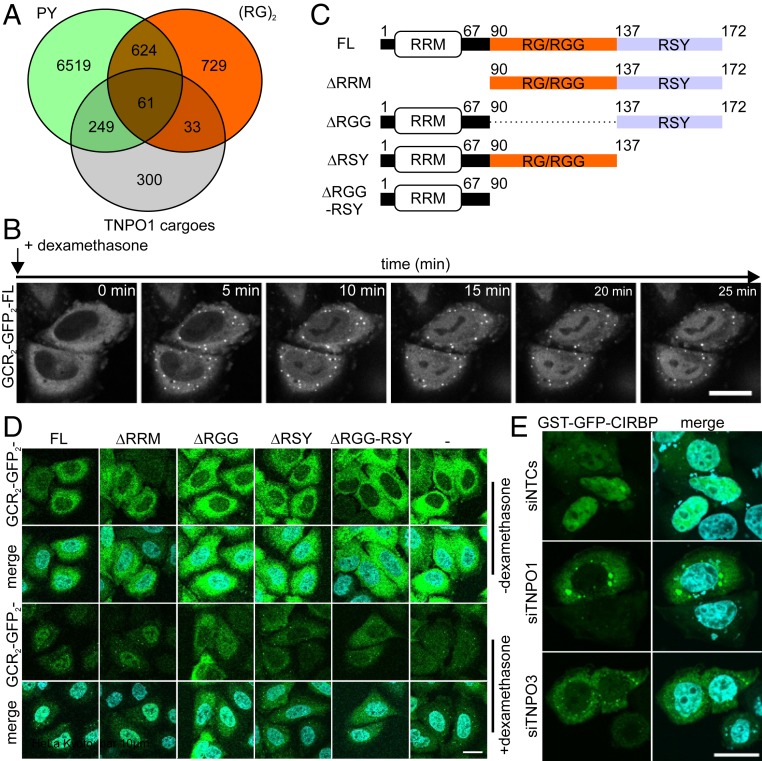
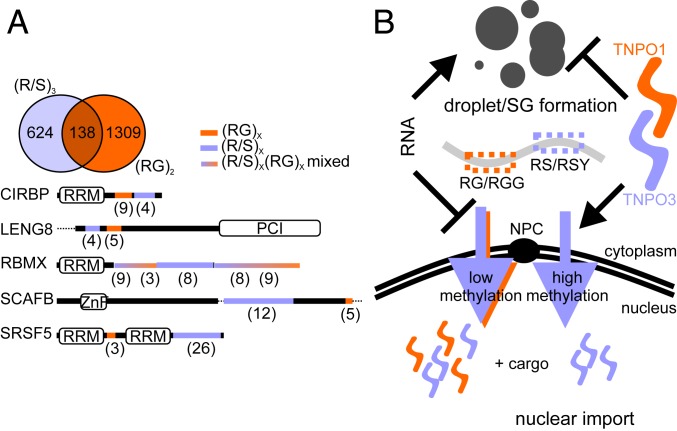
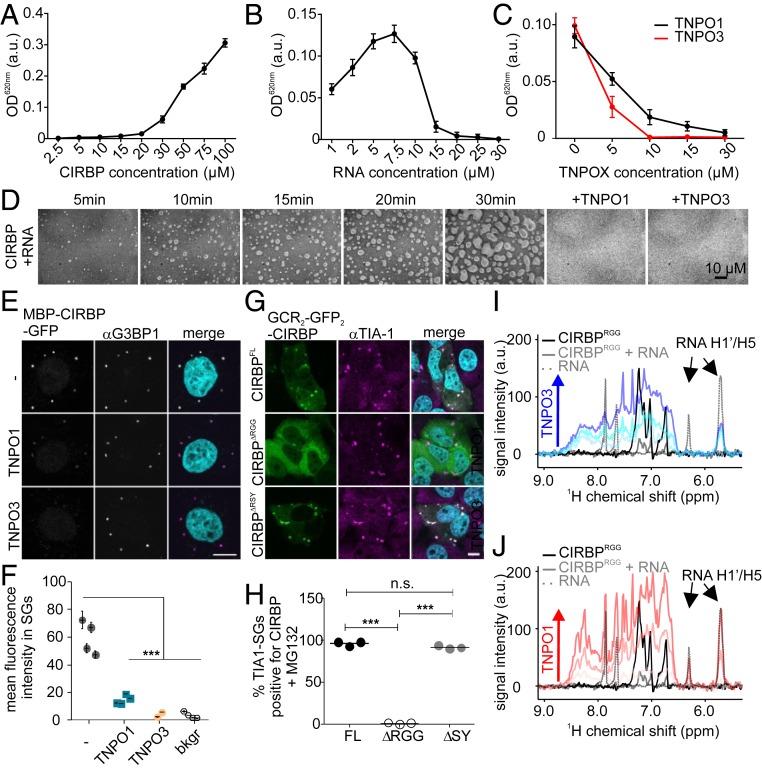
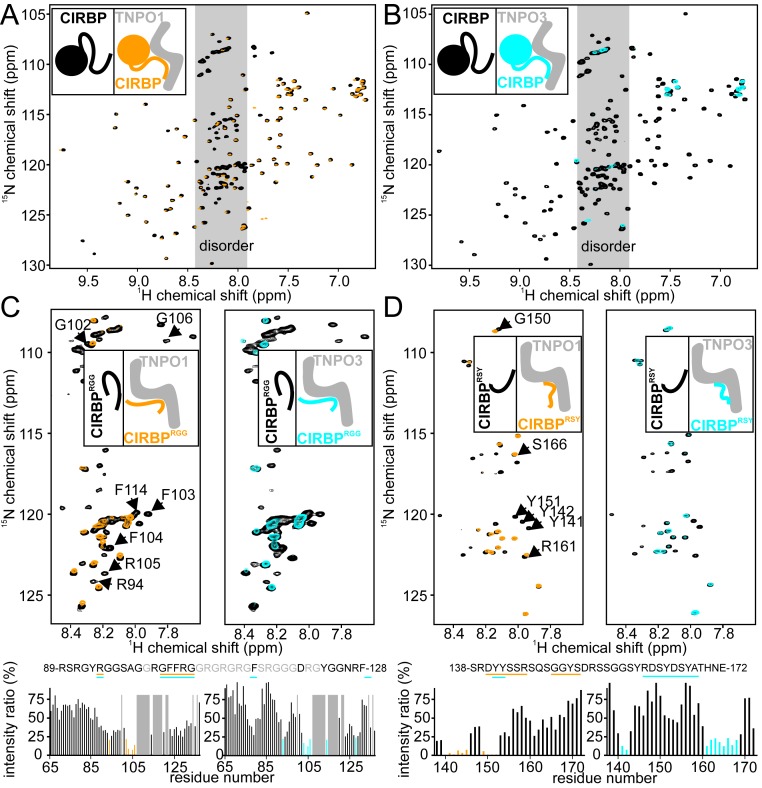
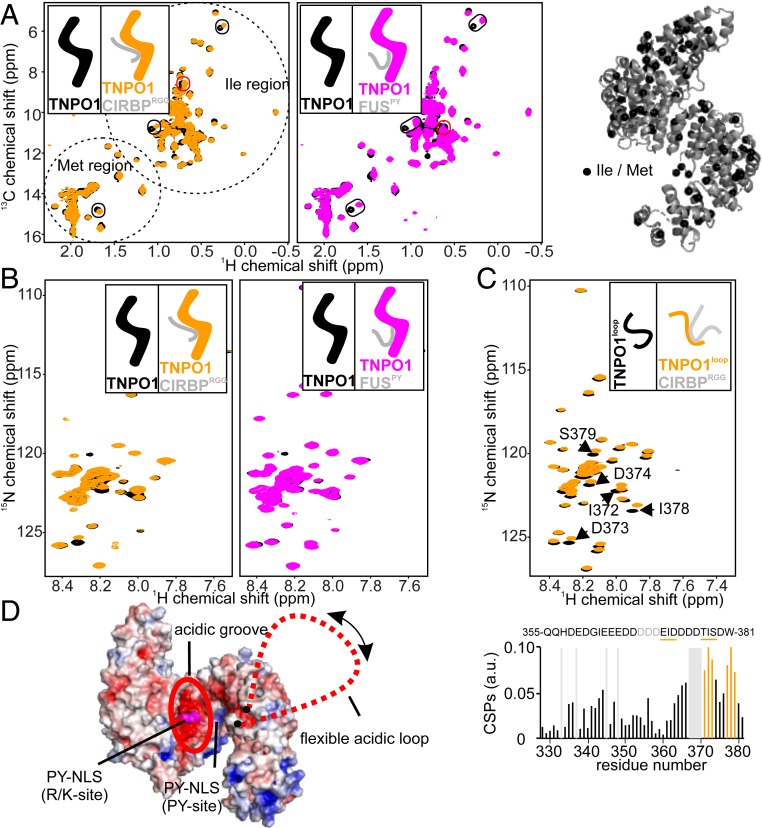
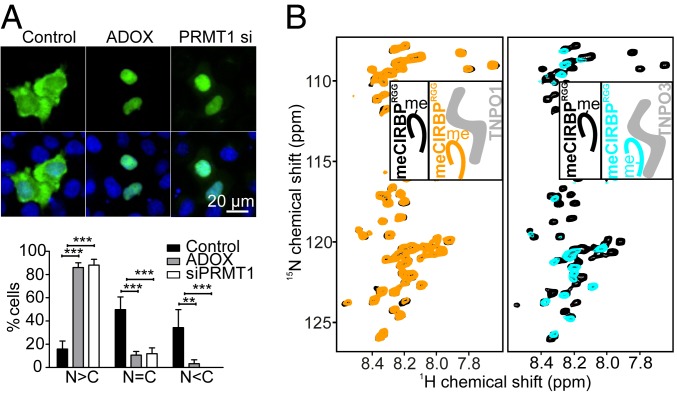
The specific interaction of importins with nuclear localization signals (NLSs) of cargo proteins not only mediates nuclear import but also, prevents their aberrant phase separation and stress granule recruitment in the cytoplasm. The importin Transportin-1 (TNPO1) plays a key role in the (patho-)physiology of both processes. Here, we report that both TNPO1 and Transportin-3 (TNPO3) recognize two nonclassical NLSs within the cold-inducible RNA-binding protein (CIRBP). Our biophysical investigations show that TNPO1 recognizes an arginine-glycine(-glycine) (RG/RGG)-rich region, whereas TNPO3 recognizes a region rich in arginine-serine-tyrosine (RSY) residues. These interactions regulate nuclear localization, phase separation, and stress granule recruitment of CIRBP in cells. The presence of both RG/RGG and RSY regions in numerous other RNA-binding proteins suggests that the interaction of TNPO1 and TNPO3 with these nonclassical NLSs may regulate the formation of membraneless organelles and subcellular localization of numerous proteins.
进口蛋白与货物蛋白核定位信号(NLS)的特定相互作用不仅介导核输入,而且防止它们在细胞质中异常的相分离和应激颗粒募集。进口蛋白Transportin-1(TNPO1)在这两个过程的(病理)生理学中起着关键作用。在这里,我们报告 TNPO1 和 Transportin-3(TNPO3)都识别冷诱导 RNA 结合蛋白(CIRBP)内的两个非经典 NLS。我们的生物物理研究表明,TNPO1 识别富含精氨酸-甘氨酸(RG/RGG)的区域,而 TNPO3 识别富含精氨酸-丝氨酸-酪氨酸(RSY)残基的区域。这些相互作用调节 CIRBP 在细胞中的核定位、相分离和应激颗粒募集。许多其他 RNA 结合蛋白中都存在 RG/RGG 和 RSY 区域,这表明 TNPO1 和 TNPO3 与这些非经典 NLS 的相互作用可能调节无膜细胞器的形成和众多蛋白质的亚细胞定位。