The Einthoven laboratory for Vascular and Regenerative Medicine, Department of Internal Medicine, Division of Nephrology, Leiden University Medical Center, 2333 ZA, Leiden, The Netherlands.
The Einthoven laboratory for Vascular and Regenerative Medicine, Department of Surgery, Leiden University Medical Center, 2333 ZA, Leiden, the Netherlands.
Cells. 2020 Mar 29;9(4):824. doi: 10.3390/cells9040824.
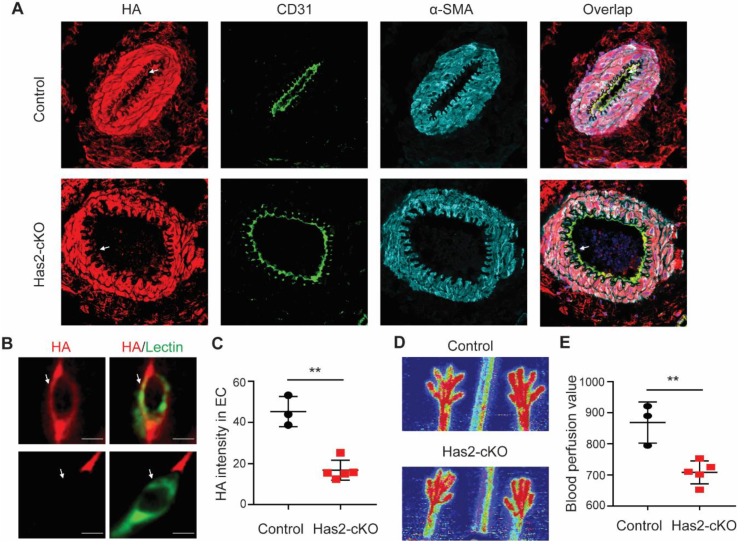
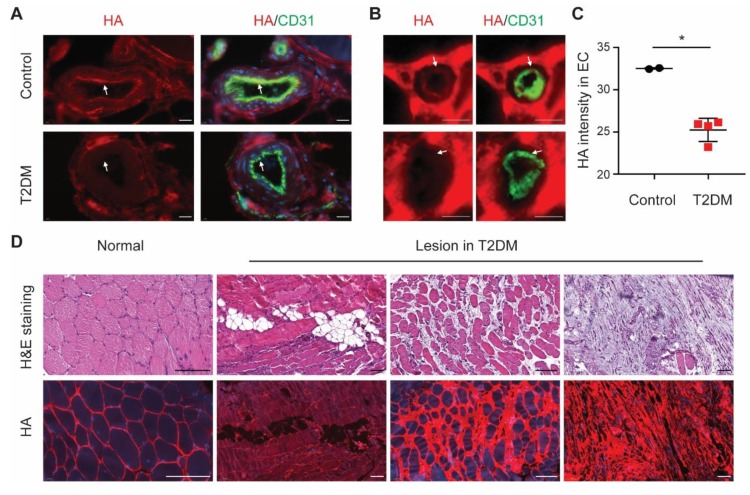
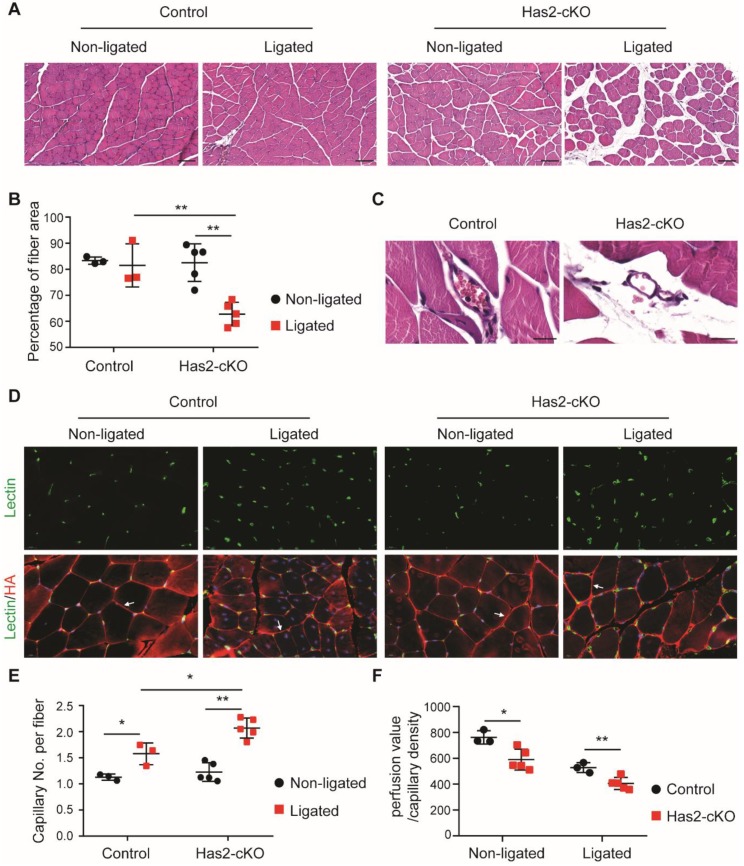
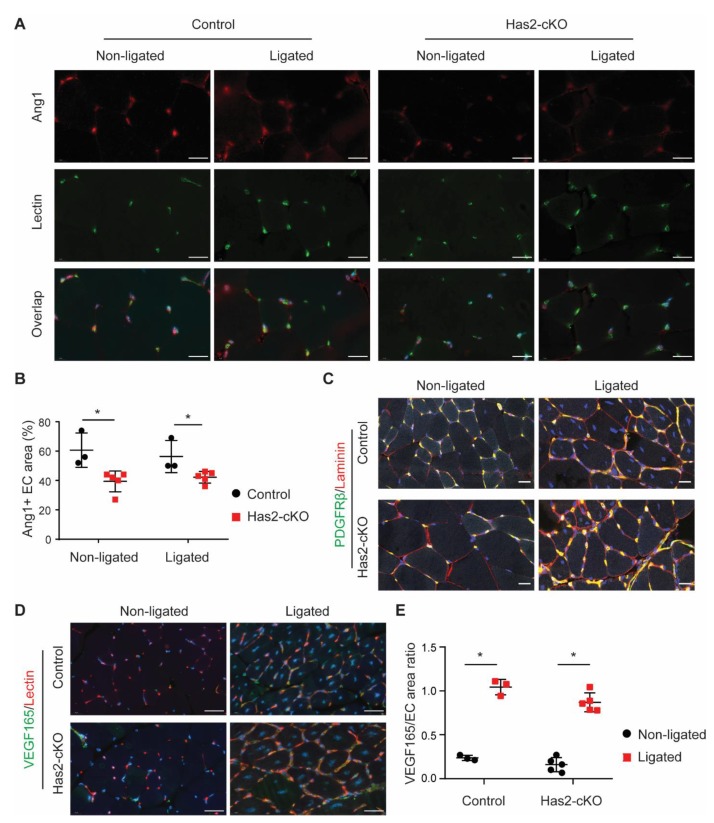
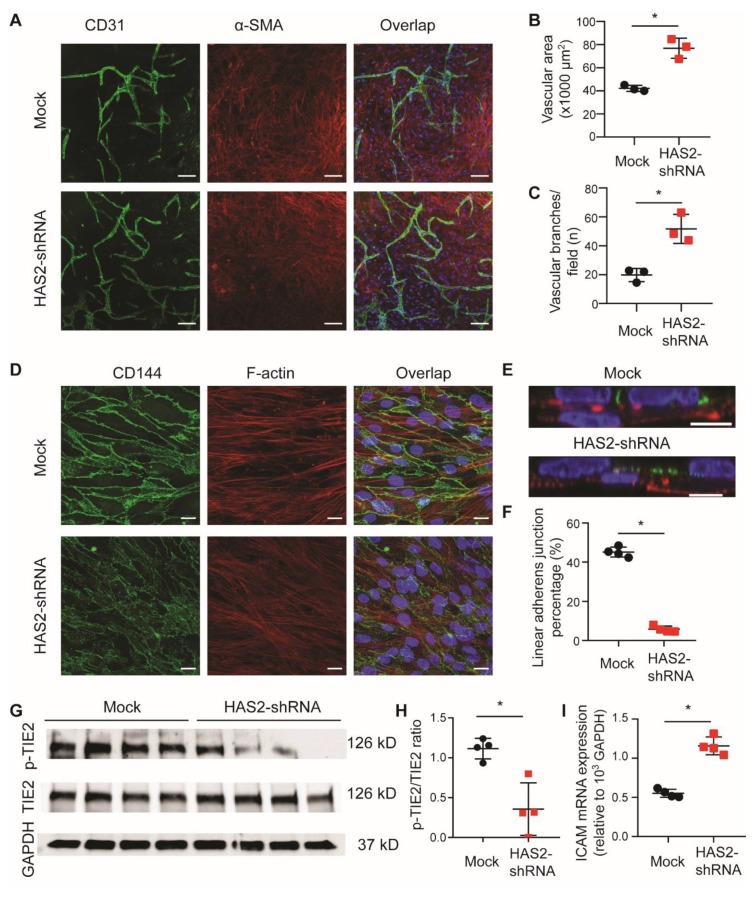
We recently reported that loss of hyaluronan (HA) from the endothelial glycocalyx leads to loss of vessel stability in specific microcirculatory vascular beds. Here we hypothesized that such derangements in the glycocalyx may also impair the adaptive response to vascular ischemia. Endothelial specific conditional hyaluronan synthase 2-KO (Has2-cKO) mice revealed reduced endothelial HA expression and lower hindlimb perfusion at baseline compared to control mice. After a single ligation of the common femoral artery in these mice, we observed dysregulated angiogenesis in the gastrocnemius muscle which did not restore capillary perfusion. Mechanistically, decreased endothelial binding of the pericyte-derived molecule angiopoietin1 (Ang1) could be observed in the Has2-cKO mouse. In vitro angiogenesis assays with an endothelial cell-pericyte coculture confirmed such disturbed Ang1-TIE2 signaling resulting in excessive angiogenesis upon loss of HA. These data could be of relevance to diabetes patients, where we confirm loss of endothelial HA in the microcirculation of muscle tissue, indicating that this may contribute to the known disturbed adaptation to ischemia in these patients. In summary, loss of endothelial HA results in impaired microvascular perfusion and endothelial stability in ischemic gastrocnemius muscle. Endothelial HA is a potential target to improve angiogenic therapy in diabetic patients with critical limb ischemia.
我们最近报道称,内皮细胞糖萼中的透明质酸(HA)丧失会导致特定微循环血管床中血管稳定性丧失。在这里,我们假设糖萼的这种紊乱也可能损害血管缺血的适应性反应。内皮细胞特异性条件性透明质酸合酶 2 敲除(Has2-cKO)小鼠与对照组小鼠相比,其内皮 HA 表达减少,后肢灌注降低。在这些小鼠的股总动脉单次结扎后,我们观察到比目鱼肌中的血管生成失调,毛细血管灌注未恢复。从机制上讲,Has2-cKO 小鼠中可以观察到内皮细胞与周细胞衍生分子血管生成素 1(Ang1)的结合减少。内皮细胞-周细胞共培养的体外血管生成实验证实,这种 Ang1-TIE2 信号的紊乱导致 HA 丧失时过度血管生成。这些数据可能与糖尿病患者有关,我们在这些患者的肌肉组织的微循环中证实了内皮 HA 的丧失,这表明这可能导致已知的对缺血的适应不良。总之,内皮 HA 的丧失会导致缺血性比目鱼肌中的微血管灌注和内皮稳定性受损。内皮 HA 是改善糖尿病合并肢体严重缺血患者血管生成治疗的潜在靶点。