Jadlowiec Caroline, Smith Maxwell, Neville Matthew, Mao Shennen, Abdelwahab Dina, Reddy Kunam, Moss Adyr, Aqel Bashar, Taner Timucin
Division of Transplant Surgery, Mayo Clinic, Phoenix, AZ 85054, USA.
Division of Anatomic Pathology, Mayo Clinic, Phoenix, AZ 85054, USA.
J Clin Med. 2020 Mar 30;9(4):954. doi: 10.3390/jcm9040954.
Steatotic grafts are increasingly being used for liver transplant (LT); however, the impact of graft steatosis on renal function has not been well described.
A total of 511 allografts from Mayo Clinic Arizona and Minnesota were assessed. We evaluated post-LT acute kidney injury (AKI) patterns, perioperative variables and one-year outcomes for patients receiving moderately steatotic allografts (>30% macrovesicular steatosis, = 40) and compared them to non-steatotic graft recipients.
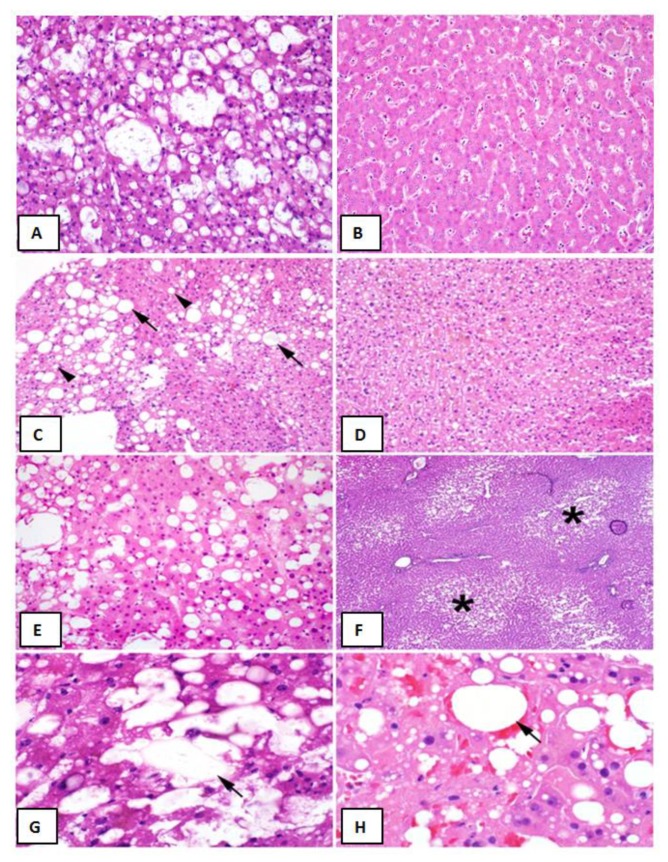
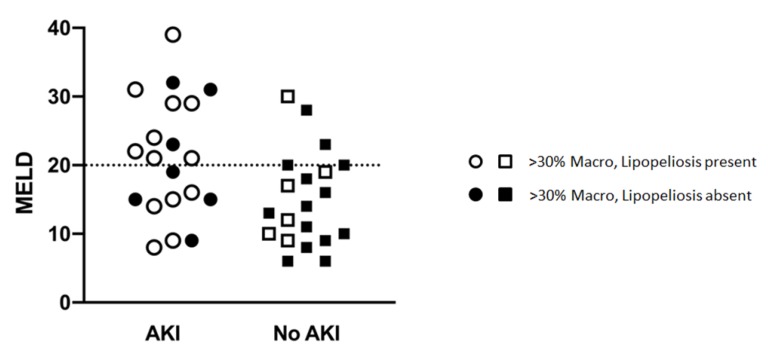
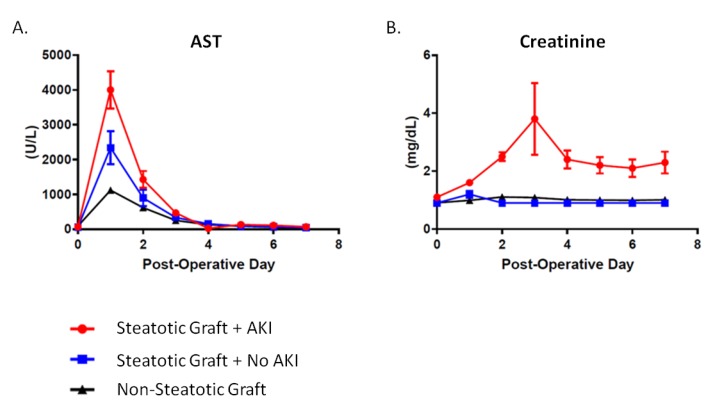
Post-LT AKI occurred in 52.5% of steatotic graft recipients versus 16.7% in non-steatotic recipients ( < 0.001). Ten percent of steatotic graft recipients required new dialysis post-LT ( = 0.003). At five years, there were no differences for AKI vs. no AKI patient survival (HR 0.95, 95% CI 0.08-10.6, = 0.95) or allograft survival (HR 1.73, 95% CI 0.23-13.23, = 0.59) for those using steatotic grafts. Lipopeliosis on biopsy was common in those who developed AKI (61.0% vs. 31.6%, = 0.04), particularly when the Model for End-Stage Liver Disease (MELD) was ≥20 (88.9%; = 0.04). Lipopeliosis was a predictor of post-LT AKI (OR 6.0, 95% CI 1.1-34.6, = 0.04).
One-year outcomes for moderately steatotic grafts are satisfactory; however, a higher percentage of post-LT AKI and initiation of dialysis can be expected. Presence of lipopeliosis on biopsy appears to be predictive of post-LT AKI.
脂肪变性的移植物越来越多地用于肝移植(LT);然而,移植物脂肪变性对肾功能的影响尚未得到充分描述。
对来自亚利桑那州和明尼苏达州梅奥诊所的511个同种异体移植物进行了评估。我们评估了接受中度脂肪变性移植物(>30%大泡性脂肪变性,n = 40)患者的肝移植后急性肾损伤(AKI)模式、围手术期变量和一年结局,并将其与非脂肪变性移植物受者进行比较。
肝移植后AKI发生在52.5%的脂肪变性移植物受者中,而非脂肪变性受者中为16.7%(P < 0.001)。10%的脂肪变性移植物受者在肝移植后需要新的透析(P = 0.003)。在五年时,对于使用脂肪变性移植物的患者,发生AKI与未发生AKI的患者生存率(HR 0.95,95%CI 0.08 - 10.6,P = 0.95)或同种异体移植物生存率(HR 1.73,95%CI 0.23 - 13.23,P = 0.59)没有差异。活检发现脂质沉着在发生AKI的患者中很常见(61.0%对31.6%,P = 0.04),特别是当终末期肝病模型(MELD)≥20时(88.9%;P = 0.04)。脂质沉着是肝移植后AKI的一个预测因素(OR 6.0,95%CI 1.1 - 34.6,P = 0.04)。
中度脂肪变性移植物的一年结局令人满意;然而,可以预期肝移植后AKI的发生率和透析启动率会更高。活检中脂质沉着的存在似乎可预测肝移植后AKI。