Centro de Investigación y Gestión de Recursos Naturales (CIGREN), Instituto de Biología, Facultad de Ciencias, Universidad de Valparaíso, 2360102, Valparaíso, Chile.
Núcleo Milenio INVASAL, 4030000, Concepción, Chile.
Sci Rep. 2020 Mar 31;10(1):5725. doi: 10.1038/s41598-020-62178-6.
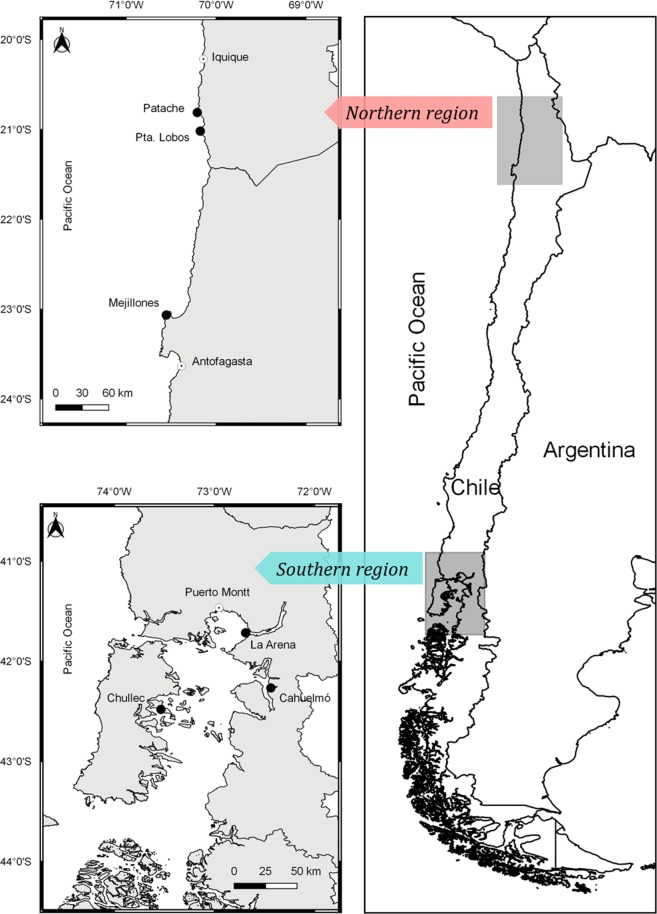
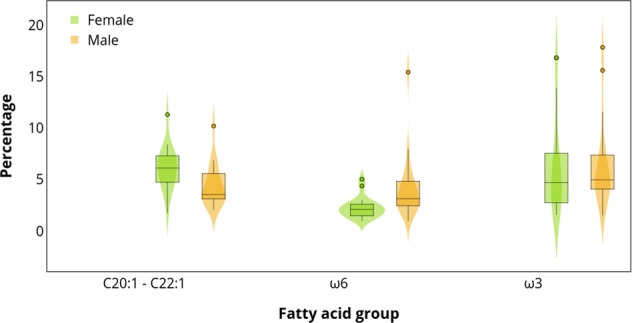
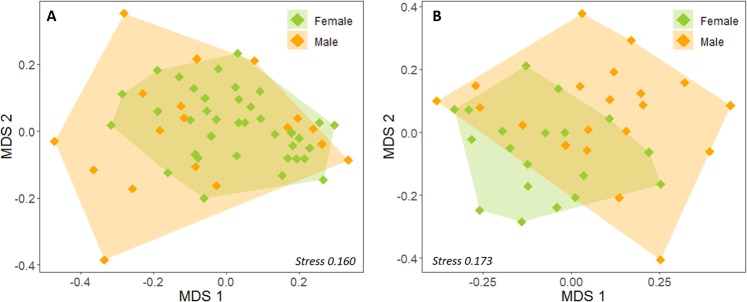
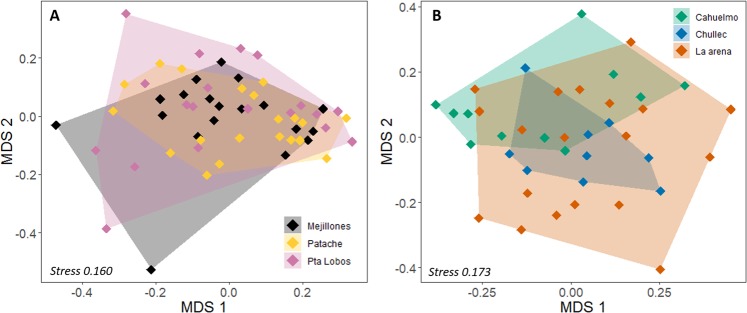
Fatty acids have been widely used as trophic biomarkers in marine mammals. However, for the South American sea lion, the most abundant otariid in the eastern South Pacific, there is no information about blubber fatty acids and their link to diet. Here, we compare fatty acid profiles of sea lions from two distinct oceanographic regions in northern and southern Chile. Their fatty acids vary greatly between regions, suggesting dietary differences at a spatial scale. The fatty acid C22:6ω3 was more abundant in sea lions from the northern region, likely associated with consumption of anchovy, cephalopods, and crustaceans, which are rich in that fatty acid, and have been reported as their main prey items. Sea lions from the southern region were richer in C22:1 and C20:1, characteristic of teleost fish, suggesting a piscivorous diet. Males displayed a more diverse fatty acid composition than females, suggesting a wider trophic niche. Few individual sea lions within the southern region had unusually high levels of C18:2ω6, commonly found in terrestrial environments. This suggests consumption of farmed salmon, whose diet is usually based on terrestrial sources. This demonstrates how human intervention is being reflected in the tissues of a top predator in a natural environment.
脂肪酸在海洋哺乳动物中被广泛用作营养生物标志物。然而,对于东南太平洋数量最多的鳍足类动物南美海狮,关于其鲸脂脂肪酸及其与饮食的关系尚不清楚。在这里,我们比较了智利北部和南部两个不同海洋区域的海狮的脂肪酸图谱。它们的脂肪酸在区域之间有很大的差异,表明在空间尺度上存在饮食差异。C22:6ω3 脂肪酸在来自北部地区的海狮中更为丰富,可能与食用凤尾鱼、头足类动物和甲壳类动物有关,这些动物富含这种脂肪酸,并且被报道为它们的主要猎物。来自南部地区的海狮富含 C22:1 和 C20:1,这是硬骨鱼的特征,表明它们以肉食为主。雄性的脂肪酸组成比雌性更为多样,表明它们的营养生态位更广。在南部地区的少数个体海狮体内发现了异常高水平的 C18:2ω6,这种脂肪酸通常存在于陆地环境中。这表明它们食用了养殖三文鱼,其饮食通常基于陆地来源。这表明人类干预如何在自然环境中顶级捕食者的组织中得到反映。