Department of Computer Science and Engineering, The Hong Kong University of Science and Technology, Pokfulam, Hong Kong.
National Dental Care Center for Persons with Special Needs, Seoul National University Dental Hospital, Seoul, Korea.
Sci Rep. 2020 Mar 31;10(1):5711. doi: 10.1038/s41598-020-62586-8.
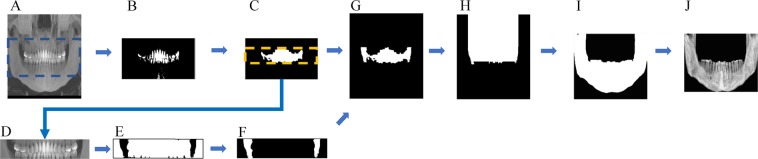
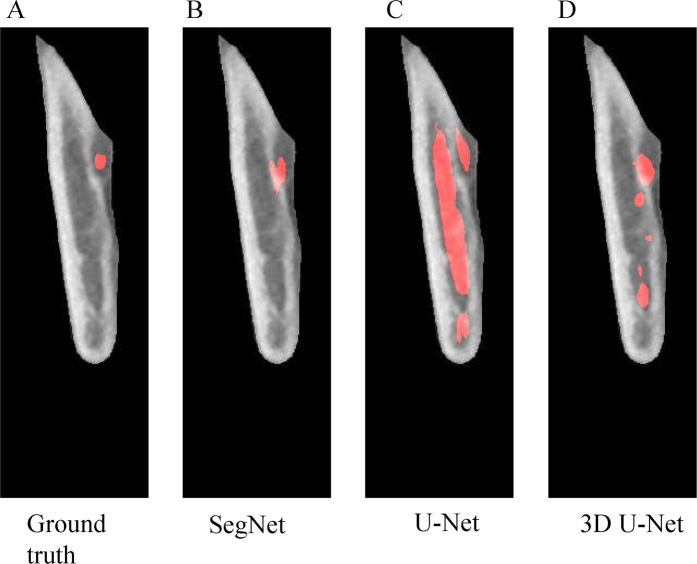
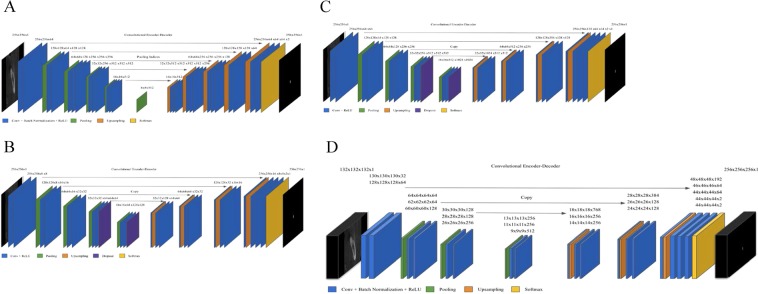
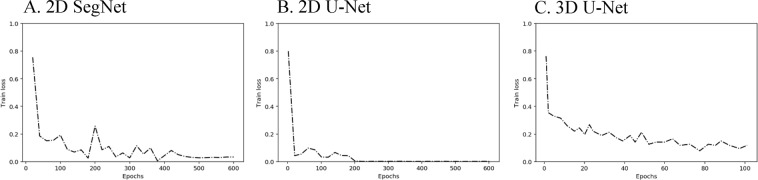
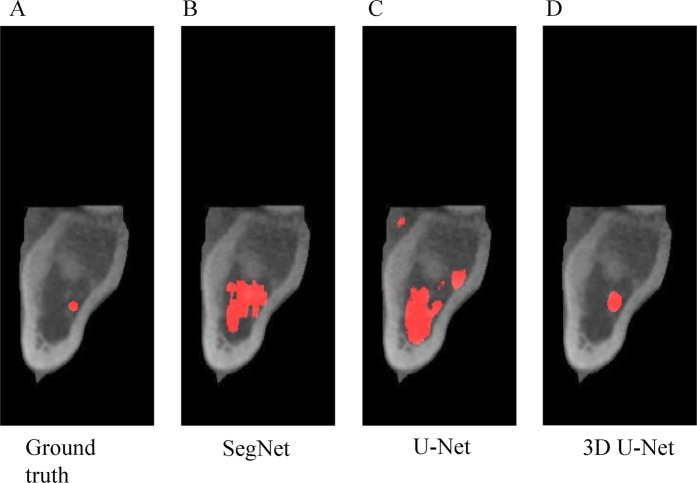
The practicability of deep learning techniques has been demonstrated by their successful implementation in varied fields, including diagnostic imaging for clinicians. In accordance with the increasing demands in the healthcare industry, techniques for automatic prediction and detection are being widely researched. Particularly in dentistry, for various reasons, automated mandibular canal detection has become highly desirable. The positioning of the inferior alveolar nerve (IAN), which is one of the major structures in the mandible, is crucial to prevent nerve injury during surgical procedures. However, automatic segmentation using Cone beam computed tomography (CBCT) poses certain difficulties, such as the complex appearance of the human skull, limited number of datasets, unclear edges, and noisy images. Using work-in-progress automation software, experiments were conducted with models based on 2D SegNet, 2D and 3D U-Nets as preliminary research for a dental segmentation automation tool. The 2D U-Net with adjacent images demonstrates higher global accuracy of 0.82 than naïve U-Net variants. The 2D SegNet showed the second highest global accuracy of 0.96, and the 3D U-Net showed the best global accuracy of 0.99. The automated canal detection system through deep learning will contribute significantly to efficient treatment planning and to reducing patients' discomfort by a dentist. This study will be a preliminary report and an opportunity to explore the application of deep learning to other dental fields.
深度学习技术的实用性已经在各种领域得到了证明,包括临床医生的诊断成像。根据医疗保健行业的不断增长的需求,自动预测和检测技术正在被广泛研究。特别是在牙科领域,由于各种原因,自动检测下颌管的需求变得非常迫切。定位下颌神经(IAN),这是下颌骨中的主要结构之一,对于防止手术过程中的神经损伤至关重要。然而,使用锥形束计算机断层扫描(CBCT)进行自动分割存在一定的困难,例如人类颅骨的复杂外观、数据集数量有限、边缘不清晰和图像噪声等。使用正在进行中的自动化软件,基于 2D SegNet、2D 和 3D U-Net 的模型进行了实验,作为牙科分割自动化工具的初步研究。使用相邻图像的 2D U-Net 比原始 U-Net 变体具有更高的全局准确性,为 0.82。2D SegNet 显示第二高的全局准确性,为 0.96,3D U-Net 显示最佳的全局准确性,为 0.99。通过深度学习的自动管检测系统将为有效的治疗计划和减少患者的不适做出重大贡献。本研究将是一个初步报告,并为探索深度学习在其他牙科领域的应用提供机会。