Institute of Environmental Engineering, University of Pannonia, Veszprém, 8200, Hungary.
Faculty of Chemical Engineering and Environmental Protection, Gheorghe Asachi Technical University of Iasi, Iasi, Romania.
Environ Sci Pollut Res Int. 2020 Jun;27(16):20136-20148. doi: 10.1007/s11356-020-08366-3. Epub 2020 Apr 1.
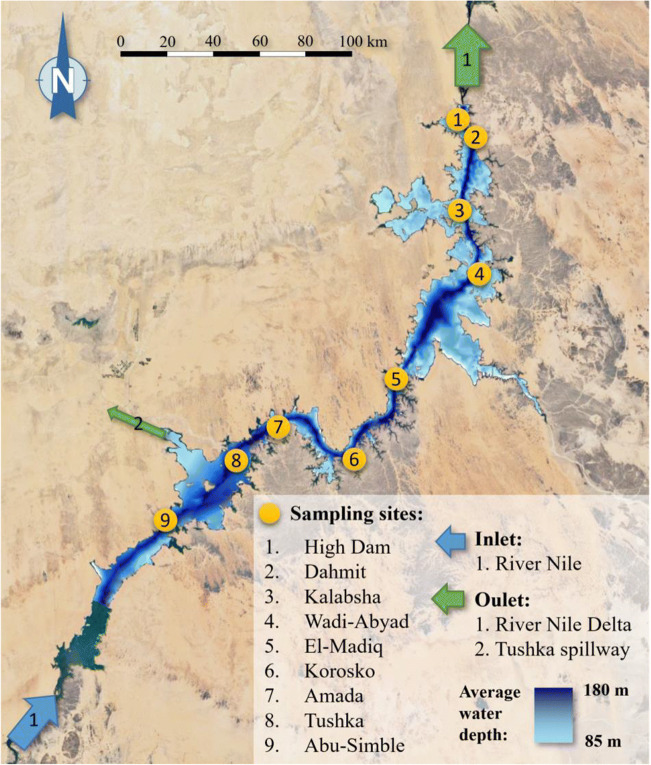
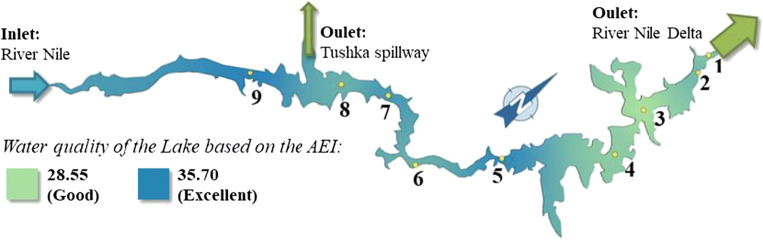
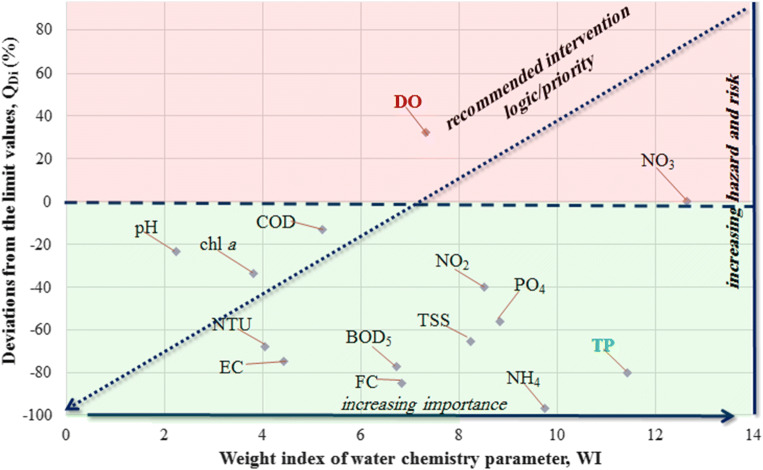
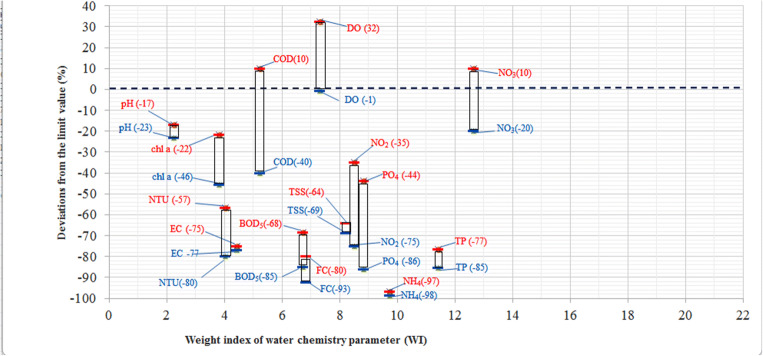
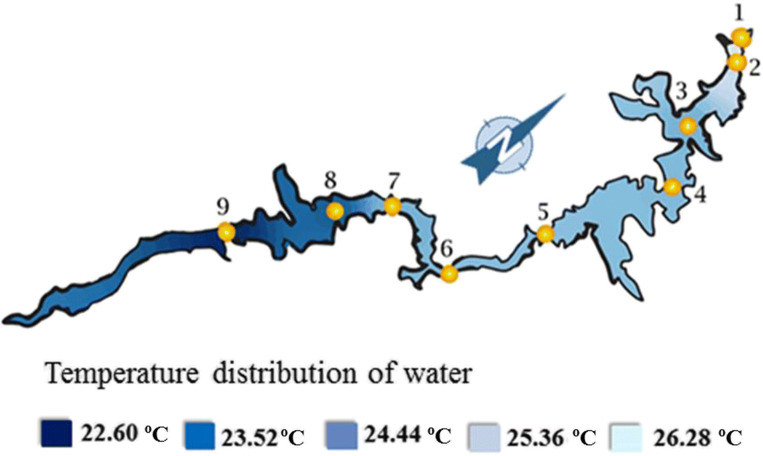
Lake Nasser is one of the largest man-made lakes on earth. It has a vital importance to Egypt for several decades because of the safe water supply of the country. Therefore, the water quality of the Lake Nasser must be profoundly investigated, and physico-chemical parameter changes of the water of the Lake Nasser should be continuously monitored and assessed. This work describes the present state of the physico-chemical (nitrate-nitrogen, nitrite-nitrogen, orthophosphate, total phosphate content, dissolved oxygen content, chemical oxygen demand, and biological oxygen demand) water parameters of Lake Nasser in Egypt at nine measurement sites along the Lake Nasser. The algorithm was devised at the University of Pannonia, Hungary, for the evaluation of the water quality. The aquatic environmental indices determined alongside the Lake Nasser fall into the category of "good" water quality at seven sampling sites and exhibited "excellent" water quality at two sampling sites according to Egyptian Governmental Decree No. 92/2013. In light of the tremendous demand for safe and healthy water supply in Egypt and international requirements, the water quality assessment is a very important tool for providing reliable information on the water quality. The protocol for water quality assessment could significantly contribute to the provision of high-quality water supply in Egypt. In conclusion, it can be stated that the parameters under investigation in different regions of Lake Nasser fall within the permissible ranges and the water of the Lake has good quality for drinking, irrigation, and fish cultures according to Egyptian standards; however, according to European specifications, there are steps to be accomplished for future water quality improvement.
纳赛尔湖是世界上最大的人工湖之一。几十年来,它对埃及具有重要意义,因为它为该国提供了安全的水源。因此,必须深入调查纳赛尔湖的水质,并持续监测和评估纳赛尔湖的水质理化参数变化。本工作描述了在埃及纳赛尔湖九个测量点沿湖水的理化(硝酸盐氮、亚硝酸盐氮、正磷酸盐、总磷含量、溶解氧含量、化学需氧量和生化需氧量)水参数的现状。该算法是由匈牙利潘诺尼亚大学设计的,用于评估水质。根据埃及政府第 92/2013 号法令,纳赛尔湖周边确定的水生环境指数在七个采样点属于“良好”水质类别,在两个采样点属于“优秀”水质类别。鉴于埃及对安全健康用水的巨大需求以及国际要求,水质评估是提供水质可靠信息的重要工具。水质评估方案可以为埃及提供高质量的供水做出重大贡献。总之,可以说,在纳赛尔湖不同地区调查的参数都在允许范围内,根据埃及标准,湖水适合饮用、灌溉和鱼类养殖,但是,根据欧洲规范,为了未来水质的改善,还需要采取一些措施。