Department of Respiratory Disease, Daping Hospital, Army Medical University, Chongqing, China.
Department of Ultrasound, The First Affiliated Hospital of Chongqing Medical University, China.
Mol Oncol. 2020 Jun;14(6):1152-1169. doi: 10.1002/1878-0261.12682. Epub 2020 May 5.
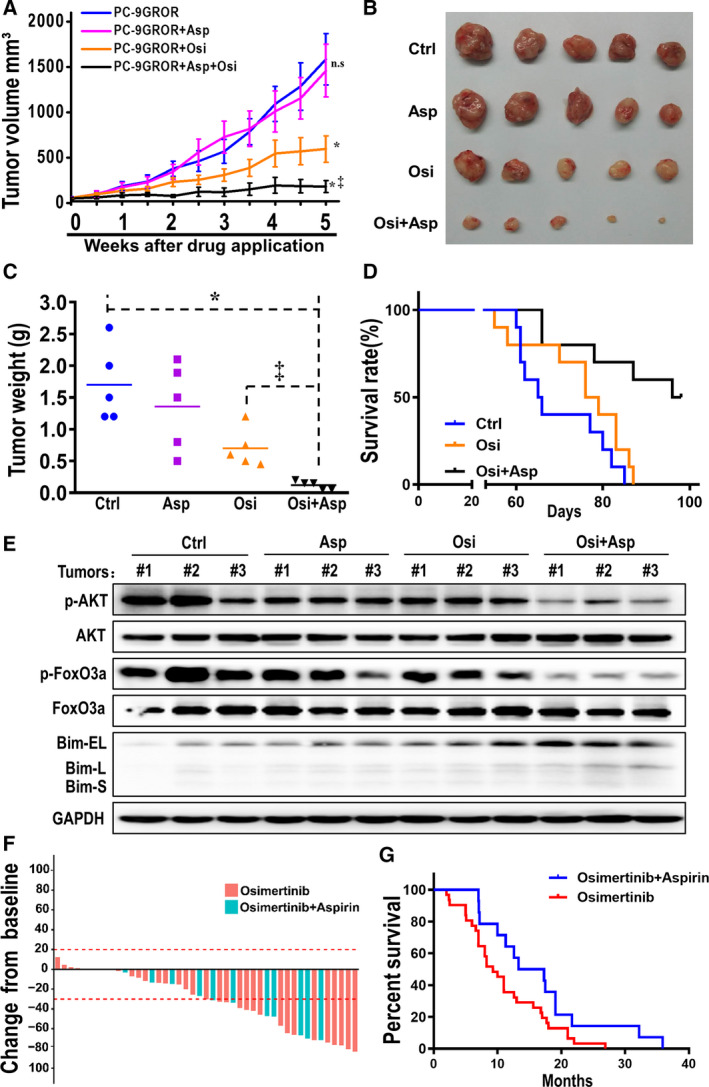
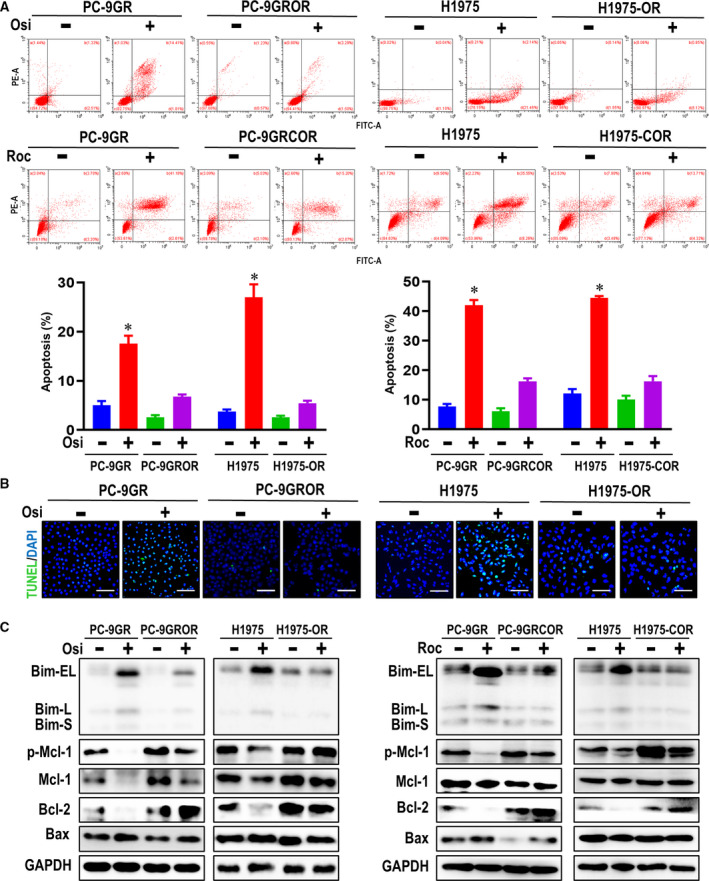
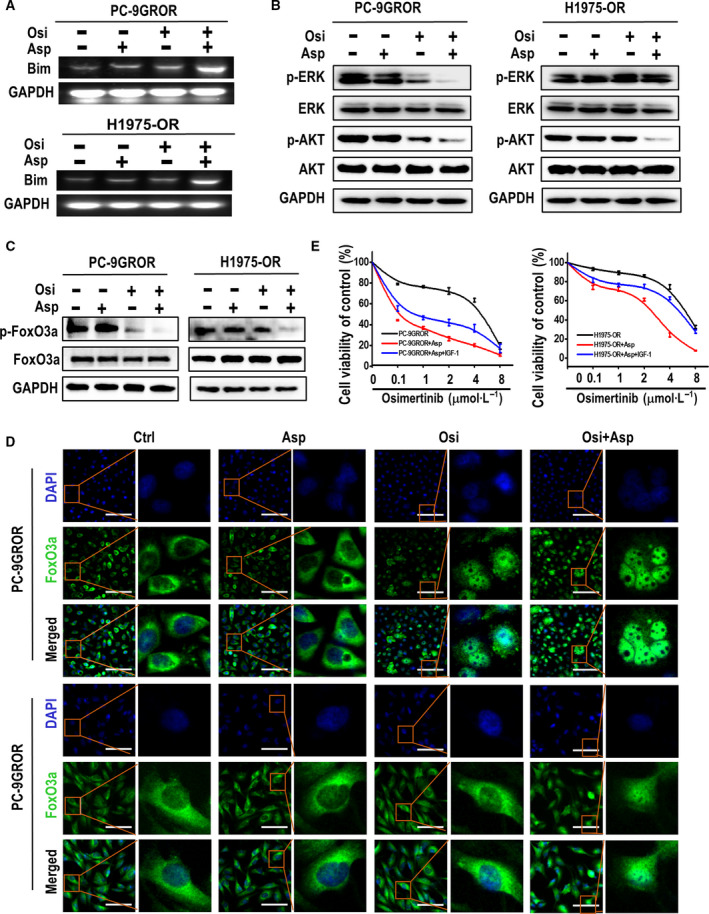
Osimertinib, a third-generation irreversible epidermal growth factor receptor tyrosine kinase inhibitor (EGFR-TKI), provides marked clinical benefit for patients with EGFR-activating mutations. Unfortunately, limited treatments exist for patients who acquire osimertinib resistance. We observed two 'special' patients who regained an antitumor response with osimertinib plus aspirin treatment. As previous data indicate that aspirin induces antiproliferative effects in tumor cells, we designed a preclinical study to explore whether aspirin combined with osimertinib could synergistically sensitize osimertinib-resistant non-small-cell lung cancer (NSCLC) cells. The effects of combined treatment with osimertinib and aspirin on osimertinib-resistant NSCLC cell lines were examined in vitro and in vivo. The combination of osimertinib and aspirin induced strong antiproliferative and proapoptotic effects in osimertinib-resistant NSCLC cells through inhibition of Akt/FoxO3a signaling component phosphorylation and increased Bim expression. Furthermore, Bim knockdown by siRNA significantly attenuated osimertinib resensitization by aspirin. In vivo, combination of aspirin and osimertinib significantly decreased tumor growth of PC-9GROR cell xenografts. Data of patients with NSCLC who received osimertinib treatment at Daping Hospital between January 2015 and January 2019 were reviewed retrospectively. According to clinical data for 45 patients with NSCLC, retrospective analysis showed that the median progression-free survival was significantly longer in the osimertinib plus aspirin group than in the osimertinib group. In summary, aspirin synergistically enhances the antitumor activity of osimertinib in osimertinib-resistant lung cancer cells through promoting Bim-dependent apoptosis. This combination therapy may be effective in overcoming acquired resistance to osimertinib and prolonging survival in patients with NSCLC.
奥希替尼是一种第三代不可逆表皮生长因子受体酪氨酸激酶抑制剂(EGFR-TKI),为具有 EGFR 激活突变的患者提供了显著的临床获益。不幸的是,对于获得奥希替尼耐药的患者,治疗方法有限。我们观察到两位“特殊”的患者,他们在接受奥希替尼加阿司匹林治疗后重新获得了抗肿瘤反应。由于先前的数据表明阿司匹林可诱导肿瘤细胞的抗增殖作用,我们设计了一项临床前研究,以探讨阿司匹林联合奥希替尼是否可以协同增强奥希替尼耐药非小细胞肺癌(NSCLC)细胞的敏感性。在体外和体内研究了奥希替尼联合阿司匹林对奥希替尼耐药 NSCLC 细胞系的作用。联合奥希替尼和阿司匹林治疗可通过抑制 Akt/FoxO3a 信号转导元件磷酸化和增加 Bim 表达,对奥希替尼耐药 NSCLC 细胞产生强烈的抗增殖和促凋亡作用。此外,通过 siRNA 敲低 Bim 可显著减弱阿司匹林对奥希替尼的再敏化作用。在体内,阿司匹林和奥希替尼的联合使用可显著降低 PC-9GROR 细胞异种移植瘤的肿瘤生长。回顾性分析了 2015 年 1 月至 2019 年 1 月在大坪医院接受奥希替尼治疗的 NSCLC 患者的数据。根据 45 例 NSCLC 患者的临床数据,回顾性分析显示,奥希替尼加阿司匹林组的中位无进展生存期明显长于奥希替尼组。总之,阿司匹林通过促进 Bim 依赖性细胞凋亡,协同增强奥希替尼在奥希替尼耐药肺癌细胞中的抗肿瘤活性。这种联合治疗可能有助于克服奥希替尼获得性耐药,并延长 NSCLC 患者的生存时间。