State Key Laboratory of Oncology in South China, Collaborative Innovation Center for Cancer Medicine; Guangdong Esophageal Cancer Institute; Sun Yat-sen University Cancer Center, Guangzhou, 510060, People's Republic of China.
School of Pharmacy, Faculty of Medicine, The Chinese University of Hong Kong, Room 801N, Area 39, Lo Kwee-Seong Integrated Biomedical Sciences Building, Shatin, New Territories, Hong Kong, SAR, China.
Mol Cancer. 2021 Jan 18;20(1):17. doi: 10.1186/s12943-021-01307-9.
Epidermal growth factor receptor (EGFR)-mutated lung cancer constitutes a major subgroup of non-small cell lung cancer (NSCLC) and osimertinib is administrated as first-line treatment. However, most patients with osimertinib treatment eventually relapse within one year. The underlying mechanisms of osimertinib resistance remain largely unexplored.
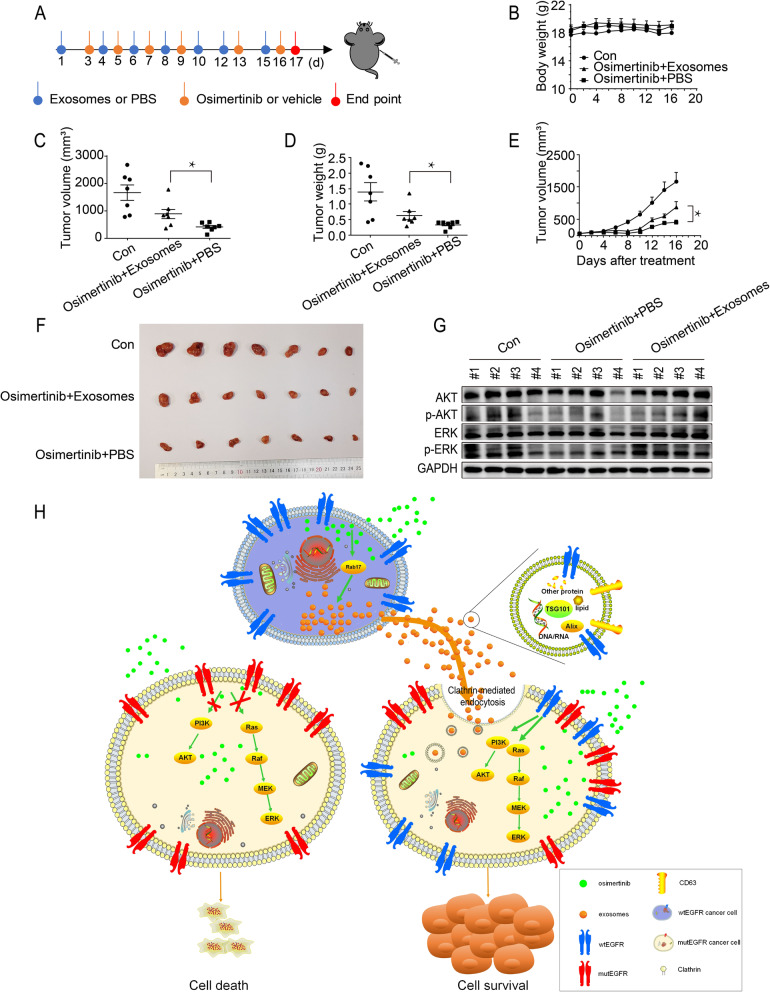
Exosomes isolation was performed by differential centrifugation. Co-culture assays were conducted to explore the alteration of drug sensitivity by cell viability and apoptosis assays. Immunofluorescence and flow cytometry were performed to visualize the formation or absorption of exosomes. Exosomes secretion was measured by Nanoparticle Tracking Analysis or ELISA. The xenograft tumor model in mice was established to evaluate the effect of exosomes on osimertinib sensitivity in vivo.
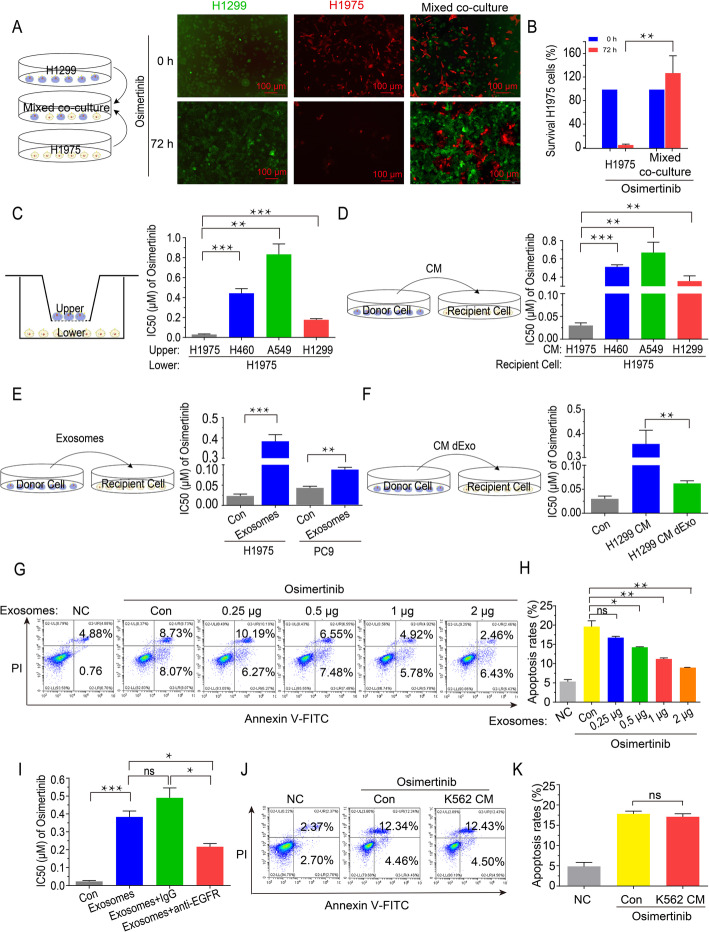
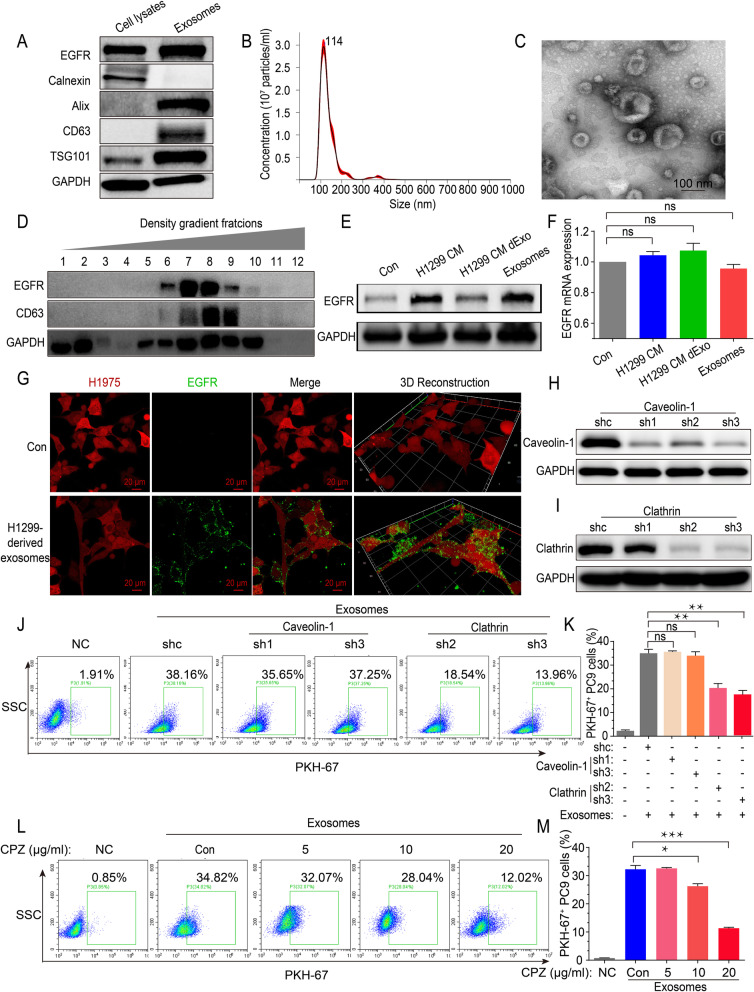
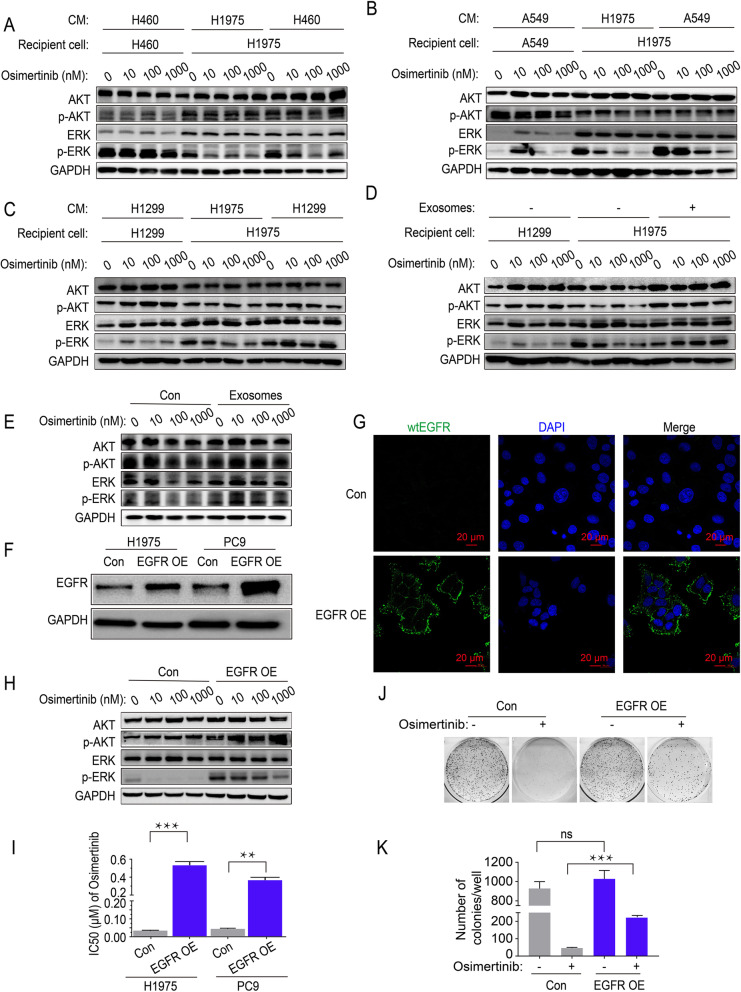
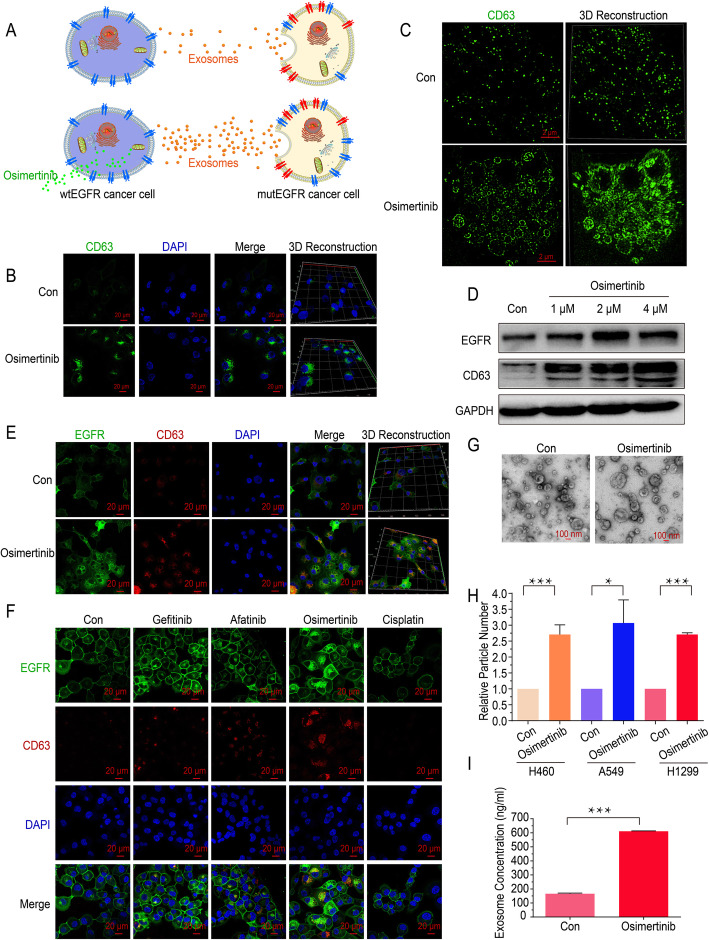
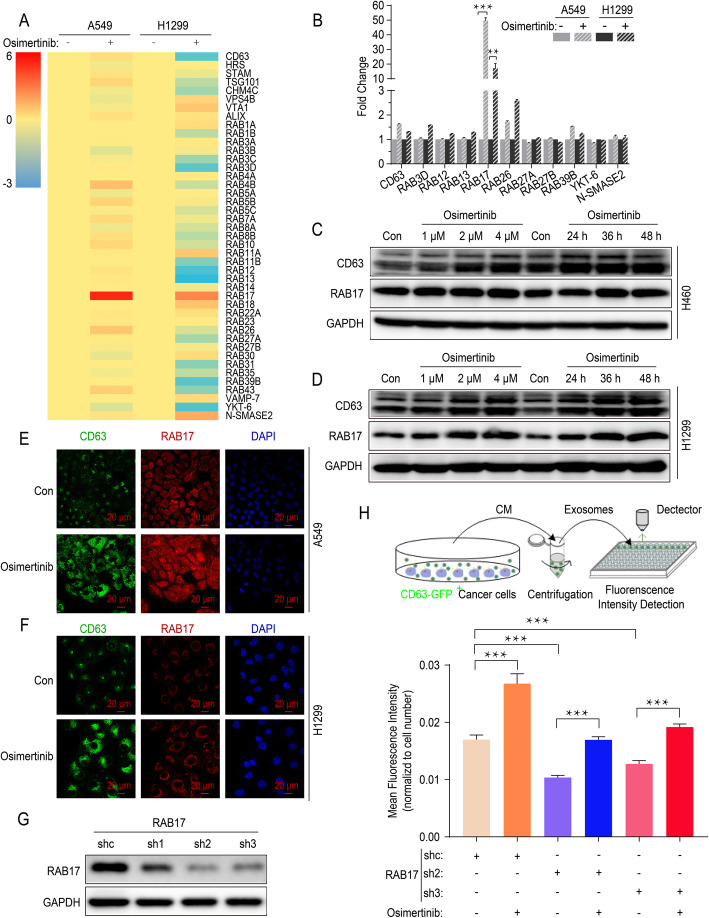
Intercellular transfer of exosomal wild type EGFR protein confers osimertinib resistance to EGFR-mutated sensitive cancer cells in vitro and in vivo. Co-culture of EGFR-mutated sensitive cells and EGFR-nonmutated resistant cells promoted osimertinib resistance phenotype in EGFR-mutated cancer cells, while depletion of exosomes from conditioned medium or blockade of exosomal EGFR by neutralizing antibody alleviated this phenotype. Mechanistically, osimertinib promoted the release of exosomes by upregulated a Rab GTPase (RAB17). Knockdown of RAB17 resulted in the decrease of exosomes secretion. Moreover, exosomes could be internalized by EGFR-mutated cancer cells via Clathrin-dependent endocytosis and then the encapsulated exosomal wild type EGFR protein activated downstream PI3K/AKT and MAPK signaling pathways and triggered osimertinib resistance.
Intercellular transfer of exosomal wild type EGFR promotes osimertinib resistance in NSCLC, which may represent a novel resistant mechanism of osimertinib and provide a proof of concept for targeting exosomes to prevent and reverse the osimertinib resistance.
表皮生长因子受体(EGFR)突变型肺癌构成非小细胞肺癌(NSCLC)的主要亚群,奥希替尼被用作一线治疗药物。然而,大多数接受奥希替尼治疗的患者最终在一年内复发。奥希替尼耐药的潜在机制在很大程度上仍未得到探索。
通过差速离心法进行外泌体分离。通过细胞活力和细胞凋亡检测,共培养实验来研究药物敏感性的改变。通过免疫荧光和流式细胞术来可视化外泌体的形成或吸收。通过纳米颗粒跟踪分析或 ELISA 来测量外泌体的分泌。建立了小鼠异种移植肿瘤模型,以评估外泌体对体内奥希替尼敏感性的影响。
体外和体内共培养 EGFR 突变型敏感细胞和 EGFR 非突变型耐药细胞促进了 EGFR 突变型癌细胞中奥希替尼耐药表型的形成,而从条件培养基中耗尽外泌体或用中和抗体阻断外泌体 EGFR 则减轻了这种表型。从机制上讲,奥希替尼通过上调 Rab GTPase(RAB17)促进外泌体的释放。RAB17 的敲低导致外泌体分泌减少。此外,外泌体可以通过网格蛋白依赖性内吞作用被 EGFR 突变型癌细胞内化,然后包裹的外泌体野生型 EGFR 蛋白激活下游 PI3K/AKT 和 MAPK 信号通路,并引发奥希替尼耐药。
细胞间转移的外泌体野生型 EGFR 促进了 NSCLC 中的奥希替尼耐药,这可能代表了奥希替尼耐药的一种新机制,并为靶向外泌体以预防和逆转奥希替尼耐药提供了概念验证。