Cao Weiguo, Pomeroy Marc J, Gao Yongfeng, Barish Matthew A, Abbasi Almas F, Pickhardt Perry J, Liang Zhengrong
The Department of Radiology, Stony Brook University, Stony Brook, NY, 11794, USA.
The Departments of Radiology and Biomedical Engineering, Stony Brook University, Stony Brook, NY, 11794, USA.
Vis Comput Ind Biomed Art. 2019 Dec 27;2(1):25. doi: 10.1186/s42492-019-0032-7.
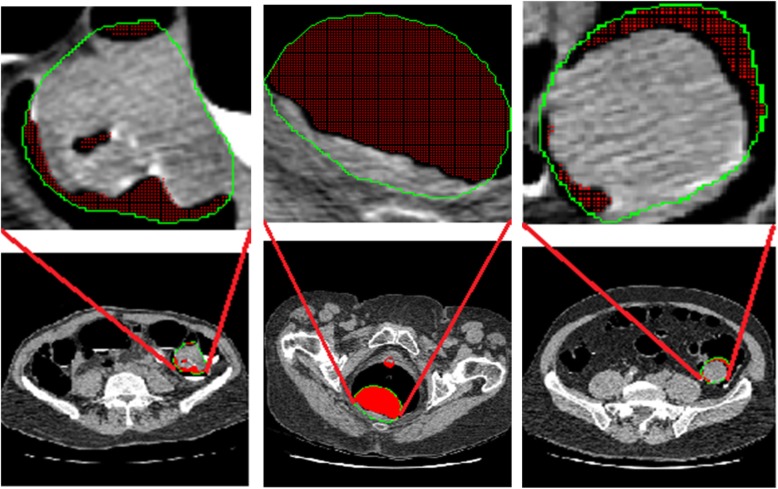
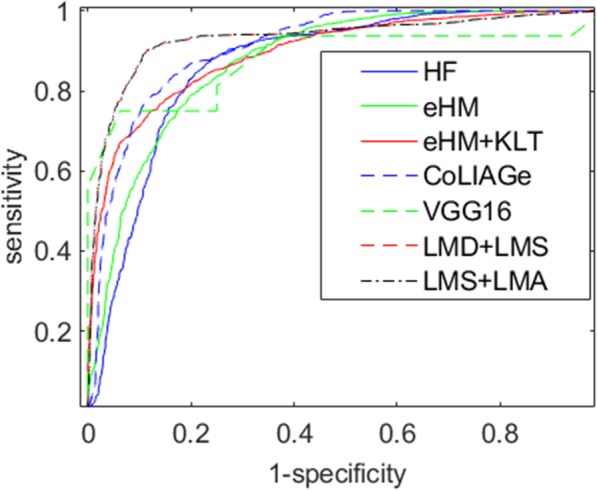
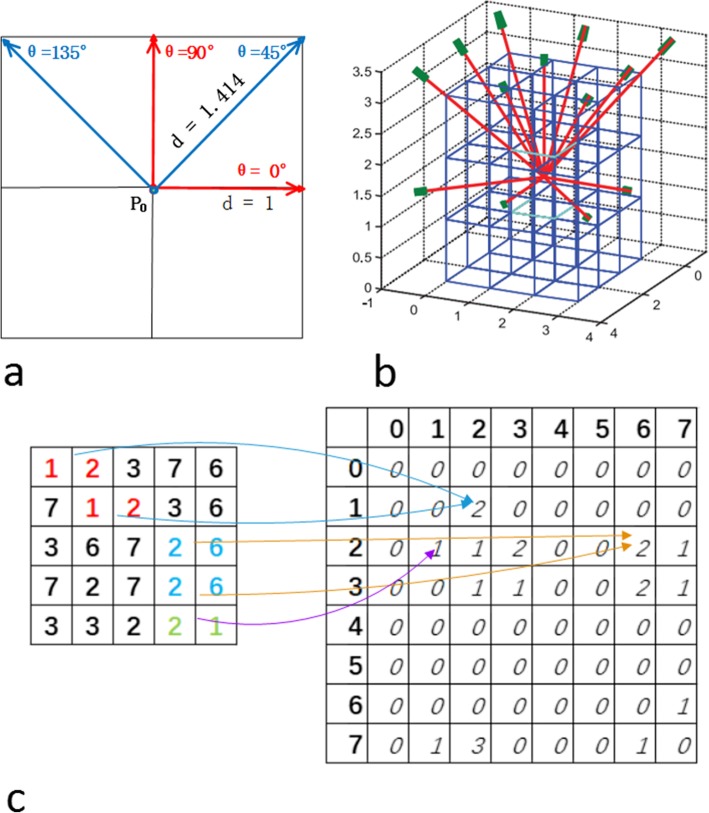
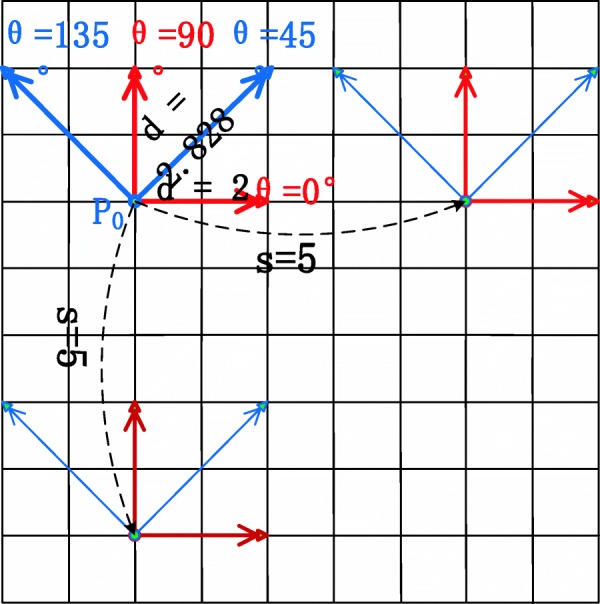
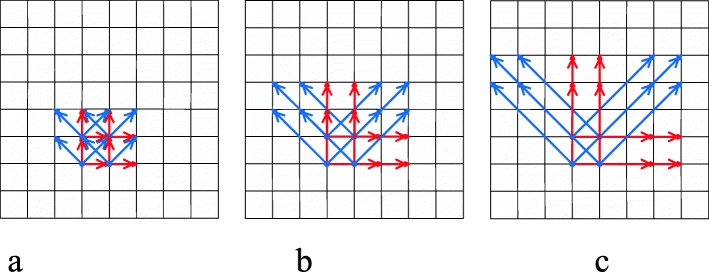
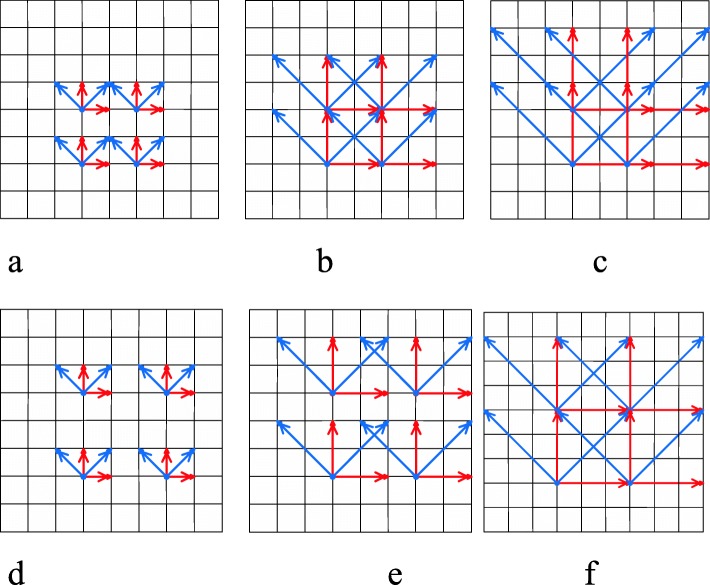
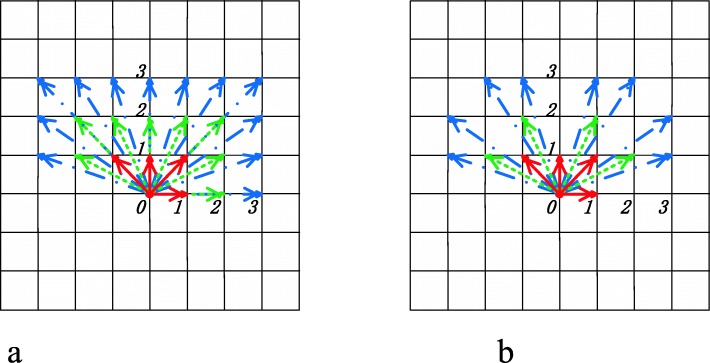
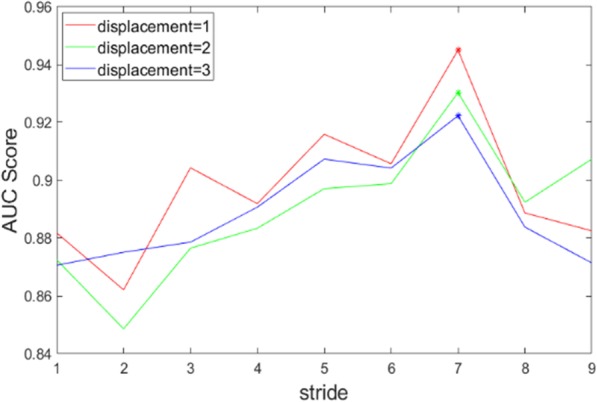
Texture features have played an essential role in the field of medical imaging for computer-aided diagnosis. The gray-level co-occurrence matrix (GLCM)-based texture descriptor has emerged to become one of the most successful feature sets for these applications. This study aims to increase the potential of these features by introducing multi-scale analysis into the construction of GLCM texture descriptor. In this study, we first introduce a new parameter - stride, to explore the definition of GLCM. Then we propose three multi-scaling GLCM models according to its three parameters, (1) learning model by multiple displacements, (2) learning model by multiple strides (LMS), and (3) learning model by multiple angles. These models increase the texture information by introducing more texture patterns and mitigate direction sparsity and dense sampling problems presented in the traditional Haralick model. To further analyze the three parameters, we test the three models by performing classification on a dataset of 63 large polyp masses obtained from computed tomography colonoscopy consisting of 32 adenocarcinomas and 31 benign adenomas. Finally, the proposed methods are compared to several typical GLCM-texture descriptors and one deep learning model. LMS obtains the highest performance and enhances the prediction power to 0.9450 with standard deviation 0.0285 by area under the curve of receiver operating characteristics score which is a significant improvement.
纹理特征在医学成像领域的计算机辅助诊断中发挥了重要作用。基于灰度共生矩阵(GLCM)的纹理描述符已成为这些应用中最成功的特征集之一。本研究旨在通过将多尺度分析引入GLCM纹理描述符的构建中来提高这些特征的潜力。在本研究中,我们首先引入一个新参数——步幅,以探索GLCM的定义。然后根据其三个参数提出了三种多尺度GLCM模型:(1)多位移学习模型,(2)多步幅学习模型(LMS),以及(3)多角度学习模型。这些模型通过引入更多纹理模式增加了纹理信息,并减轻了传统哈拉里克模型中存在的方向稀疏性和密集采样问题。为了进一步分析这三个参数,我们通过对一个由63个大息肉肿块组成的数据集进行分类来测试这三种模型,该数据集来自计算机断层结肠成像,包括32个腺癌和31个良性腺瘤。最后,将所提出的方法与几种典型的GLCM纹理描述符和一个深度学习模型进行比较。LMS取得了最高性能,通过接收器操作特征曲线下面积得分,预测能力提高到0.9450,标准差为0.0285,这是一个显著的改进。