Laboratory of Neuropharmacology and Neurotoxicology, Shanghai Key Laboratory of Bio-Energy Crops, College of Life Science, Shanghai University, Shanghai, 200444, China.
Department of Physiology and Pathophysiology, Basic Medicine College, Fudan University, Shanghai, 200032, China.
Neurosci Bull. 2020 May;36(5):475-492. doi: 10.1007/s12264-020-00484-9. Epub 2020 Apr 3.
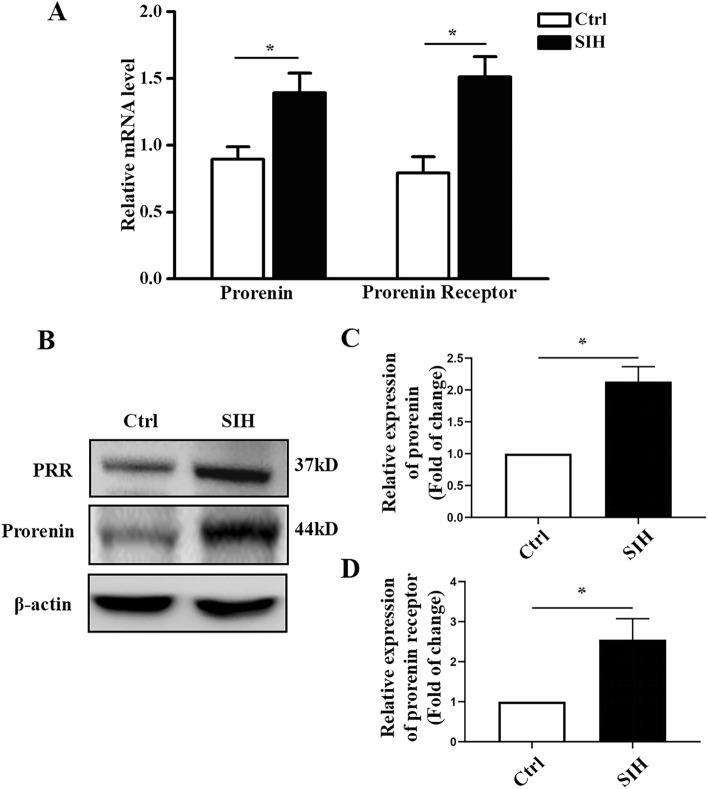
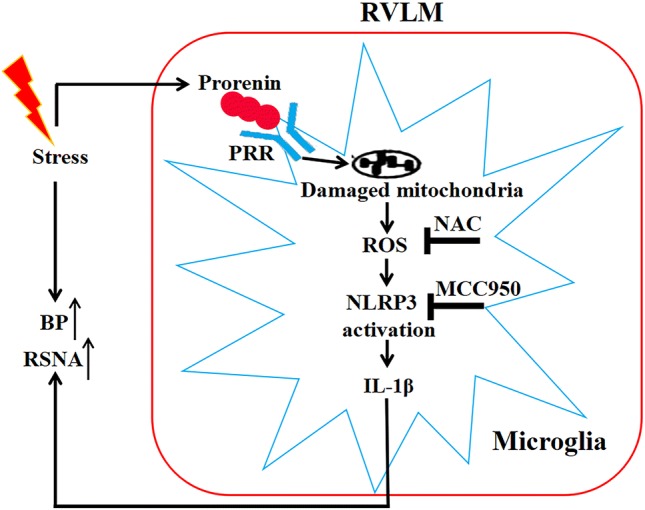
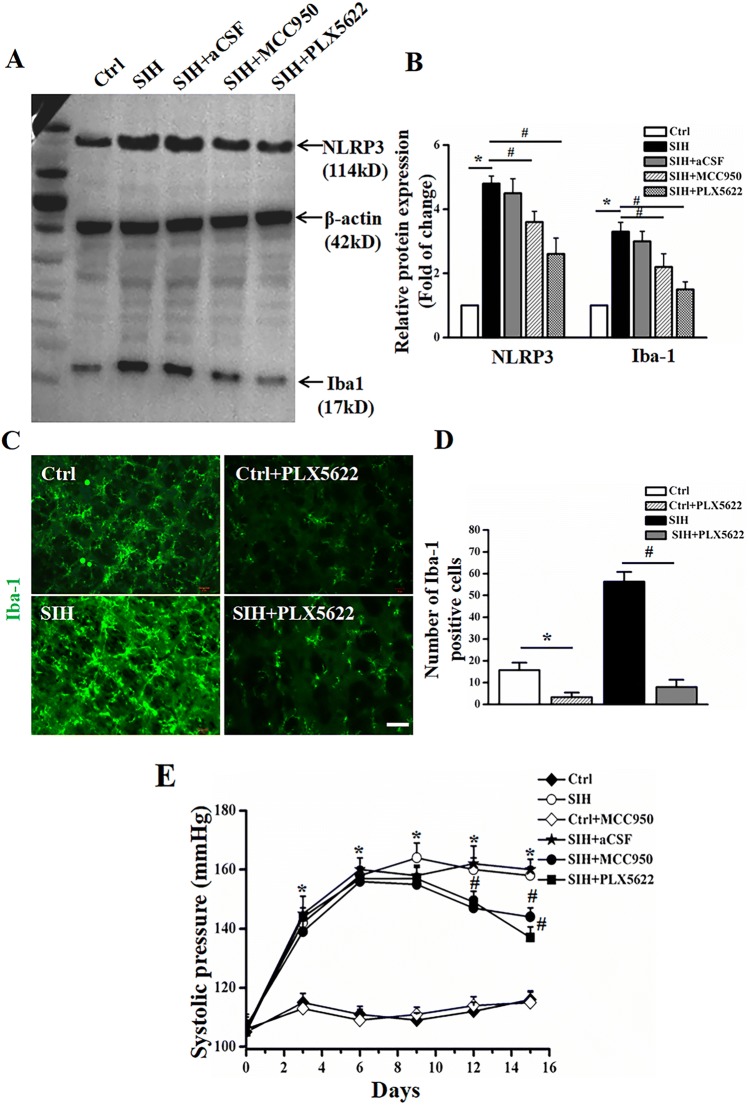
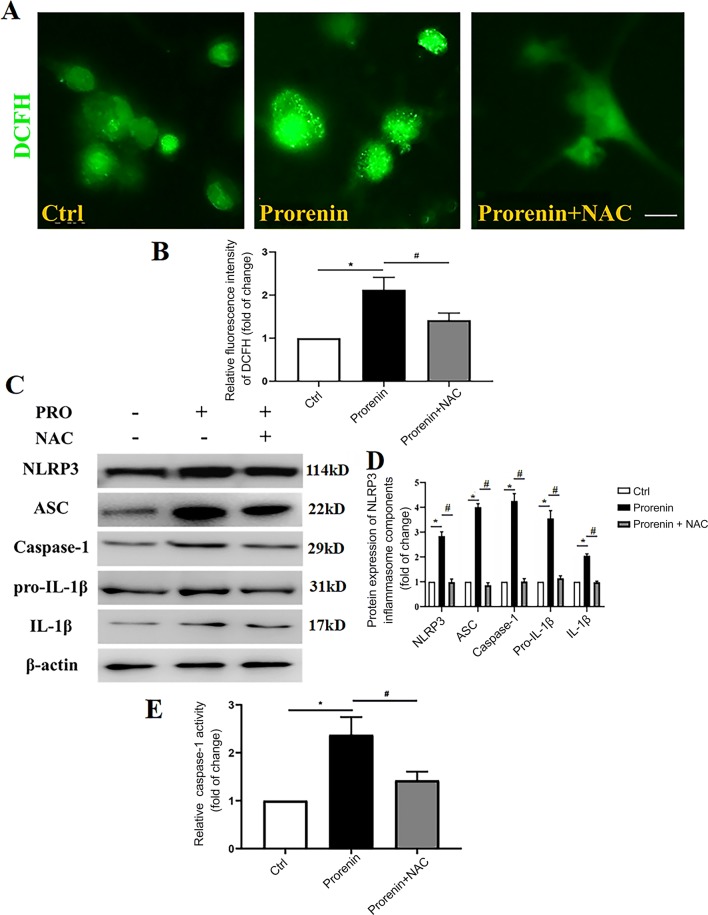
Increased microglial activation and neuroinflammation within autonomic brain regions such as the rostral ventrolateral medulla (RVLM) have been implicated in stress-induced hypertension (SIH). Prorenin, a member of the brain renin-angiotensin system (RAS), can directly activate microglia. The present study aimed to investigate the effects of prorenin on microglial activation in the RVLM of SIH rats. Rats were subjected to intermittent electric foot-shocks plus noise, this stress was administered for 2 h twice daily for 15 consecutive days, and mean arterial pressure (MAP) and renal sympathetic nerve activity (RSNA) were monitored. The results showed that MAP and RSNA were augmented, and this paralleled increased pro-inflammatory phenotype (M1) switching. Prorenin and its receptor (PRR) expression and the NLR family pyrin domain containing 3 (NLRP3) activation were increased in RVLM of SIH rats. In addition, PLX5622 (a microglial depletion agent), MCC950 (a NLRP3 inhibitor), and/or PRO20 (a (Pro)renin receptor antagonist) had antihypertensive effects in the rats. The NLRP3 expression in the RVLM was decreased in SIH rats treated with PLX5622. Mito-tracker staining showed translocation of NLRP3 from mitochondria to the cytoplasm in prorenin-stimulated microglia. Prorenin increased the ROS-triggering M1 phenotype-switching and NLRP3 activation, while MCC950 decreased the M1 polarization. In conclusion, upregulated prorenin in the RVLM may be involved in the pathogenesis of SIH, mediated by activation of the microglia-derived NLRP3 inflammasome. The link between prorenin and NLRP3 in microglia provides insights for the treatment of stress-related hypertension.
在自主脑区(如延髓头端腹外侧区 [RVLM])中,小胶质细胞的激活和神经炎症增加与应激诱导的高血压(SIH)有关。脑肾素-血管紧张素系统(RAS)的成员前肾素可以直接激活小胶质细胞。本研究旨在探讨前肾素对 SIH 大鼠 RVLM 中小胶质细胞激活的影响。大鼠接受间歇性电击加噪声,这种应激每天两次,每次 2 小时,连续 15 天,监测平均动脉压(MAP)和肾交感神经活性(RSNA)。结果表明,MAP 和 RSNA 增加,这与促炎表型(M1)转换增加平行。前肾素及其受体(PRR)表达和 NOD、LRP 和pyrin 结构域包含蛋白 3(NLRP3)激活在 SIH 大鼠的 RVLM 中增加。此外,PLX5622(一种小胶质细胞耗竭剂)、MCC950(一种 NLRP3 抑制剂)和/或 PRO20(一种(Pro)肾素受体拮抗剂)在大鼠中具有降压作用。在接受 PLX5622 治疗的 SIH 大鼠中,RVLM 中的 NLRP3 表达减少。Mito-tracker 染色显示,前肾素刺激的小胶质细胞中 NLRP3 从线粒体易位到细胞质。前肾素增加了 ROS 触发的 M1 表型转换和 NLRP3 激活,而 MCC950 则减少了 M1 极化。总之,RVLM 中上调的前肾素可能参与了 SIH 的发病机制,其介导方式是小胶质细胞源性 NLRP3 炎性小体的激活。小胶质细胞中前肾素与 NLRP3 之间的联系为应激相关高血压的治疗提供了新的思路。