Department of Human Anatomy and Psychobiology, Clinical and Experimental Neuroscience Group (NiCE-IMIB), Institute for Aging Research, School of Medicine, University of Murcia, Murcia, Spain.
Biomedical Research Institute of Murcia (IMIB-Arrixaca), Campus of Health Sciences, University of Murcia, Murcia, Spain.
J Neuroinflammation. 2018 Nov 26;15(1):328. doi: 10.1186/s12974-018-1357-4.
Neuroprotective strategies are becoming relevant to slow down dopaminergic cell death and inflammatory processes related to the progressive neurodegeneration in Parkinson's disease (PD). Interestingly, among others, physical activity (PA) or anti-oxidant agents (such as N-acetyl-L-cysteine, NAC) are common therapeutic strategies. Therefore, this study aims to analyze if there is a synergistic effect of physical activity along with NAC treatment on dopaminergic degeneration and neuroinflammatory response in a 1-methyl-4-phenyl-1,2,3,6-tetrahydropyridine (MPTP)-induced Parkinsonism model after subchronic intoxication.
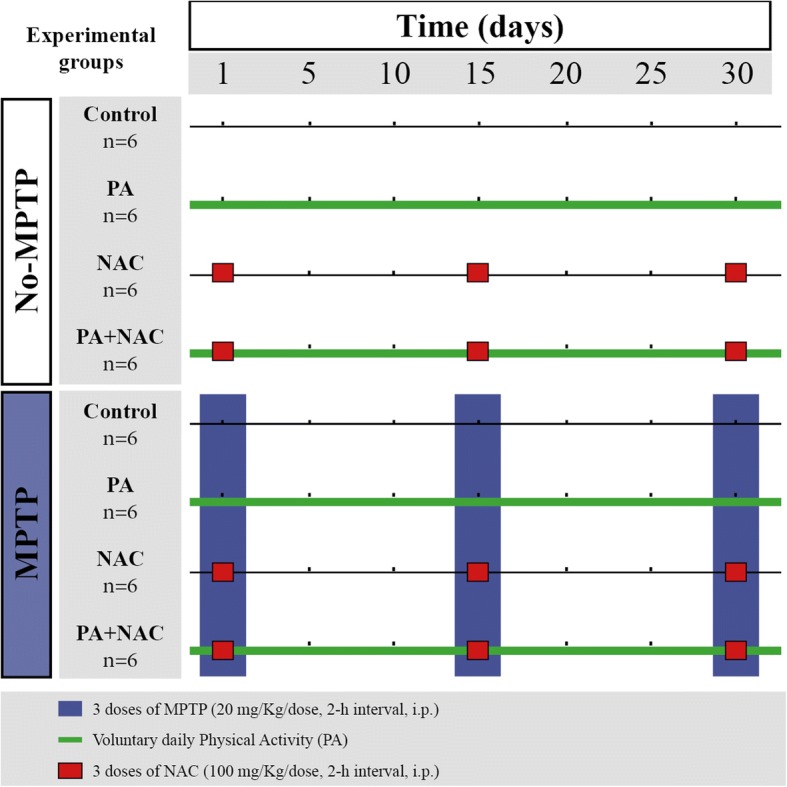
To ascertain this possibility, 48 8-week-old male mice (C57BL/6 strain) were used. Twenty four of them were placed individually in cages where voluntary physical activity was automatically monitored during 30 days and were divided into groups: (i) control; (ii) NAC; (iii) MPTP, and (iv) MPTP+NAC. The other 24 mice were divided into the same four groups but without physical activity.
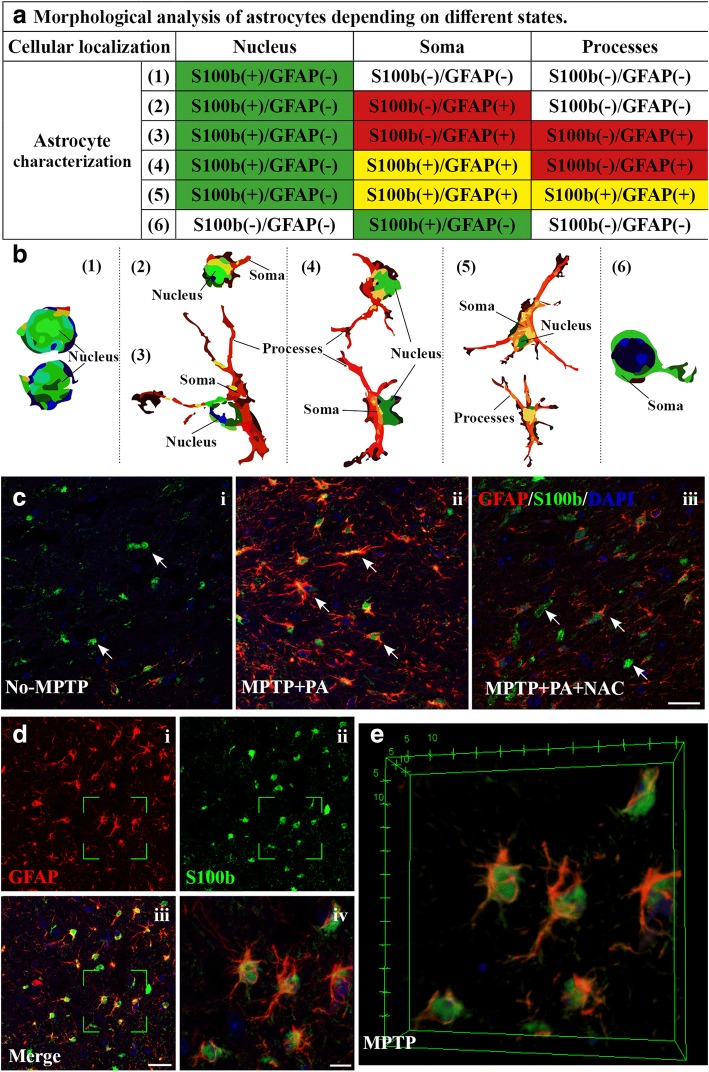
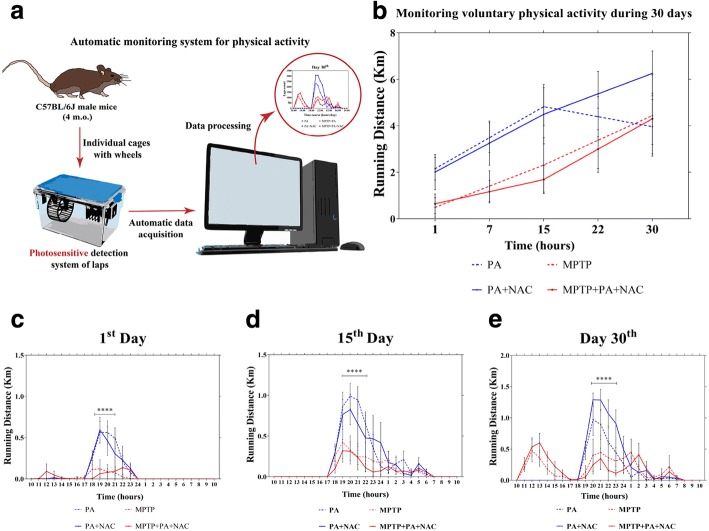
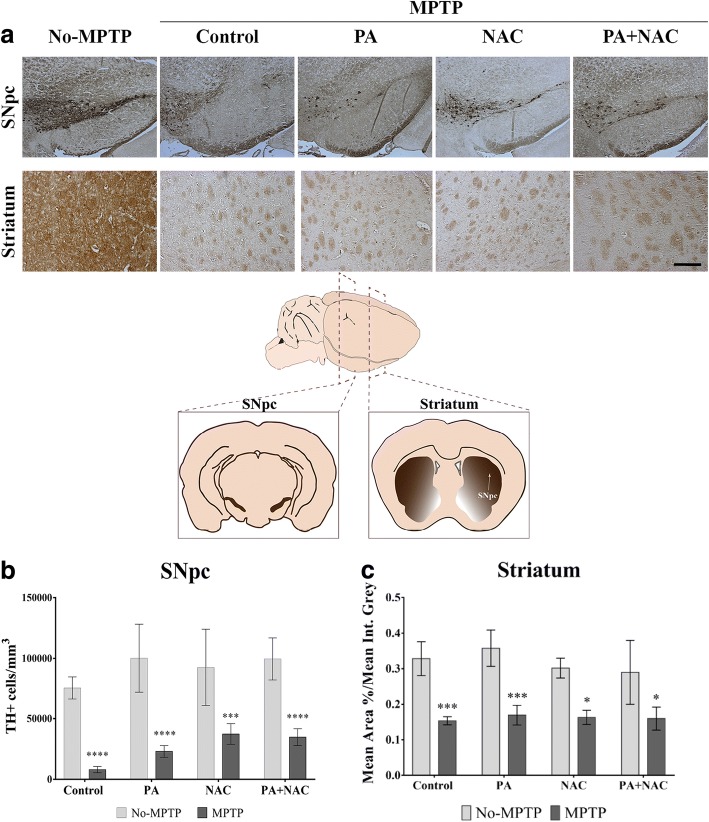
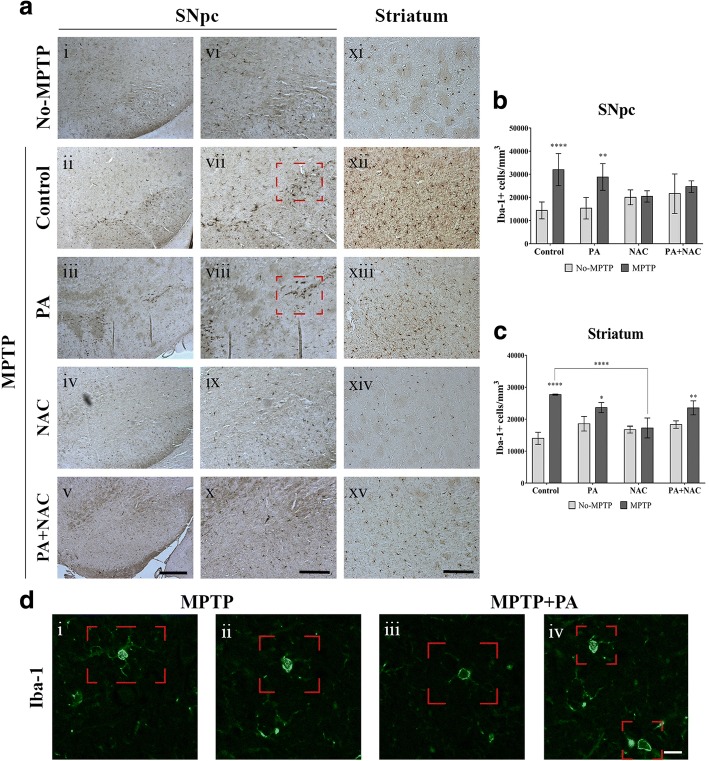
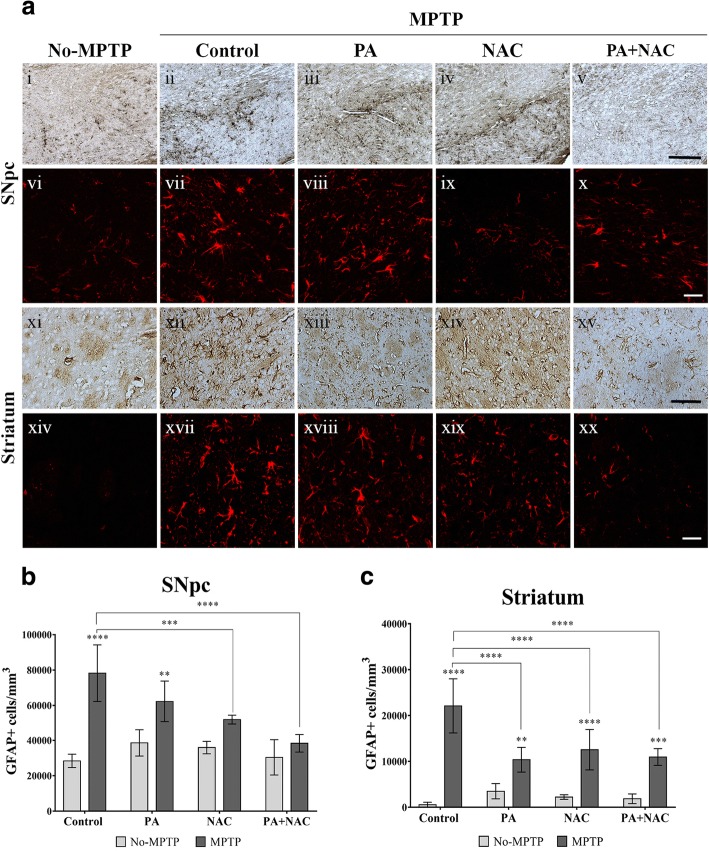
The data collected during the treatment period showed that there was an overall increase in the total running distance in all groups under physical activity, including Parkinsonian animals. However, the monitoring data per day showed that the activity routine by MPTP and MPTP+NAC groups was disrupted by alterations in the circardian rhythm because of MPTP intoxication. Results from post-mortem studies in the substantia nigra pars compacta (SNpc) showed significant decrease in the number of TH+ cells in all MPTP groups. Moreover, TH+ expression in the striatum was significantly decreased in all MPTP groups. Thus, PA + NAC treatment do not protect dopaminergic neurons against a subchronic intoxication of MPTP. Regarding glial response, the results obtained from microglial analysis do not show significant increase in the number of Iba-1+ cell in MPTP+NAC and MPTP+PA + NAC. In the striatum, a significant decrease is observed only in the MPTP+NAC group compared with that of the MPTP group. The microglial results are reinforced by those obtained from the analysis of astroglial response, in which a decrease in the expression of GFAP+ cells are observed in MPTP+NAC and MPTP+PA + NAC compared with MPTP groups both in the SNpc and in the striatum. Finally, from the study of the astroglial response by the co-localization of GFAP/S100b, we described some expression patterns observed based on the severity of the damage produced by the MPTP intoxication in the different treated groups.
These results suggest that the combination of physical activity with an anti-oxidant agent does not have a synergistic neuroprotective effect in the nigrostriatal pathway. Our results show a potential positive effect, only due to NAC treatment, on the neuroinflammatory response after subchronic MPTP intoxication. Thus, physical activity is not essential, under these conditions. However, we believe that physical activity, used for therapeutic purposes, has a beneficial long-term effect. In this line, these results open the door to design longer studies to demonstrate its promising effect as neuroprotective strategy.
神经保护策略对于减缓帕金森病(PD)中与多巴胺能细胞死亡和进行性神经退行相关的炎症过程变得越来越重要。有趣的是,除其他外,体育活动(PA)或抗氧化剂(如 N-乙酰-L-半胱氨酸,NAC)是常见的治疗策略。因此,本研究旨在分析在亚慢性 1-甲基-4-苯基-1,2,3,6-四氢吡啶(MPTP)诱导的帕金森病模型中,PA 与 NAC 治疗联合是否对多巴胺能变性和神经炎症反应有协同作用。
为了确定这种可能性,使用了 48 只 8 周龄雄性小鼠(C57BL/6 品系)。其中 24 只被单独放置在笼子中,在 30 天内自动监测自愿性 PA,然后分为以下几组:(i)对照组;(ii)NAC 组;(iii)MPTP 组;和(iv)MPTP+NAC 组。其余 24 只小鼠也分为相同的四组,但没有 PA。
在治疗期间收集的数据表明,所有进行 PA 的组的总跑动距离均总体增加,包括帕金森病动物。然而,每天的监测数据显示,由于 MPTP 中毒,MPTP 和 MPTP+NAC 组的活动常规被昼夜节律的改变打乱了。在黑质致密部(SNpc)的死后研究结果表明,所有 MPTP 组的 TH+细胞数量均显著减少。此外,所有 MPTP 组纹状体中的 TH+表达均显著减少。因此,PA+NAC 治疗不能防止 MPTP 的亚慢性中毒对多巴胺能神经元的损害。关于神经胶质反应,从小胶质细胞分析中获得的结果表明,MPTP+NAC 和 MPTP+PA+NAC 组的 Iba-1+细胞数量没有显著增加。在纹状体中,仅在 MPTP+NAC 组与 MPTP 组相比观察到明显减少。小胶质细胞结果得到了星形胶质细胞反应分析的支持,其中在 SNpc 和纹状体中,与 MPTP 组相比,MPTP+NAC 和 MPTP+PA+NAC 组的 GFAP+细胞表达减少。最后,从通过 GFAP/S100b 共定位对星形胶质细胞反应的研究中,我们描述了基于不同治疗组中 MPTP 中毒产生的损伤严重程度观察到的一些表达模式。
这些结果表明,PA 与抗氧化剂联合使用对黑质纹状体通路没有协同的神经保护作用。我们的结果表明,NAC 治疗后,仅在亚慢性 MPTP 中毒后,对神经炎症反应有潜在的积极影响。因此,在这些条件下,PA 不是必需的。然而,我们相信,用于治疗目的的 PA 具有有益的长期效果。在这方面,这些结果为设计更长时间的研究以证明其作为神经保护策略的有希望的效果奠定了基础。