Kang You-Jung, Shin Yooseok, Kim Jee-Hwan
Department of Prosthodontics, Oral Science Research Center, College of Dentistry, Yonsei University, Seoul 03722, Korea.
Department of Conservative Dentistry, Oral Science Research Center, College of Dentistry, Yonsei University, Seoul 03722, Korea.
Materials (Basel). 2020 Mar 20;13(6):1409. doi: 10.3390/ma13061409.
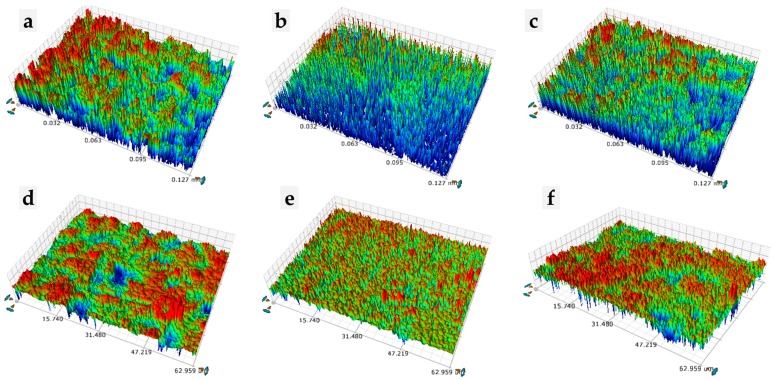
This study evaluated the shear bond strength (SBS) and biaxial flexural strength (BFS) of resin cements according to the surface treatment method using low-temperature hot etching with hydrofluoric acid (HF) on a yttrium-stabilized tetragonal zirconia (Y-TZP) surface; 96 discs and 72 cubes for BFS and SBS tests for Y-TZP were randomly divided into four groups of BFS and three groups of SBS. Specimens were subjected to the following surface treatments: (1) no treatment (C), (2) air abrasion with 50 μm AlO particles (A), (3) hot etching with HF at 100 °C for 10 min (E), and (4) air abrasion + hot etching (AE). After treatments, the specimens were coated with primer, and resin cement was applied with molds. The specimens were evaluated for roughness (Ra) via scanning electron microscopy and x-ray diffraction, and the data were analyzed by an analysis of variance (ANOVA) and Kruskal-Wallis tests. Group E produced significantly higher SBS compared to group A and AE before and after thermocycling. The BFSs of all groups showed no significant differences before thermocycling; however, after thermocycling, C and E treatment groups were significantly higher compared to group A and AE. All groups showed phase transformation. Group E was observed lower monoclinic phase transformation compared to other groups.
本研究根据在钇稳定四方氧化锆(Y-TZP)表面使用氢氟酸(HF)进行低温热蚀刻的表面处理方法,评估了树脂水门汀的剪切粘结强度(SBS)和双轴弯曲强度(BFS);用于Y-TZP的BFS和SBS测试的96个圆盘和72个立方体被随机分为四组BFS和三组SBS。对试样进行以下表面处理:(1)不处理(C),(2)用50μm AlO颗粒进行空气研磨(A),(3)在100°C下用HF热蚀刻10分钟(E),以及(4)空气研磨+热蚀刻(AE)。处理后,对试样涂覆底漆,并使用模具施加树脂水门汀。通过扫描电子显微镜和X射线衍射评估试样的粗糙度(Ra),并通过方差分析(ANOVA)和Kruskal-Wallis检验分析数据。在热循环前后,E组产生的SBS显著高于A组和AE组。在热循环前,所有组的BFS均无显著差异;然而,在热循环后,C组和E处理组显著高于A组和AE组。所有组均显示出相变。与其他组相比,观察到E组的单斜相变较低。