Department of Veterinary Sciences, Faculty of Agrobiology, Food and Natural Resources, Czech University of Life Sciences Prague, Kamýcká 129, 165 00 Praha 6-Suchdol, Czech Republic.
Int J Mol Sci. 2020 Mar 21;21(6):2174. doi: 10.3390/ijms21062174.
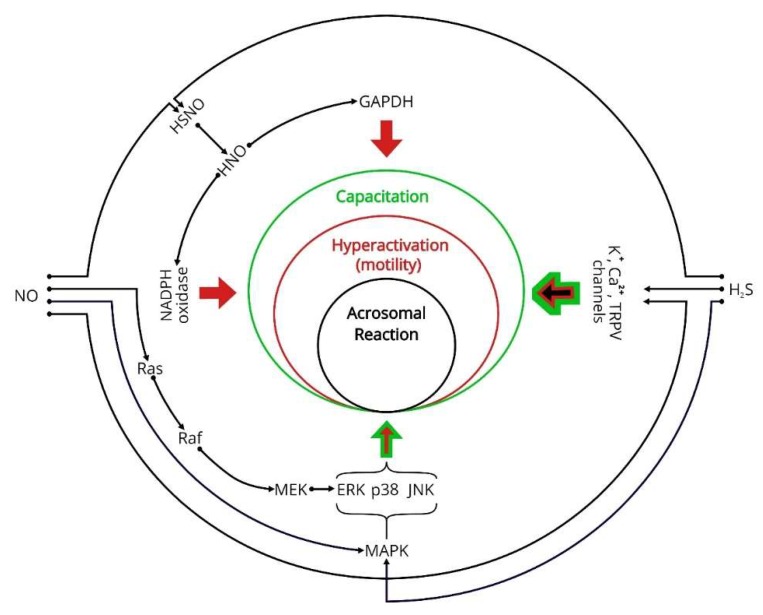
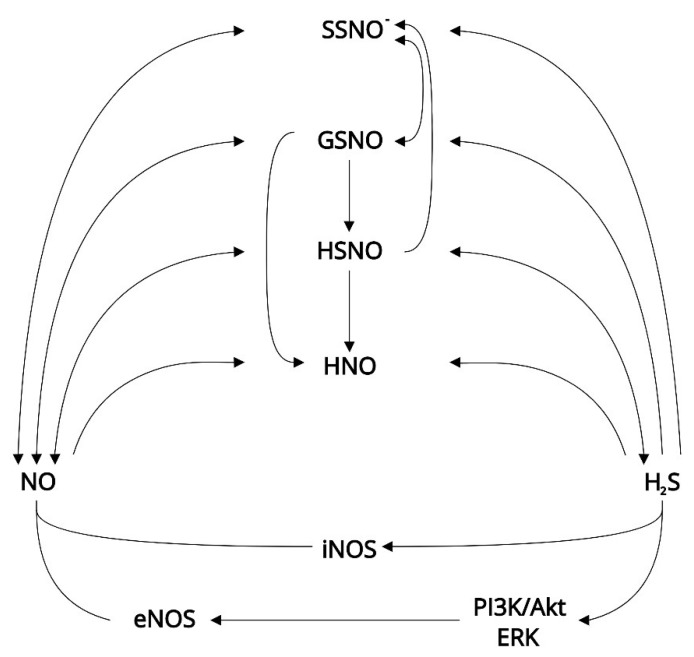
After being historically considered as noxious agents, nitric oxide (NO) and hydrogen sulfide (HS) are now listed as gasotransmitters, gaseous molecules that play a key role in a variety of cellular functions. Both NO and HS are endogenously produced, enzymatically or non-enzymatically, and interact with each other in a range of cells and tissues. In spite of the great advances achieved in recent decades in other biological systems, knowledge about HS function and interactions with NO in sperm biology is in its infancy. Here, we aim to provide an update on the importance of these molecules in the physiology of the male gamete. Special emphasis is given to the most recent advances in the metabolism, mechanisms of action, and effects (both physiological and pathophysiological) of these gasotransmitters. This manuscript also illustrates the physiological implications of NO and HS observed in other cell types, which might be important for sperm function. The relevance of these gasotransmitters to several signaling pathways within sperm cells highlights their potential use for the improvement and successful application of assisted reproductive technologies.
一氧化氮(NO)和硫化氢(HS)曾被历史认为是有毒物质,现在被列为气体递质,即参与多种细胞功能的关键气体分子。NO 和 HS 均为内源性产生,可通过酶促或非酶促途径产生,并在多种细胞和组织中相互作用。尽管近几十年来在其他生物系统中取得了巨大进展,但关于 HS 功能及其与精子生物学中 NO 的相互作用的知识仍处于起步阶段。本文旨在介绍这些分子在精子生理学中的重要性。特别强调了这些气体递质的代谢、作用机制及其在生理和病理生理条件下的作用的最新进展。本文还说明了在其他细胞类型中观察到的 NO 和 HS 的生理意义,这可能对精子功能很重要。这些气体递质在精子细胞内的多种信号通路中的相关性突出了它们在改善和成功应用辅助生殖技术方面的潜在用途。