MRIGlobal, 425 Volker Boulevard, Kansas City, MO, 64110-2241, USA.
Charles River Laboratories, Inc, Wilmington, MA, USA.
Respir Res. 2020 Apr 3;21(1):78. doi: 10.1186/s12931-020-01343-x.
Histamine release and vasodilation during an allergic reaction can alter the pharmacokinetics of drugs administered via the intranasal (IN) route. The current study evaluated the effects of histamine-induced nasal congestion on epinephrine pharmacokinetics and heart rate changes after IN epinephrine.
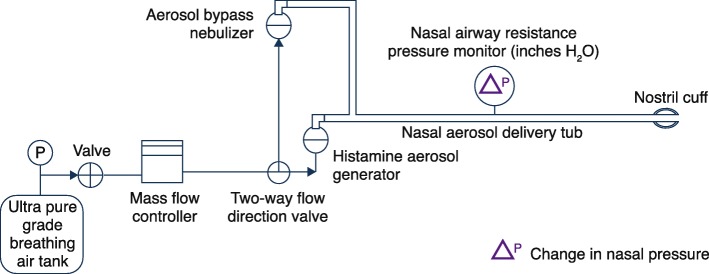
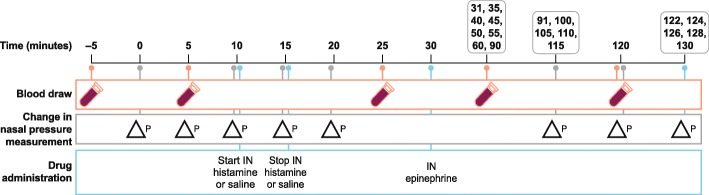
Dogs received 5% histamine or saline IN followed by 4 mg epinephrine IN. Nasal restriction pressure, epinephrine concentration, and heart rate were assessed. Maximum concentration (C), area under plasma concentration-time curve from 1 to 90 min (AUC), and time to reach C (T) were measured. Clinical observations were documented.
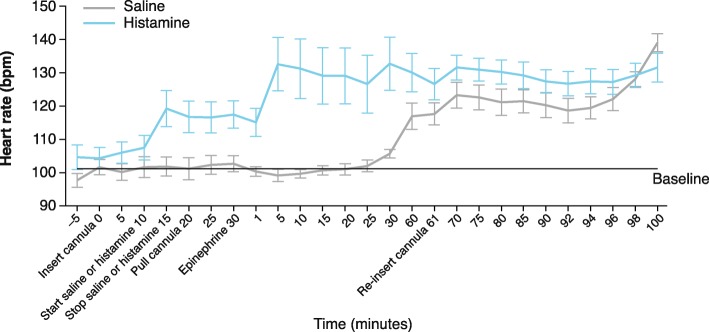
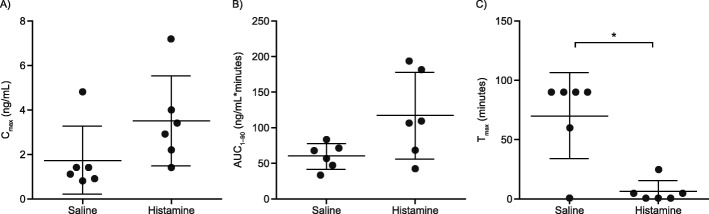
In the 12 dogs in this study, nasal congestion occurred at 5-10 min after IN histamine administration versus no nasal congestion after IN saline. After administration of IN epinephrine, IN histamine-mediated nasal congestion was significantly reduced to baseline levels at 60, 80, and 100 min. There were no significant differences in C and AUC between histamine and saline groups after IN epinephrine delivery (3.5 vs 1.7 ng/mL, p = 0.06, and 117 vs 59 ng/mL*minutes, p = 0.09, respectively). After receiving IN epinephrine, the histamine group had a significantly lower T versus the saline group (6 vs 70 min, respectively; p = 0.02). Following IN epinephrine administration, the histamine group showed rapidly increased heart rate at 5 min, while there was a delayed increase in heart rate (occurring 30-60 min after administration) in the saline group. Clinical observations included salivation and emesis.
IN histamine led to more rapid epinephrine absorption and immediately increased heart rate compared with IN saline. IN epinephrine decreased histamine-induced nasal congestion.
过敏反应期间组胺释放和血管扩张会改变经鼻(IN)途径给予的药物的药代动力学。本研究评估了组胺诱导的鼻塞对 IN 肾上腺素后肾上腺素药代动力学和心率变化的影响。
狗接受 5%组胺或盐水 IN 后,再接受 4mg 肾上腺素 IN。评估鼻限制压力、肾上腺素浓度和心率。测量最大浓度(C)、从 1 到 90 分钟的血浆浓度-时间曲线下面积(AUC)和达到 C 的时间(T)。记录临床观察结果。
在这项研究中的 12 只狗中,IN 组胺给药后 5-10 分钟出现鼻塞,而 IN 盐水后无鼻塞。给予 IN 肾上腺素后,IN 组胺介导的鼻塞在 60、80 和 100 分钟时显著降低至基线水平。IN 肾上腺素给药后,组胺组和盐水组之间的 C 和 AUC 无显著差异(分别为 3.5 和 1.7ng/mL,p=0.06 和 117 和 59ng/mL*min,p=0.09)。接受 IN 肾上腺素后,组胺组的 T 明显低于盐水组(分别为 6 和 70 分钟,p=0.02)。给予 IN 肾上腺素后,组胺组在 5 分钟时心率迅速增加,而盐水组在给药后 30-60 分钟时心率增加延迟。临床观察包括流涎和呕吐。
与 IN 盐水相比,IN 组胺导致肾上腺素吸收更快,心率立即增加。IN 肾上腺素可减少组胺诱导的鼻塞。