Palazzolo Gemma, Mollica Hilaria, Lusi Valeria, Rutigliani Mariangela, Di Francesco Martina, Pereira Rui Cruz, Filauro Marco, Paleari Laura, DeCensi Andrea, Decuzzi Paolo
Laboratory of Nanotechnology for Precision Medicine, Fondazione Istituto Italiano di Tecnologia, 16163 Genoa, Italy.
Laboratory of Nanotechnology for Precision Medicine, Fondazione Istituto Italiano di Tecnologia, 16163 Genoa, Italy.
Transl Oncol. 2020 Apr;13(4):100760. doi: 10.1016/j.tranon.2020.100760. Epub 2020 Apr 1.
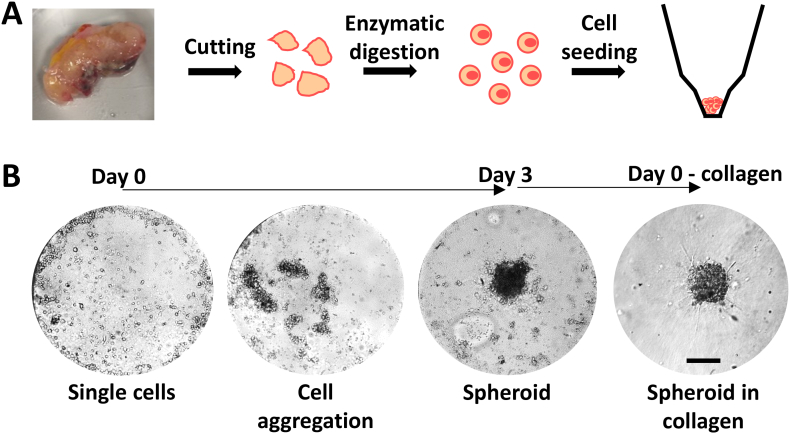
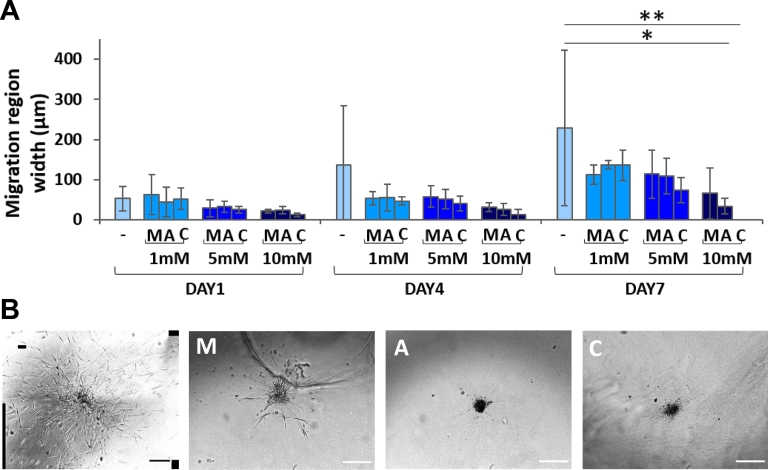
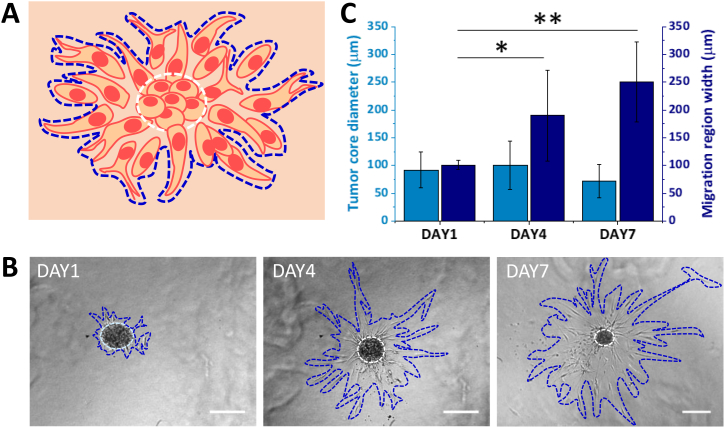
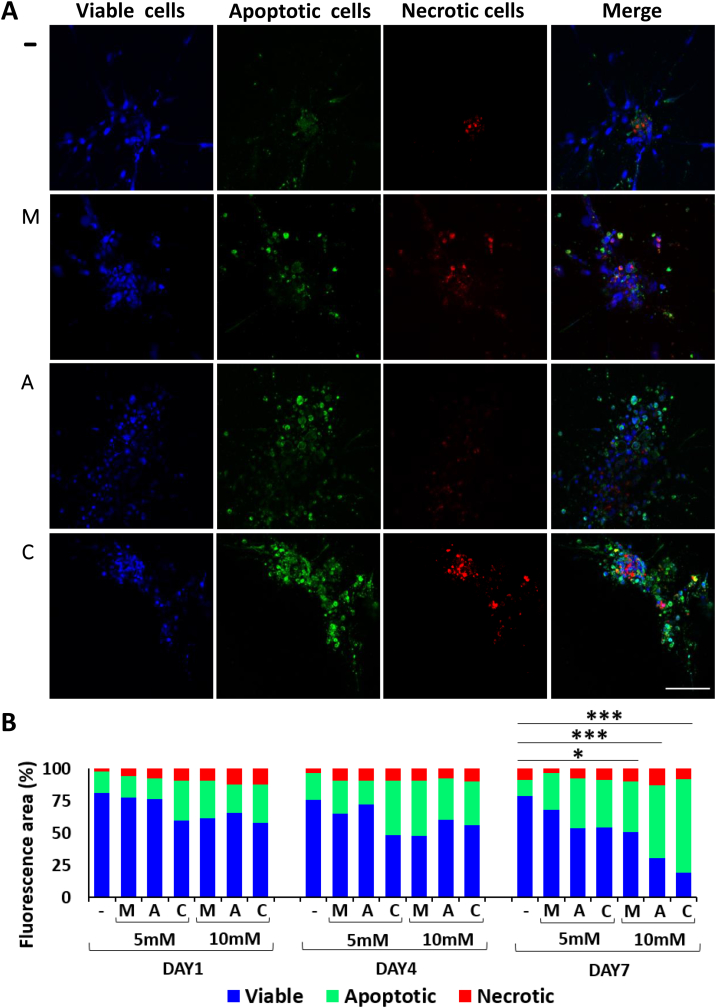
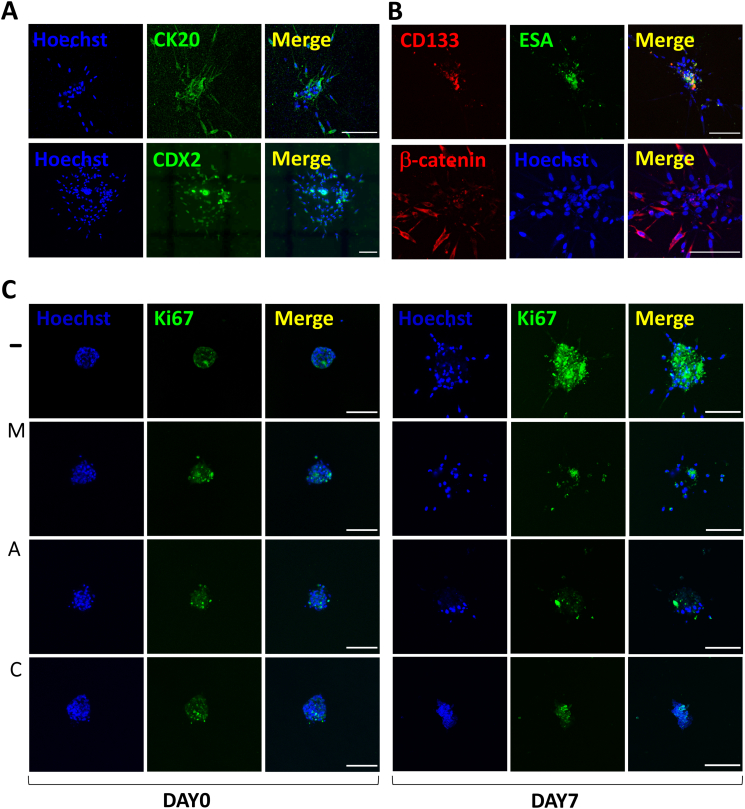
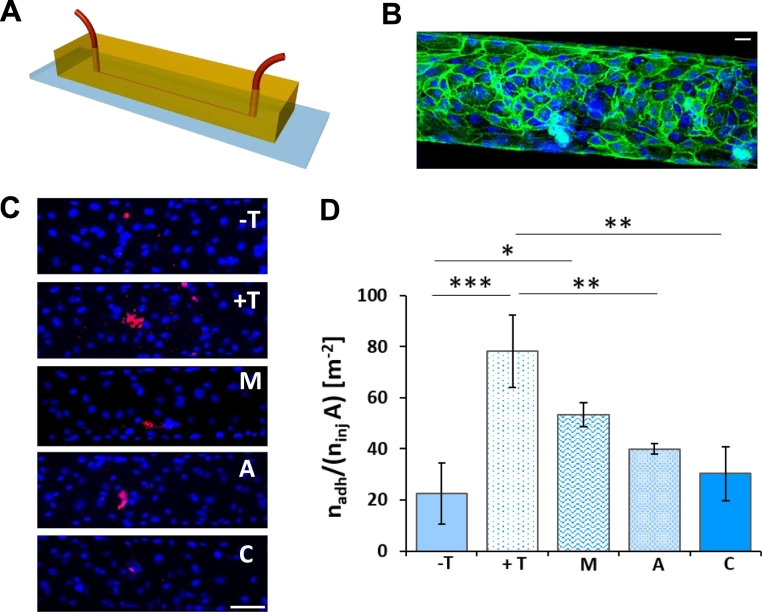
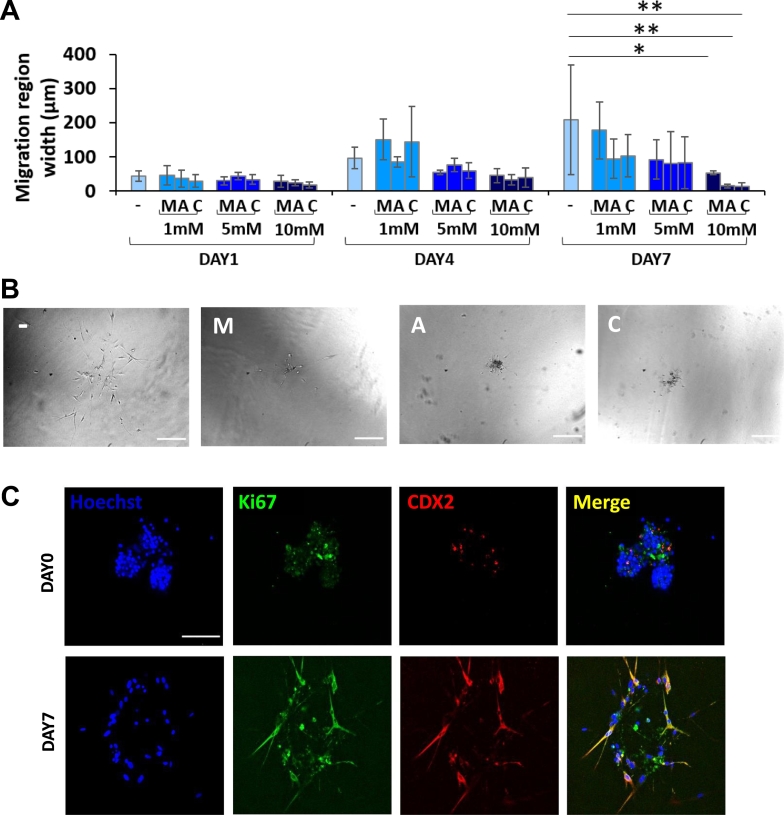
Although screening has reduced mortality rates for colorectal cancer (CRC), about 20% of patients still carry metastases at diagnosis. Postsurgery chemotherapy is toxic and induces drug resistance. Promising alternative strategies rely on repurposing drugs such as aspirin (ASA) and metformin (MET). Here, tumor spheroids were generated in suspension by primary CRCs and metastatic lymph nodes from 11 patients. These spheroids presented a heterogeneous cell population including a small core of CD133/ESA cancer stem cells surrounded by a thick corona of CDX2/CK20 CRC cells, thus maintaining the molecular hallmarks of the tumor source. Spheroids were exposed to ASA and/or MET at different doses for up to 7 days to assess cell growth, migration, and adhesion in three-dimensional assays. While ASA at 5 mM was always sufficient to mitigate cell migration, the response to MET was patient specific. Only in MET-sensitive spheroids, the 5 mM ASA/MET combination showed an effect. Interestingly, CRCs from diabetic patients daily pretreated with MET gave a very low spheroid yield due to reduced cancer cell survival. This study highlights the potential of ASA/MET treatments to modulate CRC spreading.
尽管筛查降低了结直肠癌(CRC)的死亡率,但仍有20%的患者在确诊时已发生转移。术后化疗具有毒性并会诱导耐药性。有前景的替代策略依赖于重新利用阿司匹林(ASA)和二甲双胍(MET)等药物。在此,从11例患者的原发性结直肠癌和转移性淋巴结中悬浮培养出肿瘤球体。这些球体呈现出异质性细胞群体,包括一小核心的CD133/ESA癌干细胞,周围环绕着一层厚厚的CDX2/CK20结直肠癌细胞晕,从而保持了肿瘤来源的分子特征。将球体暴露于不同剂量的ASA和/或MET中长达7天,以在三维试验中评估细胞生长、迁移和黏附。虽然5 mM的ASA总是足以减轻细胞迁移,但对MET的反应具有患者特异性。仅在对MET敏感的球体中,5 mM的ASA/MET组合显示出效果。有趣的是,由于癌细胞存活率降低,每天用MET预处理的糖尿病患者的结直肠癌产生的球体产量非常低。这项研究突出了ASA/MET治疗调节结直肠癌扩散的潜力。