Department of Psychology, College of the Holy Cross.
VA Central Western Massachusetts.
Psychol Addict Behav. 2020 Sep;34(6):680-689. doi: 10.1037/adb0000576. Epub 2020 Apr 6.
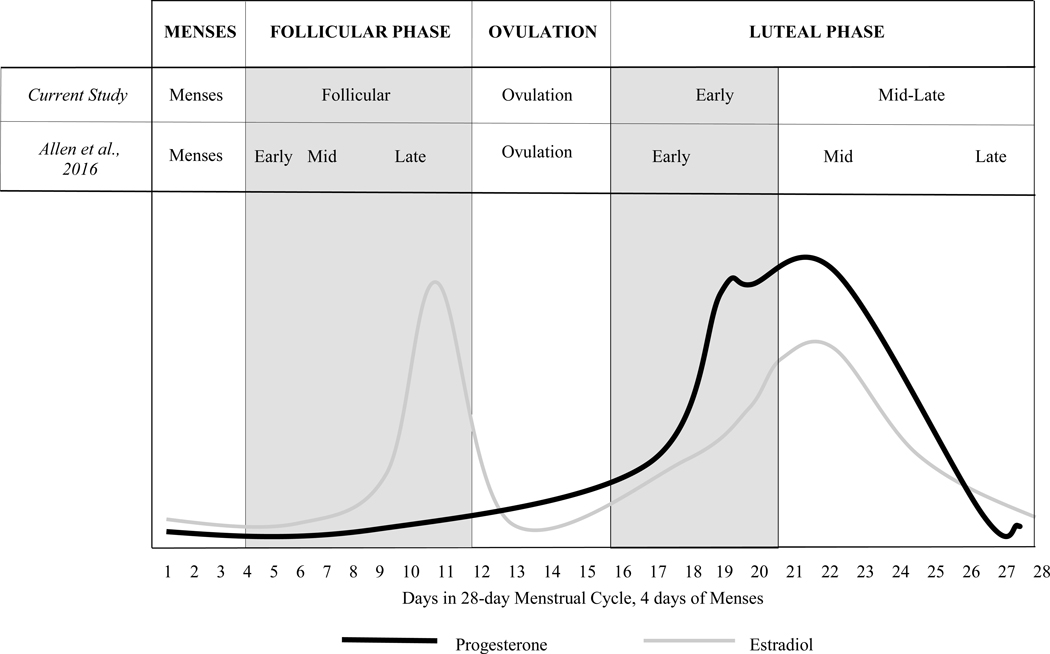
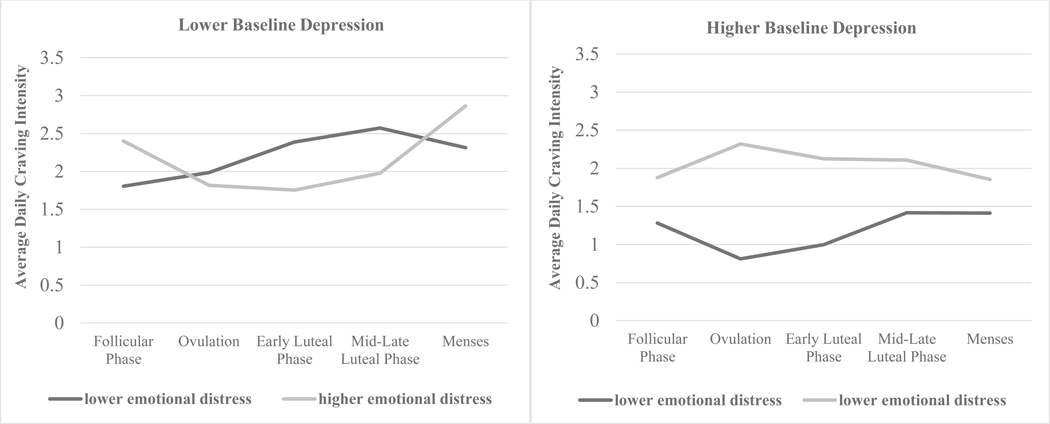
Research shows fluctuations in drinking across the menstrual cycle among women with alcohol use disorder (AUD), but little work has investigated moderators of these fluctuations. This study examined drinking and craving intensity across the menstrual cycle, and the moderating effect of baseline depression and emotional distress during the midlate luteal phase and/or menses, among women receiving AUD treatment. Fifty-nine regularly cycling women reported menstrual history and baseline depression. Over 3 months of treatment, they kept daily logs of drinks, alcohol cravings, and menstruation (yes/no). Emotional distress during the midlate luteal phase and/or menses of their most recent menstrual cycle was also assessed during treatment. Menstrual cycle phase was estimated for each within-treatment day. Mixed model analyses tested main and interactive effects of menstrual cycle phase, baseline depression, and emotional distress during the midlate luteal phase and/or menses on daily drinks and craving intensity. Women drank most during the midlate luteal phase and menses compared with other phases. Among women with lower baseline depression, those with lower distress during the midlate luteal phase and/or menses reported more intense cravings during the midlate luteal phase (ΔM = .77, = .000) and menses (ΔM = .51, = .012); those with higher distress reported more intense cravings during menses, compared with all other phases ( < .01). Among women with higher baseline depression, craving intensity remained consistently high. Results document more drinking during the midlate luteal phase and menses and suggest that cycle-related distress and depression moderate the alcohol-menstrual association among women in AUD treatment. (PsycInfo Database Record (c) 2020 APA, all rights reserved).
研究表明,患有酒精使用障碍(AUD)的女性在月经周期中饮酒量会波动,但很少有研究调查这些波动的调节因素。本研究调查了接受 AUD 治疗的女性在月经周期中的饮酒量和渴求强度,以及在中晚期黄体期和/或月经期基线抑郁和情绪困扰对这些波动的调节作用。59 名定期排卵的女性报告了月经史和基线抑郁情况。在治疗期间的 3 个月内,她们每天记录饮料、酒精渴求以及月经情况(是/否)。在治疗期间还评估了她们最近一次月经周期的中晚期黄体期和/或月经期的情绪困扰。对于每个治疗日内的情况,估计了月经周期阶段。混合模型分析测试了月经周期阶段、基线抑郁、中晚期黄体期和/或月经期的情绪困扰对每日饮酒量和渴求强度的主要和交互作用。与其他阶段相比,女性在中晚期黄体期和月经期饮酒最多。在基线抑郁较低的女性中,那些在中晚期黄体期和/或月经期情绪困扰较低的女性,在中晚期黄体期(ΔM =.77, =.000)和月经期(ΔM =.51, =.012)的渴求强度更高;那些情绪困扰较高的女性,在月经期的渴求强度比其他所有阶段都高(<.01)。在基线抑郁较高的女性中,渴求强度一直很高。结果表明,在中晚期黄体期和月经期饮酒量更多,并表明与月经周期相关的困扰和抑郁会调节 AUD 治疗女性中酒精与月经的关联。(PsycInfo 数据库记录(c)2020 APA,保留所有权利)。