Institut d´Investigació Sanitària Pere Virgili, Hospital Universitari Joan XXIII, Dr Mallafré Guasch, 4, 43007, Tarragona, Spain.
CIBER de Diabetes y Enfermedades Metabólicas Asociadas (CIBERDEM), Instituto de Salud Carlos III, 28014, Madrid, Spain.
Clin Epigenetics. 2020 Apr 6;12(1):53. doi: 10.1186/s13148-020-00843-3.
Crohn's disease (CD) is characterized by persistent inflammation and ulceration of the small or large bowel, and expansion of mesenteric adipose tissue, termed creeping fat (CF). We previously demonstrated that human adipose-derived stem cells (hASCs) from CF of patients with CD exhibit dysfunctional phenotypes, including a pro-inflammatory profile, high phagocytic capacity, and weak immunosuppressive properties. Importantly, these phenotypes persist in patients in remission and are found in all adipose depots explored including subcutaneous fat. We hypothesized that changes in hASCs are a consequence of epigenetic modifications.
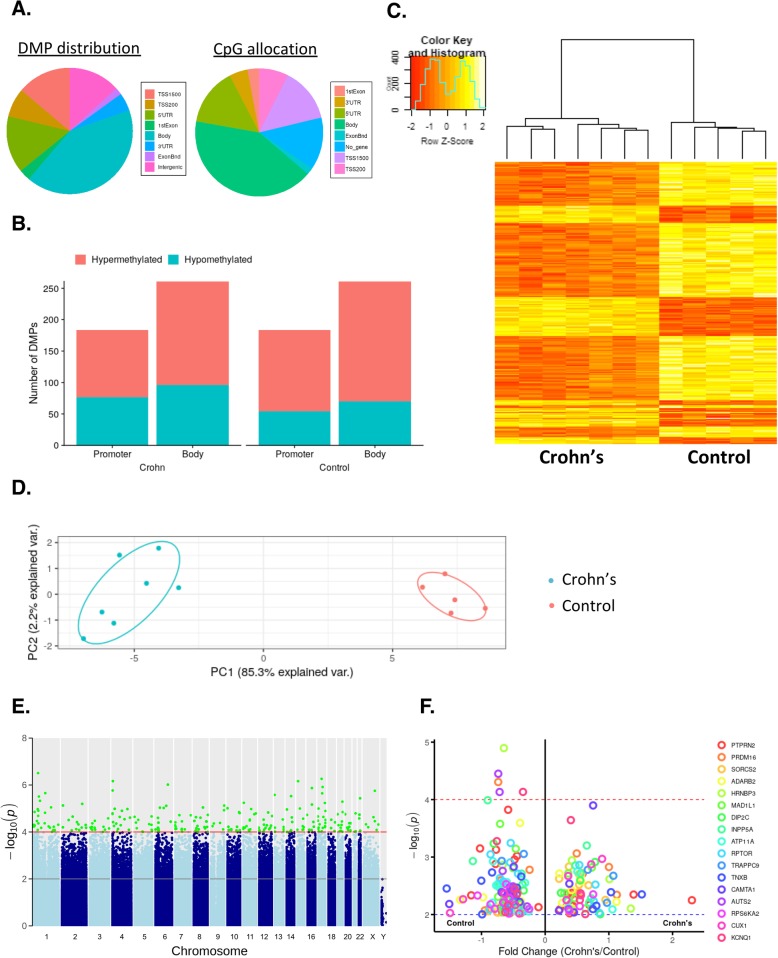
We applied epigenome-wide profiling with a methylation array (Illumina EPIC/850k array) and gene expression analysis to explore the impact of CD on the methylation signature of hASCs isolated from the subcutaneous fat of patients with CD and healthy controls (n = 7 and 5, respectively; cohort I). Differentially methylated positions (p value cutoff < 1 × 10 and ten or more DMPs per gene) and regions (inclusion threshold 0.2, p value cutoff < 1 × 10 and more than 2 DMRs per gene) were identified using dmpfinder and Bumphunter (minfi), respectively. Changes in the expression of differentially methylated genes in hASCs were validated in a second cohort (n = 10/10 inactive and active CD and 10 controls; including patients from cohort I) and also in peripheral blood mononuclear cells (PBMCs) of patients with active/inactive CD and of healthy controls (cohort III; n = 30 independent subjects).
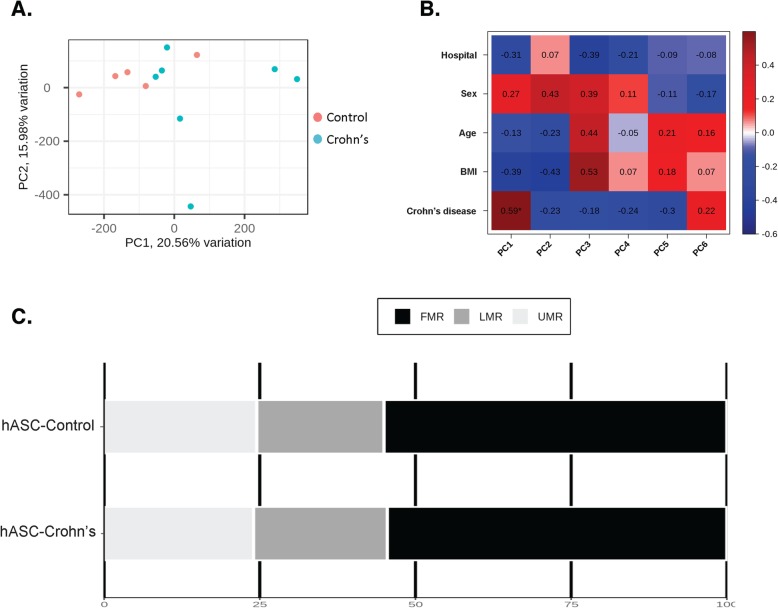
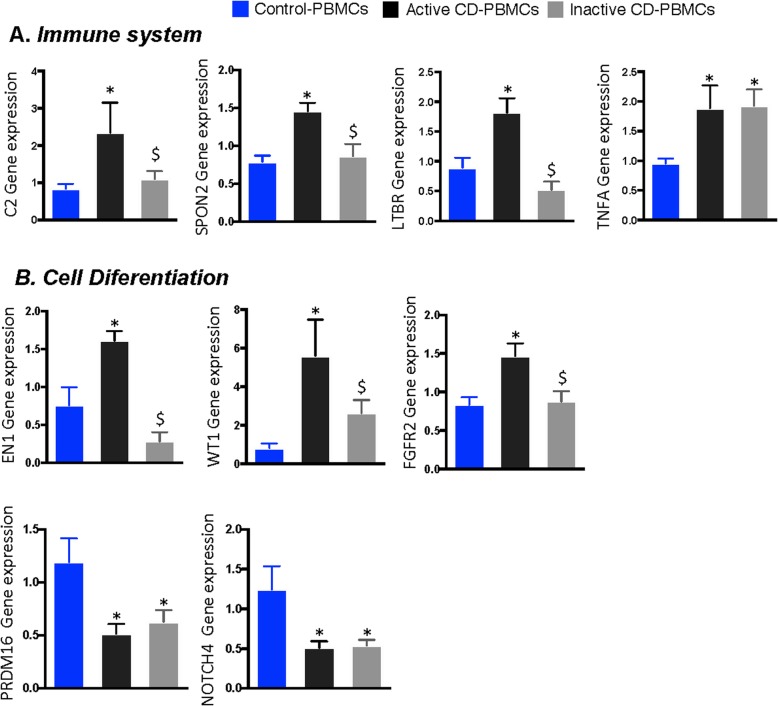
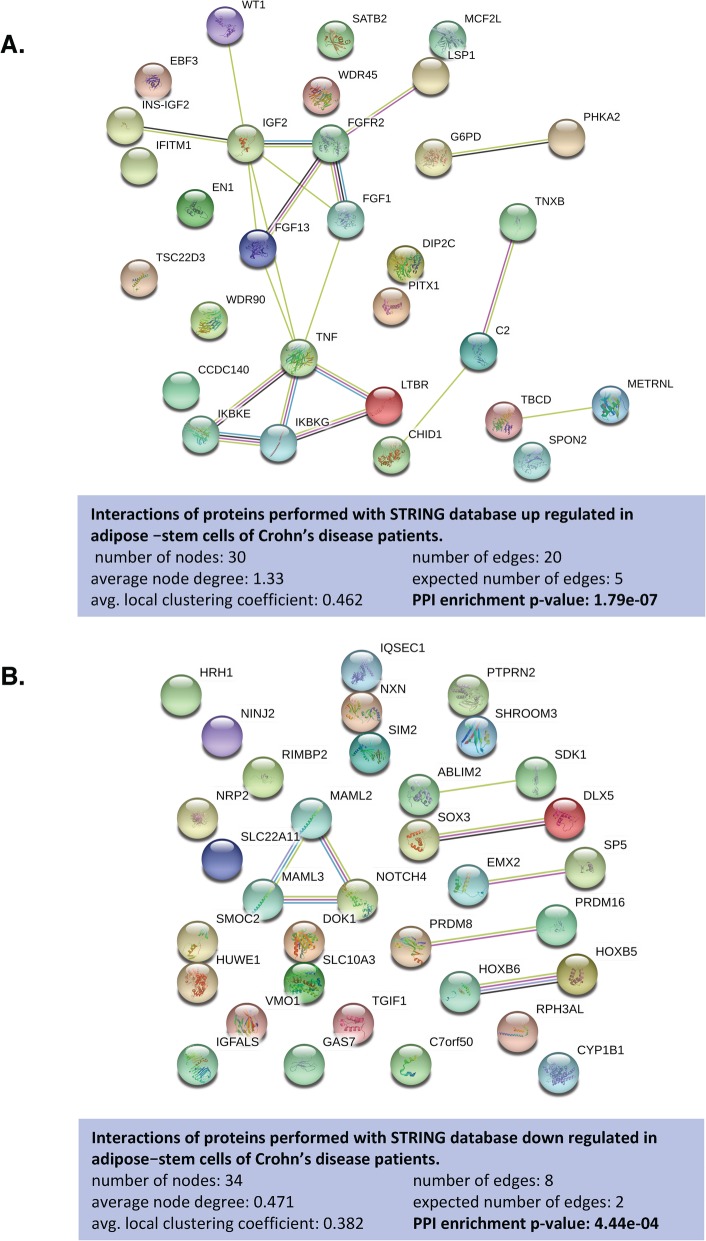
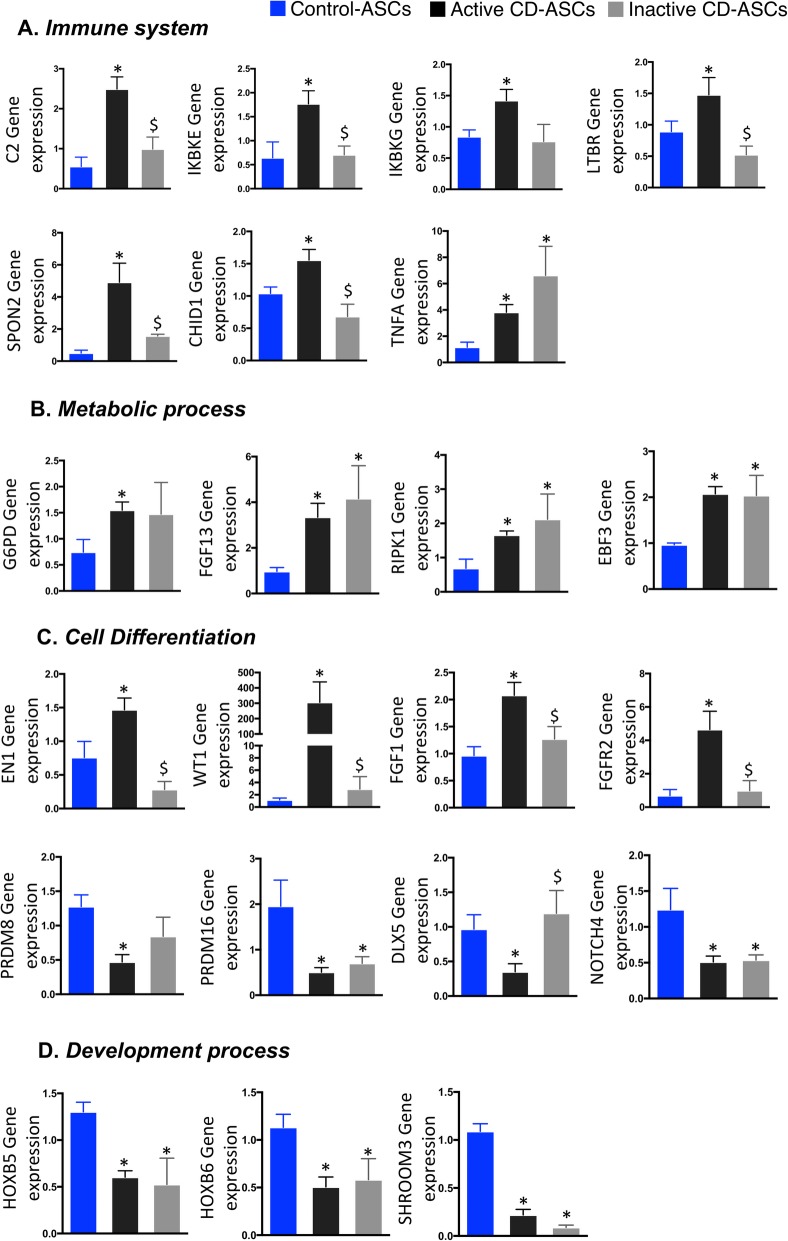
We found a distinct DNA methylation landscape in hASCs from patients with CD, leading to changes in the expression of differentially methylated genes involved in immune response, metabolic, cell differentiation, and development processes. Notably, the expression of several of these genes in hASCs and PBMCs such as tumor necrosis factor alpha (TNFA) and PR domain zinc finger protein 16 (PRDM16) were not restored to normal (healthy) levels after disease remission.
hASCs of patients with CD exhibit a unique DNA methylation and gene expression profile, but the expression of several genes are only partially restored in patients with inactive CD, both in hASCs and PBMCs. Understanding how CD shapes the functionality of hASCs is critical for investigating the complex pathophysiology of this disease, as well as for the success of cell-based therapies. Human adipose-stem cells isolated from subcutaneous fat of patients with Crohn's disease exhibit an altered DNA methylation pattern and gene expression profile compared with those isolated from healthy individuals, with immune system, cell differentiation, metabolic and development processes identified as the main pathways affected. Interestingly, the gene expression of several genes involved in these pathways is only partially restored to control levels in patients with inactive Crohn's disease, both in human adipose-stem cells and peripheral blood mononuclear cells. Understanding how Crohn's disease shapes the functionality of human adipose-stem cells is critical for investigating the complex pathophysiology of this disease, as well as for the success of cell-based therapies.
克罗恩病(CD)的特征是小肠或大肠的持续炎症和溃疡,以及肠系膜脂肪组织的扩张,称为爬行脂肪(CF)。我们之前证明,来自 CD 患者 CF 的人脂肪来源干细胞(hASC)表现出功能障碍表型,包括促炎表型、高吞噬能力和弱免疫抑制特性。重要的是,这些表型在缓解期的患者中仍然存在,并且在我们探索的所有脂肪沉积中都存在,包括皮下脂肪。我们假设 hASC 的变化是表观遗传修饰的结果。
我们应用基于甲基化阵列(Illumina EPIC/850k 阵列)的全基因组甲基化谱分析和基因表达分析,探索 CD 对来自 CD 患者和健康对照者皮下脂肪分离的 hASC 甲基化特征的影响(n = 7 和 5,分别;队列 I)。使用 dmpfinder 和 Bumphunter(minfi)分别鉴定差异甲基化位置(p 值截止值 < 1×10 和每个基因 10 个以上的 DMP)和区域(包含阈值 0.2、p 值截止值 < 1×10 和每个基因 2 个以上 DMR)。在第二个队列(n = 10/10 例活动性和非活动性 CD 患者和 10 例对照者;包括队列 I 中的患者)以及活动性/非活动性 CD 患者和健康对照者的外周血单核细胞(PBMC)中验证 hASC 中差异甲基化基因的表达(队列 III;n = 30 个独立受试者)。
我们发现 CD 患者的 hASC 存在独特的 DNA 甲基化图谱,导致参与免疫反应、代谢、细胞分化和发育过程的差异甲基化基因的表达发生变化。值得注意的是,hASC 和 PBMC 中这些基因的表达,如肿瘤坏死因子-α(TNFA)和 PR 结构域锌指蛋白 16(PRDM16),在疾病缓解后并未恢复到正常(健康)水平。
CD 患者的 hASC 表现出独特的 DNA 甲基化和基因表达谱,但在非活动性 CD 患者中,这些基因的表达仅部分恢复,无论是在 hASC 还是 PBMC 中。了解 CD 如何塑造 hASC 的功能对于研究这种疾病的复杂病理生理学以及细胞治疗的成功至关重要。与健康个体相比,来自克罗恩病患者皮下脂肪的人脂肪源干细胞表现出改变的 DNA 甲基化模式和基因表达谱,其中免疫系统、细胞分化、代谢和发育过程被确定为受影响的主要途径。有趣的是,在非活动性克罗恩病患者中,这些途径中涉及的几个基因的表达仅部分恢复到对照水平,无论是在人脂肪源干细胞还是外周血单核细胞中。了解 CD 如何塑造人脂肪源干细胞的功能对于研究这种疾病的复杂病理生理学以及细胞治疗的成功至关重要。