Center for Genome Science, National Institute of Health, Chungcheongbuk-do, 363-951, Republic of Korea.
Sci Rep. 2019 Mar 19;9(1):4855. doi: 10.1038/s41598-019-40486-w.
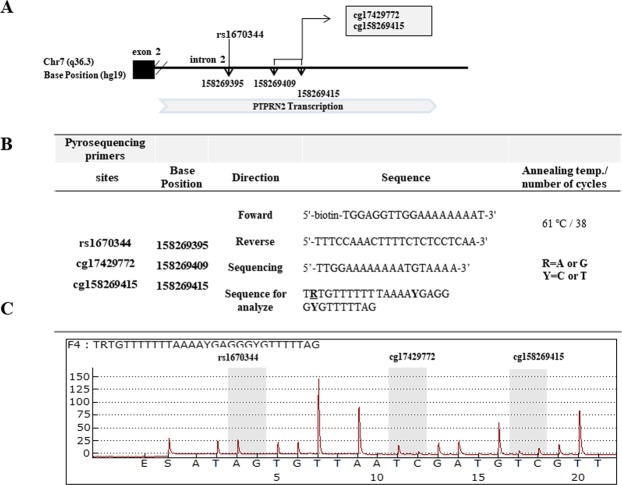
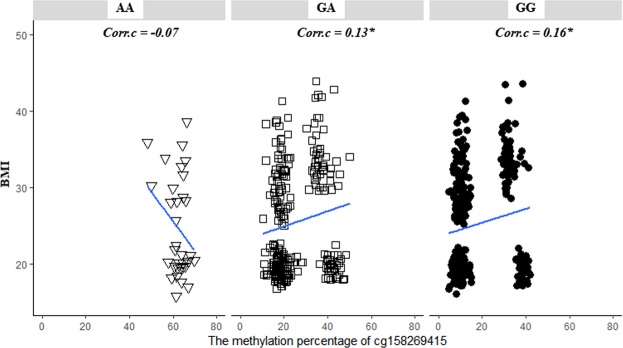
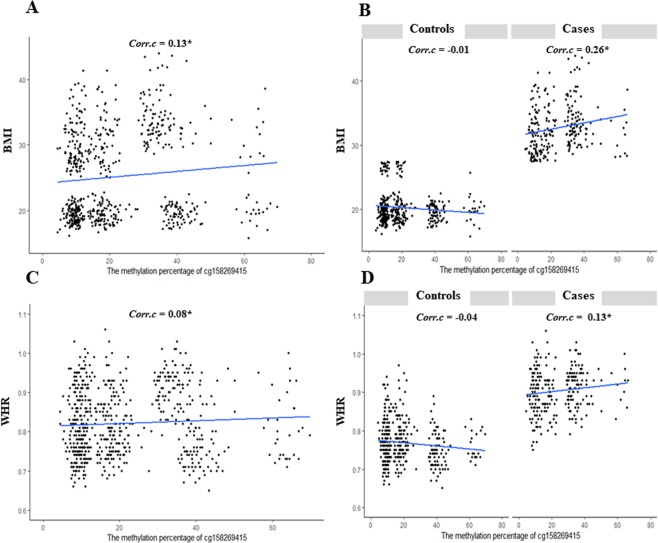
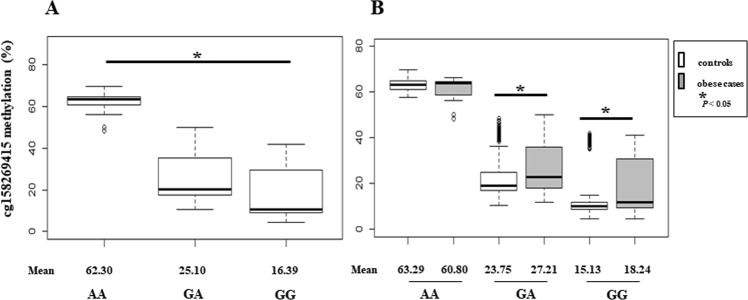
Protein tyrosine phosphatase, receptor type N2 (PTPRN2) encodes a major islet autoantigen in type-1 diabetes. Previous genetic studies have shown its significant association with obesity. PTPRN2 plays an important role in epigenetic regulation of metabolic diseases and cancers. We investigated CpG methylations (cg17429772 and cg158269415) in PTPRN2 by pyrosequencing from blood samples of childhood obesity (n = 638). cg158269415 had significant positive correlations with body mass index (BMI) and waist-hip ratio (WHR). Case-control analysis showed that cg158269415 methylation in blood sample was significantly more hypermethylated in obese cases (n = 252), an average of 2.93% more than that that in controls (n = 386). The cg158269415 methylation has a trimodal distribution pattern with strong dependency on nearby located rs1670344 G > A genotype. Correlations of cg158269415 with BMI and WHR were significant and strong in major G allele carriers (GG + GA). Our study showed that an epigenetic association of PTPRN2 gene with childhood obesity was under certain genetic background. The genetic and epigenetic interplay of PTPRN2 gene may implicate a mechanism of childhood obesity. Whether these small changes in DNA methylation from whole blood are causally or consequently related to childhood obesity outcome and their clinical relevance remains to be determined. However, this study presents a promising obesity risk marker that warrants further investigation.
蛋白酪氨酸磷酸酯酶受体 N2(PTPRN2)编码 1 型糖尿病中的主要胰岛自身抗原。先前的遗传研究表明其与肥胖症显著相关。PTPRN2 在代谢性疾病和癌症的表观遗传调控中发挥重要作用。我们通过焦磷酸测序技术,从 638 名儿童肥胖症患者的血液样本中研究了 PTPRN2 的 CpG 甲基化(cg17429772 和 cg158269415)。cg158269415 与体重指数(BMI)和腰臀比(WHR)呈显著正相关。病例对照分析显示,肥胖症患者(n=252)血液样本中 cg158269415 的甲基化明显更为高甲基化,平均比对照组(n=386)高 2.93%。cg158269415 的甲基化呈三峰分布模式,与附近 rs1670344 G>A 基因型有很强的依赖性。cg158269415 与 BMI 和 WHR 的相关性在主要 G 等位基因携带者(GG+GA)中显著且强烈。我们的研究表明,PTPRN2 基因与儿童肥胖症之间存在表观遗传关联,这与特定的遗传背景有关。PTPRN2 基因的遗传和表观遗传相互作用可能暗示了儿童肥胖症的发病机制。这些来自全血的 DNA 甲基化的微小变化是否与儿童肥胖症的结果有因果关系或随后的关系及其临床相关性仍有待确定。然而,本研究提出了一个有前途的肥胖风险标志物,值得进一步研究。