Wang Yanshi, Yang Shaojie, Zhang Shanshan, Wu Xin
Department of Gynecology, The First Affiliated Hospital of China Medical University, Shenyang, Liaoning 110001, People's Republic of China.
Cancer Manag Res. 2020 Mar 19;12:2057-2067. doi: 10.2147/CMAR.S245696. eCollection 2020.
To evaluate the anti-tumor effects of oxymatrine in vulvar squamous cell carcinoma (VSCC) cells and to explore the underlying mechanisms.
We selected SW962 and A431 VSCC cell lines. Cell proliferation was examined using MTT assay. Cell cycle and apoptosis were detected using flow cytometry. Migration and invasion were evaluated using transwell and wound-healing assays. The relevant protein expression and signaling pathways were analyzed using Western blotting.
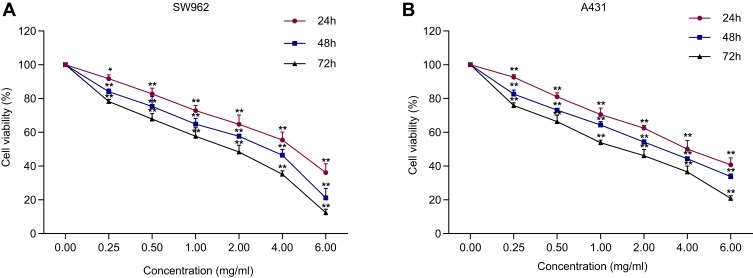
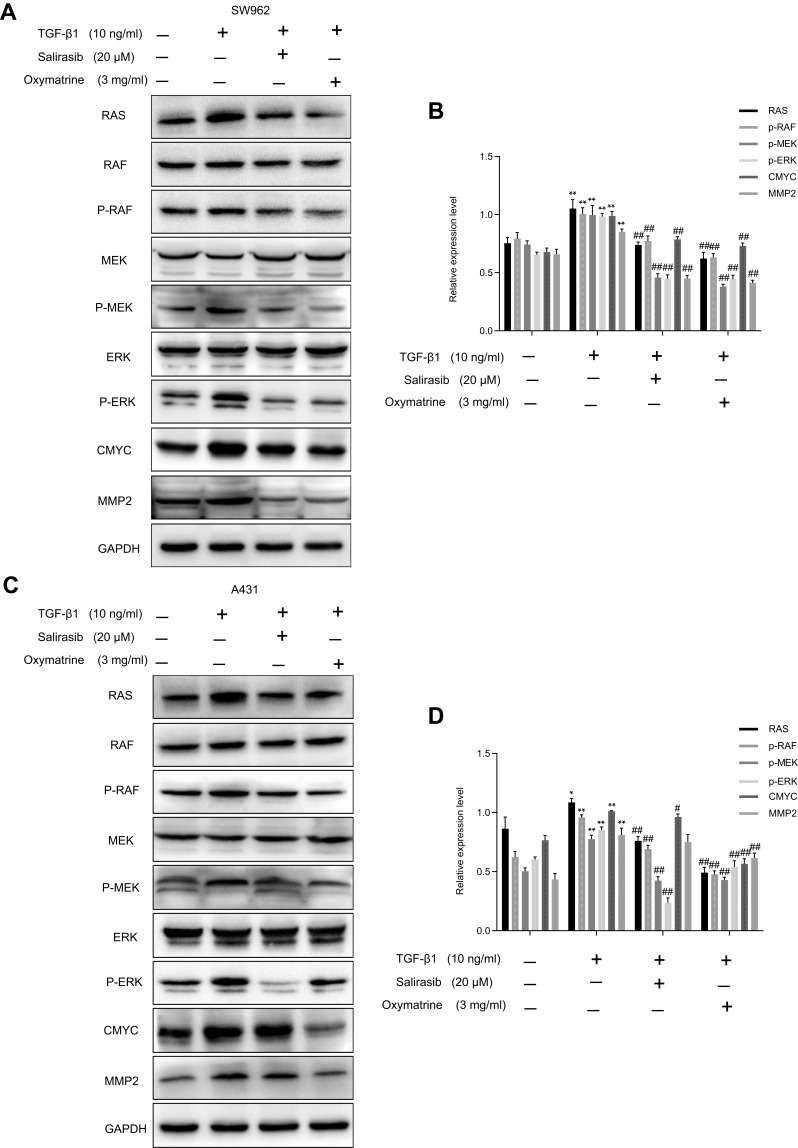
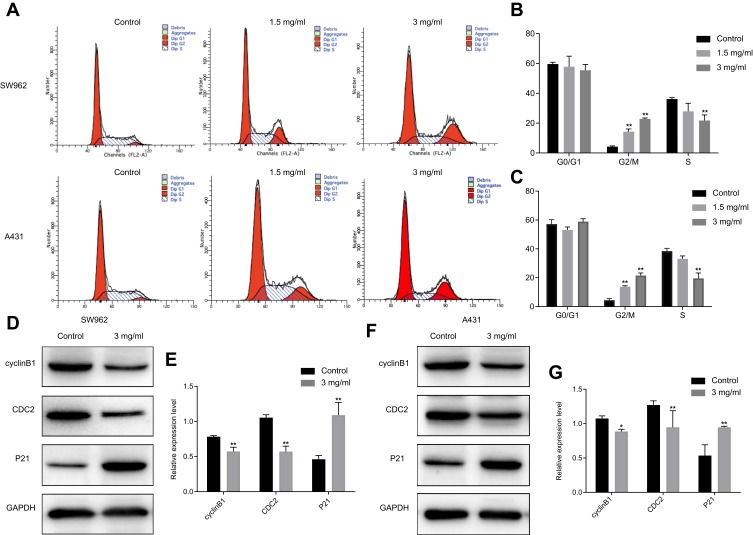
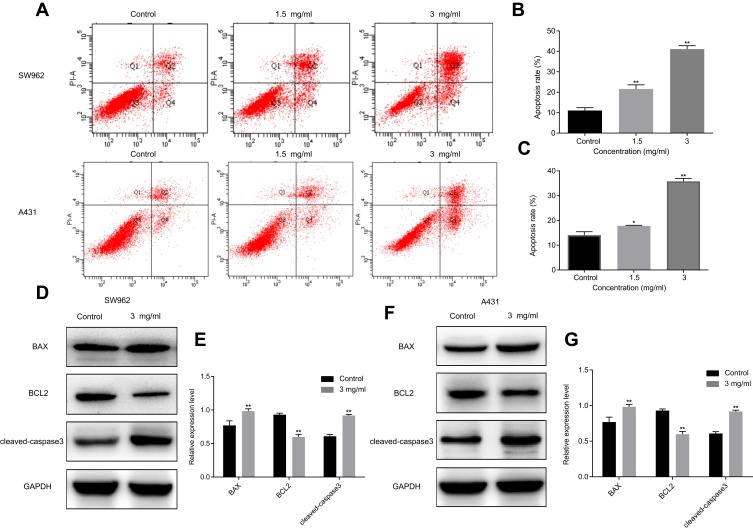
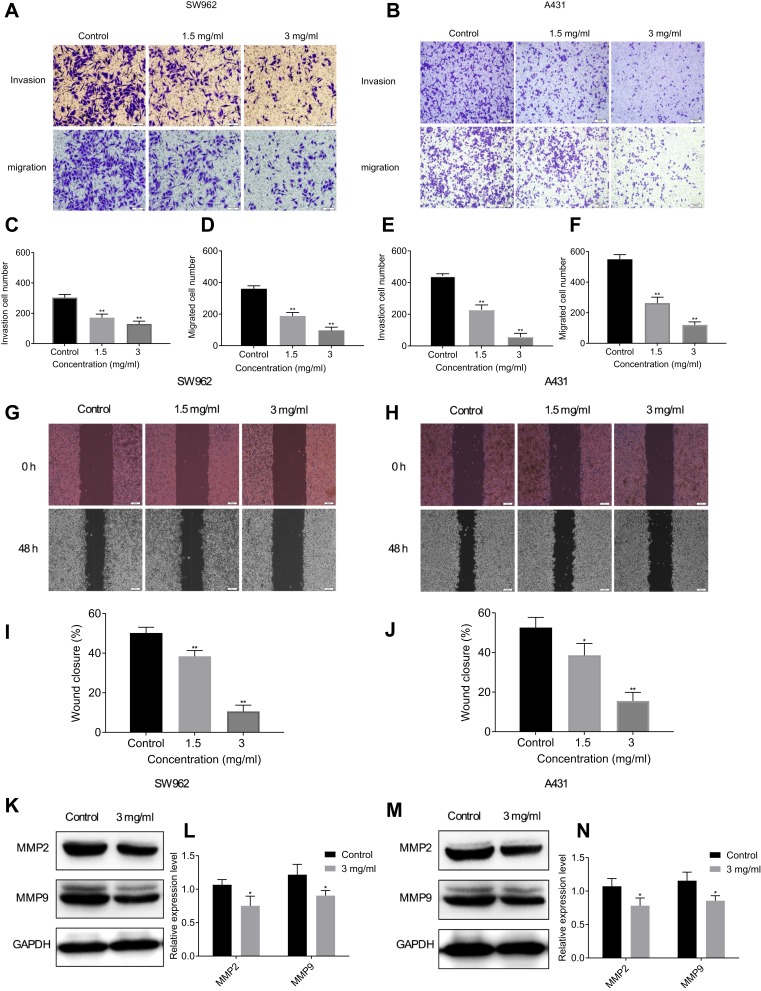
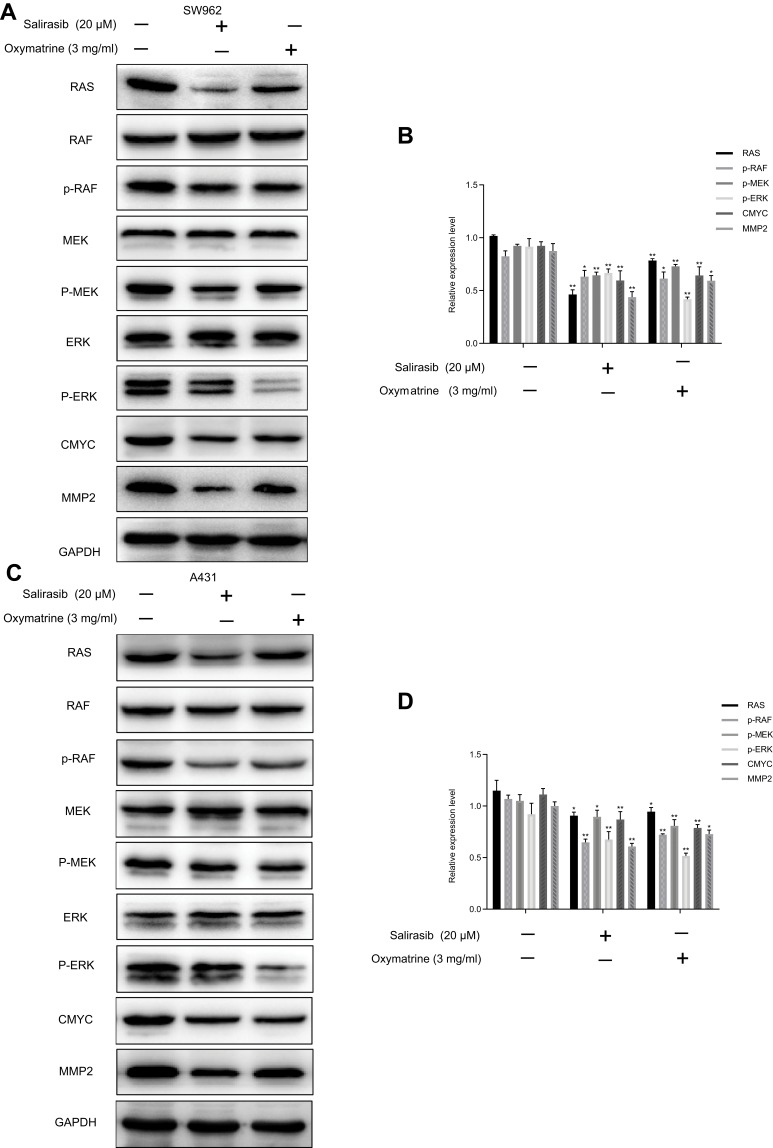
Oxymatrine inhibited the proliferation of SW962 and A431 VSCC cells in a time- and dose-dependent manner. Oxymatrine induced cell cycle arrest in the G2/M phase by increasing the protein expression of P21 and decreasing levels of cyclin B1 and CDC2. Oxymatrine upregulated the expression of cleaved-caspase 3 and BAX and downregulated the expression of BCL2, which led to an increase in apoptosis. Oxymatrine also suppressed the migration and invasion of SW962 and A431 cells by reducing levels of MMP2 and MMP9. After treatment with oxymatrine or a RAS inhibitor (salirasib), expression levels of RAS, p-RAF, p-MEK, p-ERK, C-MYC, and MMP2 were reduced. When TGF-β1 was used to stimulate SW962 and A431 cells, the expression of the above proteins increased; this increase was reversed by using oxymatrine or salirasib again.
Oxymatrine inhibits proliferation and migration of VSCC cells by blocking the RAS/RAF/MEK/ERK pathway.
评估氧化苦参碱对外阴鳞状细胞癌(VSCC)细胞的抗肿瘤作用,并探讨其潜在机制。
我们选择了SW962和A431 VSCC细胞系。使用MTT法检测细胞增殖。使用流式细胞术检测细胞周期和凋亡。使用Transwell和伤口愈合试验评估迁移和侵袭。使用蛋白质印迹法分析相关蛋白表达和信号通路。
氧化苦参碱以时间和剂量依赖性方式抑制SW962和A431 VSCC细胞的增殖。氧化苦参碱通过增加P21蛋白表达并降低细胞周期蛋白B1和细胞周期蛋白依赖性激酶2(CDC2)水平,诱导细胞周期停滞在G2/M期。氧化苦参碱上调裂解的半胱天冬酶3(cleaved-caspase 3)和Bax蛋白的表达,下调Bcl-2蛋白的表达,从而导致凋亡增加。氧化苦参碱还通过降低基质金属蛋白酶2(MMP2)和基质金属蛋白酶9(MMP9)水平,抑制SW962和A431细胞的迁移和侵袭。用氧化苦参碱或RAS抑制剂(沙立西卜)处理后,RAS、磷酸化RAF(p-RAF)、磷酸化丝裂原活化蛋白激酶激酶(p-MEK)、磷酸化细胞外信号调节激酶(p-ERK)、原癌基因C-MYC(C-MYC)和MMP2的表达水平降低。当使用转化生长因子-β1(TGF-β1)刺激SW962和A431细胞时,上述蛋白的表达增加;再次使用氧化苦参碱或沙立西卜可逆转这种增加。
氧化苦参碱通过阻断RAS/RAF/MEK/ERK途径抑制VSCC细胞的增殖和迁移。